Updated on Oct 4, 2026
How Lacoste Built Its Identity Around the Iconic Crocodile Logo
Brand StoriesChirag Pariyani12 Mins reading time
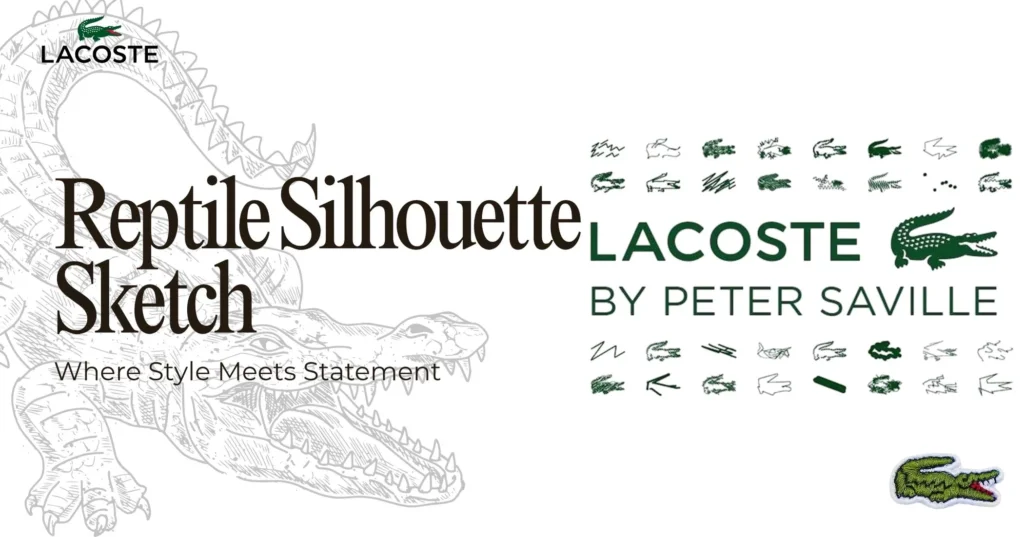
A lost bet over a suitcase in Boston somehow led to the Lacoste crocodile logo becoming one of the most recognized logos in fashion history. Lacoste didn’t set out to build a global brand around a reptile. The crocodile emerged through a tennis nickname, a friend’s sketch, and a shirt designed to solve a specific problem on the court. This guide traces that story from the beginning.
TL;DR
- René Lacoste earned the nickname “the Crocodile” from American journalists after losing a 1923 bet with his Davis Cup captain over a crocodile-skin suitcase.
- His friend, stylist Robert George, sketched the crocodile design in 1927, and Lacoste had it embroidered on his tennis blazer.
- In 1933, Lacoste and businessman André Gillier founded the company and released the L.12.12 polo, putting the crocodile on the chest of a garment for the first time.
- That made Lacoste the first brand in fashion history to display a logo visibly on the outside of clothing.
- The company expanded into the US market in 1952, colors beyond white by the 1950s, and international markets steadily from there.
- Swiss group Maus Frères took full control in 1981, and today Lacoste operates in more than 110 countries.
The Origins of Lacoste and the Birth of the Crocodile
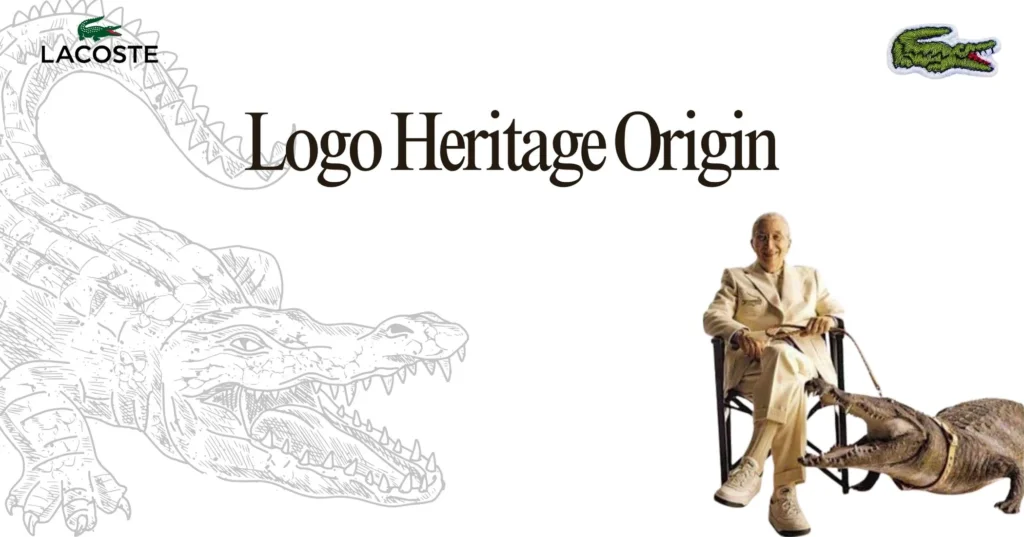
Every iconic logo has an origin story. Few are as strange, or as accidental, as this one.
How René Lacoste Earned the Crocodile Nickname
In August 1923, a 19-year-old René Lacoste arrived in Boston as part of the French Davis Cup team. Walking with team captain Allan Muhr, he stopped in front of a shop window and admired an expensive crocodile-skin suitcase. Lacoste made a wager on the spot: if he won his upcoming match, Muhr would buy him the bag. He lost. But a Boston journalist covering the match, impressed by how tenaciously Lacoste had fought despite the loss, wrote about the young player’s “crocodile” nickname, and the nickname stuck. Lacoste later said it suited him well, describing his court style as never giving up his prey.
How Robert George Turned the Nickname Into a Logo
The nickname might have faded into tennis trivia if not for Robert George, a friend and stylist who sketched a crocodile design in 1927. Lacoste, by then a genuine tennis star with seven Grand Slam titles to his name, loved the drawing enough to have it embroidered directly onto the blazer he wore walking onto court. That early version was far more detailed than what exists today, rendered with gradient shading and a mouth caught mid-snap, closer to a small illustration than a clean modern emblem.
How the Lacoste Crocodile Became a Fashion Branding Icon
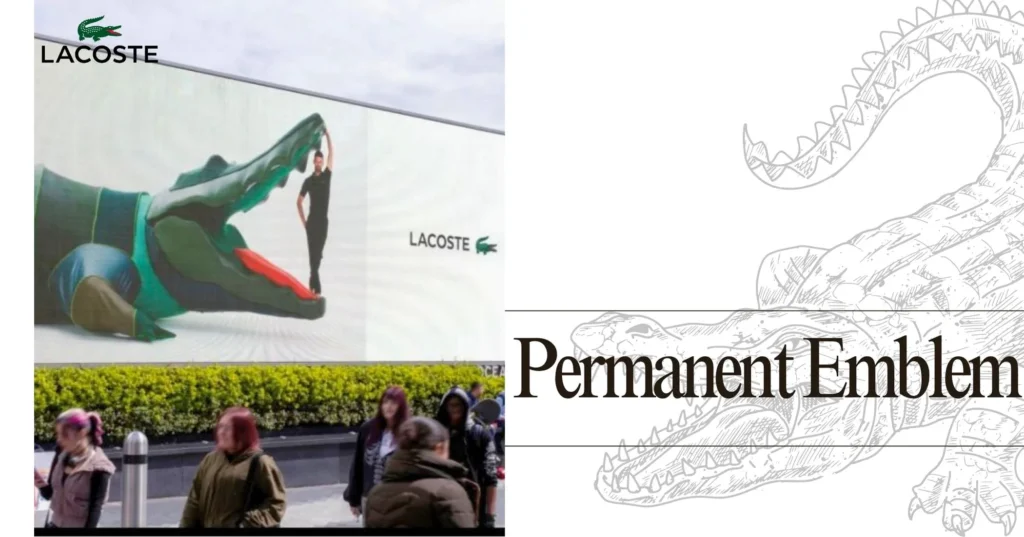
A logo on a blazer is one thing. Getting it onto an actual product line was a different challenge entirely.
Why René Lacoste Put the Crocodile on His Clothing
By the late 1920s, Lacoste had already built a reputation as an obsessive innovator, someone constantly tinkering with equipment and technique to gain any edge on court. Wearing the crocodile fit that same instinct: a visible, personal symbol tied to his identity as a relentless competitor, worn proudly rather than tucked away.
How the Visible Logo Changed Fashion Branding
When Lacoste and businessman André Gillier founded the company in 1933 and released the L.12.12 polo, the crocodile moved from a personal blazer emblem to a permanent fixture stitched onto the chest of a mass-produced shirt. That decision made Lacoste the first brand in fashion history to display its logo externally on a garment, a model virtually every visible brand mark in clothing has followed ever since.
Why the Crocodile Became Central to the Lacoste Brand
Once customers started associating the crocodile with quality and a specific athletic pedigree, the symbol stopped being decorative and became the company’s entire identity. Everything the brand released afterward carried it, turning a tennis champion’s nickname into permanent shorthand for the business itself.
How the Lacoste Polo Shirt Changed Tennis Fashion
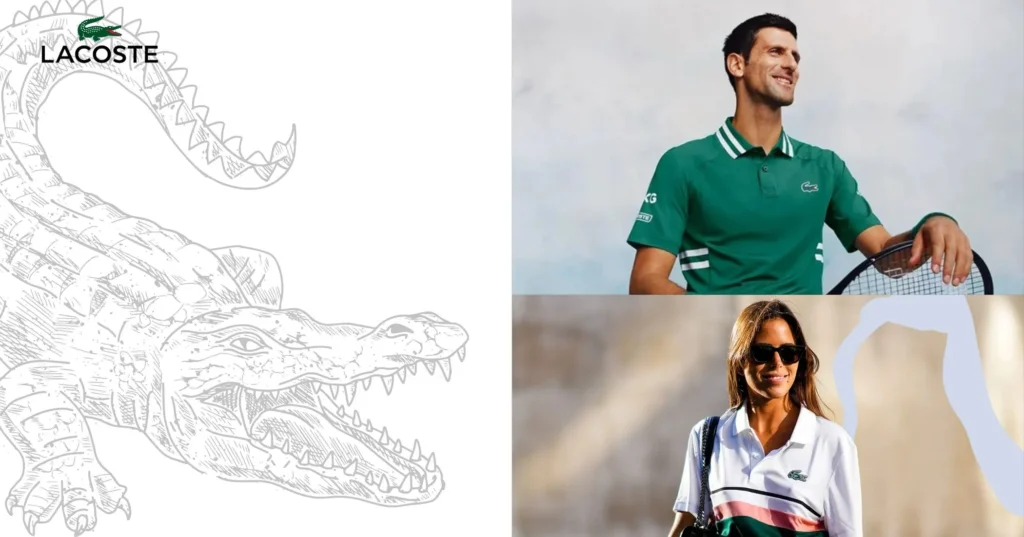
The crocodile got the attention, but the garment underneath it solved a real, practical problem tennis players had been living with for years.
How René Lacoste Changed the Traditional Tennis Shirt
Before 1933, tennis players competed in long-sleeved, heavy woven cotton shirts, hot, restrictive, and poorly suited to fast lateral movement. In 1928, Lacoste had already caused a minor scandal by playing a French championship final in a short-sleeved shirt, breaking with expected dress. That instinct eventually became a full redesign: a soft collar, short sleeves for freer movement, and a knit fabric built specifically to handle sweat and motion better than anything available at the time.
The L.12.12 and Its Petit Piqué Fabric
Working with Gillier, who owned one of France’s largest hosiery manufacturing firms, Lacoste developed a new knit called petit piqué, lightweight, breathable, and textured enough to stay slightly away from the skin during play. The resulting shirt, the L.12.12, got its name from its own development details: L for Lacoste, 1 for petit piqué, 2 for short sleeves, and 12 because it was the twelfth prototype the pair had tested before landing on the final design.
How the Polo Moved From Tennis Courts to Everyday Fashion
What started as competition gear for one sport gradually became something people wore regardless of whether they’d ever picked up a racket. The same qualities that made it useful on court, comfort, breathability, a cleaner silhouette than a dress shirt, made it just as appealing off it. Sustainable fabrics such as organic cotton, hemp, linen, and TENCEL Lyocell can offer similar combinations of breathability, comfort, and everyday wearability.
How Lacoste Became a Symbol of French Sportswear
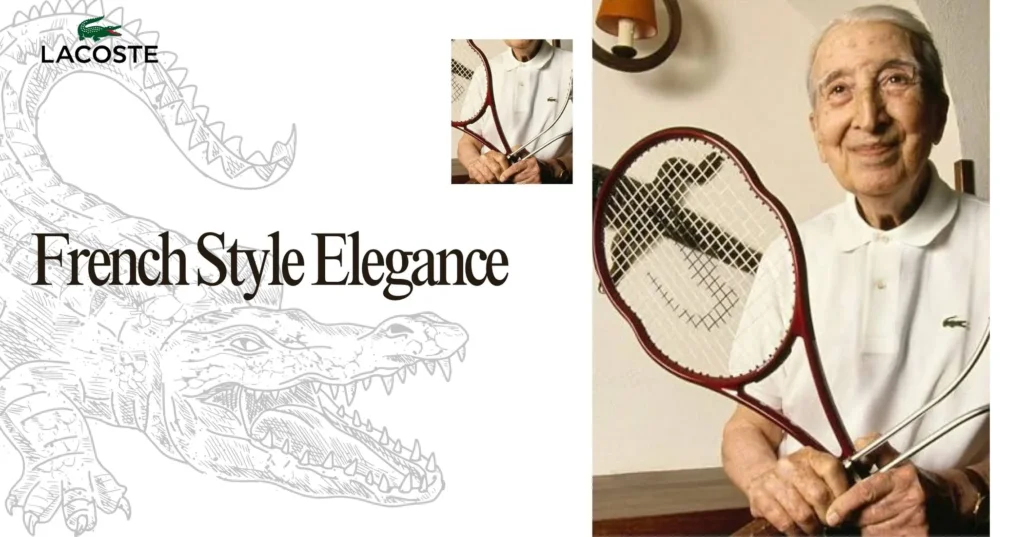
Somewhere between the tennis court and the broader market, the brand’s identity solidified into something distinctly French.
Blending Athletic Function With French Style
Lacoste’s designs never fully abandoned their competitive, performance-driven roots, but they carried an unmistakable French sensibility too: clean lines, restrained color, a certain understated elegance that separated the brand from purely functional sportswear labels emerging elsewhere.
How Tennis Fashion Became Everyday Sportswear
As the polo shirt spread beyond tennis clubs, Lacoste effectively helped define an entirely new category, casual clothing with genuine athletic engineering behind it, rather than clothing that merely looked sporty without any real performance pedigree.
How the Lacoste Crocodile Logo Evolved Over the Years
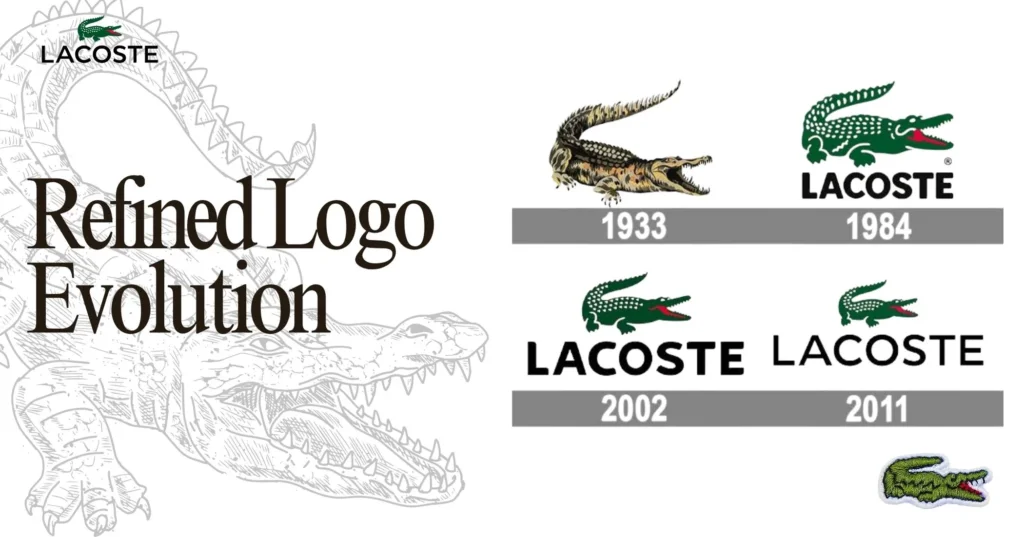
Nearly a century in, the crocodile has changed, but far less dramatically than most brand logos manage.
From the Original Crocodile to Modern Versions
The 1933 version was ornate: gradient shading, a snapping jaw, a texture closer to fine embroidery art than a simple mark. Over the following decades, the design evolution of Lacoste reflected a gradual shift in how the crocodile was presented, with each iteration refining its visual character while keeping the core symbol recognizable.
How Lacoste Kept the Symbol Recognisable Across Generations
That restraint matters more than it might seem. Few fashion brands can claim a logo that’s stayed genuinely recognizable across nine decades of fashion trends, and Lacoste’s willingness to refine rather than reinvent the crocodile is a big part of why it still reads instantly today.
Lacoste Style Beyond the Iconic Polo
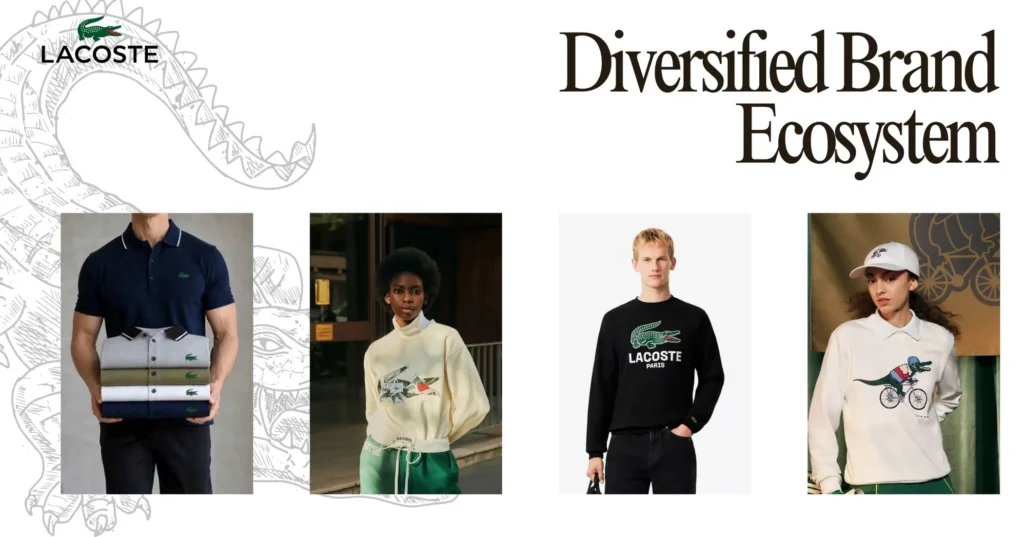
The crocodile eventually crawled well past shirts alone.
Lacoste T-Shirts and Everyday Sportswear
T-shirts, sweaters, and tracksuits extended the same design language into a fuller wardrobe, giving customers a way to wear the brand’s identity across far more casual, everyday situations than tennis courts alone could offer.
Lacoste Shoes and the Expansion of Athletic Fashion
Footwear became another major category, applying the brand’s sporting heritage to sneakers and casual shoes that carried the same crocodile identity onto an entirely different product type.
How the Brand Built a Broader Casual Wardrobe
Accessories, fragrance, and eyewear followed over subsequent decades, turning a single innovative tennis shirt into the foundation of a full lifestyle brand rather than a one-product company riding on nostalgia.
How Lacoste Connected Sportswear With Preppy Fashion
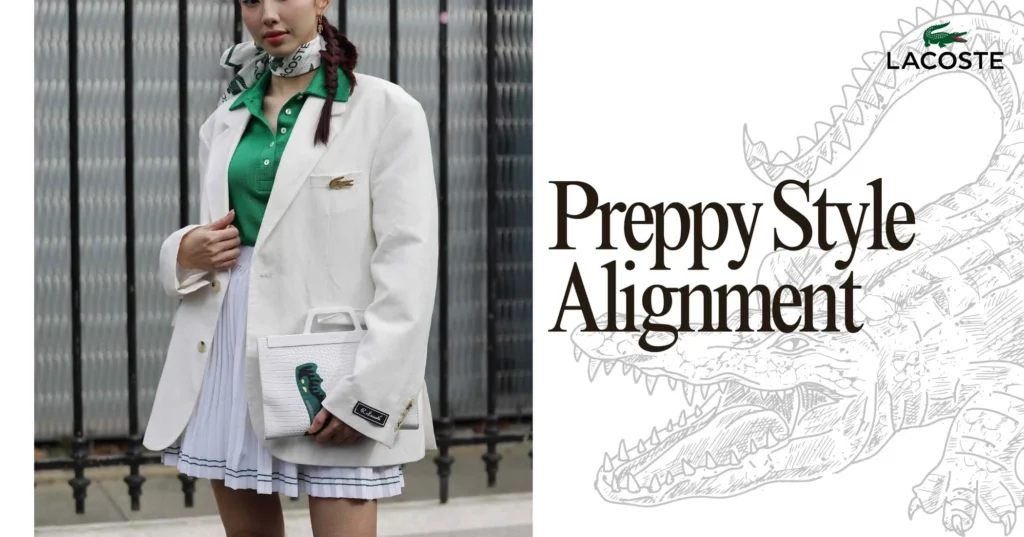
Somewhere along the way, a tennis shirt became a genuine status symbol, worn as much for what it signaled as for how it performed.
From Tennis Clothing to Preppy Style
The polo’s clean collar, structured fit, and understated branding made it a natural fit for the same East Coast, country-club-adjacent aesthetic that came to define preppy style more broadly, athletic without looking like pure activewear.
How the Crocodile Became a Fashion Status Symbol
Because the logo was visible but small, and tied to a genuine sporting legend rather than a manufactured mascot, wearing it read as understated confidence rather than loud branding, exactly the kind of quiet status signal preppy fashion has always valued.
How Lacoste Turned Its Logo Into a Global Brand Identity

A strong logo only matters if it travels well. This one clearly did.
Why the Crocodile Works Across Different Products
Small, simple, and instantly identifiable, the crocodile scales cleanly across shirts, shoes, bags, and fragrance bottles alike, without needing to be resized or redesigned dramatically for each new category the company entered.
How Consistent Branding Helped Lacoste Cross Cultural Boundaries
The company expanded into the US market in 1952 and kept building internationally from there, at one point partnering with American company Izod, which led to years of confusion among US shoppers who called it an “alligator shirt” instead. Despite that mix-up, the crocodile’s consistency helped the brand travel across dramatically different markets without losing its core identity.
Lacoste and the Evolution of Modern Fashion
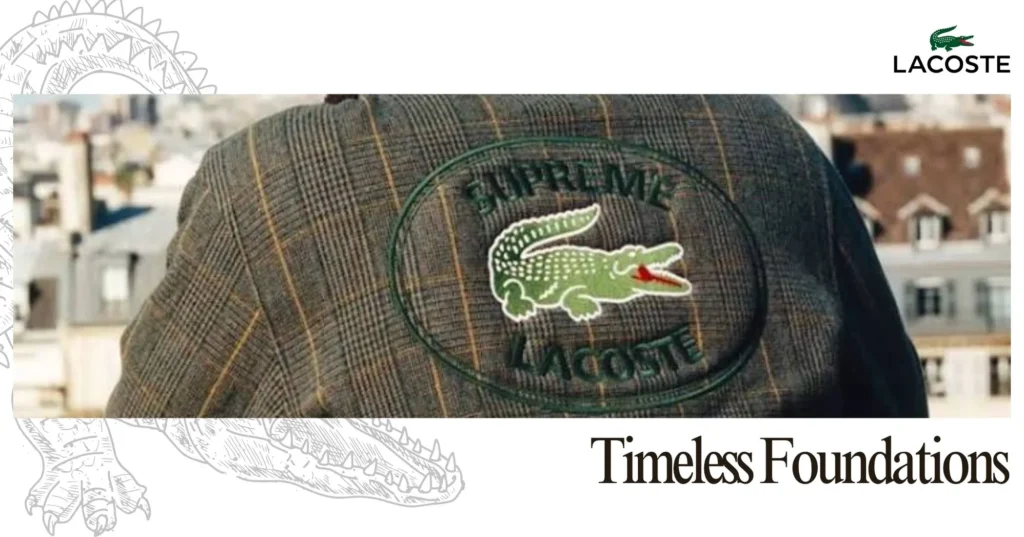
Nearly a century after that Boston bet, the brand still leans on the same foundational story.
How Lacoste Combined Heritage With Contemporary Style
Modern collections continue referencing the original L.12.12 construction and petit piqué fabric, even as cuts, colorways, and marketing have adapted considerably to contemporary tastes.
Why Lacoste Remains Relevant Across Generations
Swiss group Maus Frères took full ownership in 1981 and pushed the brand into wider international retail, and by the early 2010s, Lacoste operated in roughly 110 countries. That scale, built on a design that’s barely changed since 1933, says something about how well the original idea has held up.
The Bottom Line: How Lacoste Made the Crocodile a Fashion Icon
A lost bet, a journalist’s nickname, and a friend’s sketch turned into the first logo ever displayed on the outside of a piece of clothing, a decision that quietly reshaped fashion aesthetic and how fashion branding works to this day. René Lacoste didn’t set out to build a global company. He set out to fix a shirt that didn’t work well for tennis. The crocodile just happened to come along for the ride, and it never really left.
FAQs
Why does Lacoste have a crocodile logo?
The name traces back to a 1923 bet René Lacoste lost over a crocodile-skin suitcase, after which American journalists nicknamed him “the Crocodile” for his tenacity on court.
Who designed the Lacoste crocodile logo?
Robert George, a friend and stylist, sketched the original crocodile design in 1927, which Lacoste had embroidered onto his tennis blazer.
When did Lacoste start using the crocodile logo?
The crocodile first appeared on clothing in 1933, embroidered onto the chest of the newly released L.12.12 polo shirt.
Why is the Lacoste polo shirt famous?
It was designed specifically to solve tennis players’ problems with heavy, restrictive traditional shirts, using short sleeves and a new breathable petit piqué fabric.
What does the Lacoste crocodile represent?
It represents René Lacoste’s own tenacious playing style, a nickname earned from American sportswriters that he later turned into a permanent brand symbol.
Is Lacoste a French fashion brand?
Yes, founded in France in 1933 by René Lacoste and André Gillier, and still closely associated with French sportswear heritage today.
When was the Lacoste polo shirt created?
The L.12.12 polo launched in 1933, following Lacoste’s earlier experiments with short-sleeved shirts at tournaments as far back as 1928.
What makes Lacoste different from other sportswear brands?
Its logo was the first ever displayed on the outside of a garment, and the crocodile has stayed visually consistent, with only minor refinements, for nearly a century.
The name traces back to a 1923 bet René Lacoste lost over a crocodile-skin suitcase, after which American journalists nicknamed him “the Crocodile” for his tenacity on court.
Robert George, a friend and stylist, sketched the original crocodile design in 1927, which Lacoste had embroidered onto his tennis blazer.
The crocodile first appeared on clothing in 1933, embroidered onto the chest of the newly released L.12.12 polo shirt.
It was designed specifically to solve tennis players’ problems with heavy, restrictive traditional shirts, using short sleeves and a new breathable petit piqué fabric.
It represents René Lacoste’s own tenacious playing style, a nickname earned from American sportswriters that he later turned into a permanent brand symbol.
Yes, founded in France in 1933 by René Lacoste and André Gillier, and still closely associated with French sportswear heritage today.
The L.12.12 polo launched in 1933, following Lacoste’s earlier experiments with short-sleeved shirts at tournaments as far back as 1928.
Its logo was the first ever displayed on the outside of a garment, and the crocodile has stayed visually consistent, with only minor refinements, for nearly a century.
Tags:

Chirag Pariyani
AI Engineer, NineE
Chirag is part of the engineering team at NineE, working on the technology that powers the product —...
Read More
Get Latest Fashion Insights, Before Everyone Else.