Updated on Oct 4, 2026
The History of Global Fashion Powerhouse Armani
Brand StoriesSmit Rangras13 Mins reading time
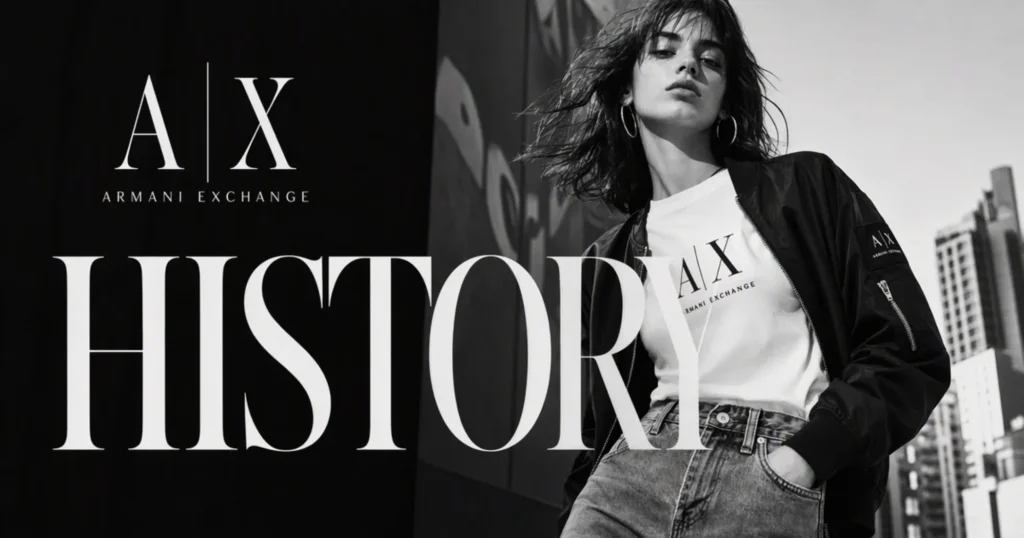
Armani built its name on quiet, refined tailoring. Then, in 1991, the house did something unexpected: it launched Armani Exchange, a label made for a younger, louder, street-influenced crowd. Inspired by dance music and city style from Milan to Tokyo, A|X turned designer polish into everyday youth fashion. This guide traces how it began, how its clothing and accessories evolved, and why it still speaks to Gen Z today.
TL;DR
- Giorgio Armani launched A|X Armani Exchange as a more accessible, street-inspired brand.
- The first A|X store opened in September 1991 in New York’s SoHo neighbourhood.
- The brand drew inspiration from street style and dance music scenes in Milan, New York, London, and Tokyo.
- It later expanded into denim, accessories, watches, and women’s fashion.
- The brand kept prices lower than the main Giorgio Armani and Emporio Armani labels.
- Giorgio Armani took full ownership of the brand.
- Armani Jeans became part of it, bringing the two brands together.
The Origins of Armani Exchange and Its Place Within Armani
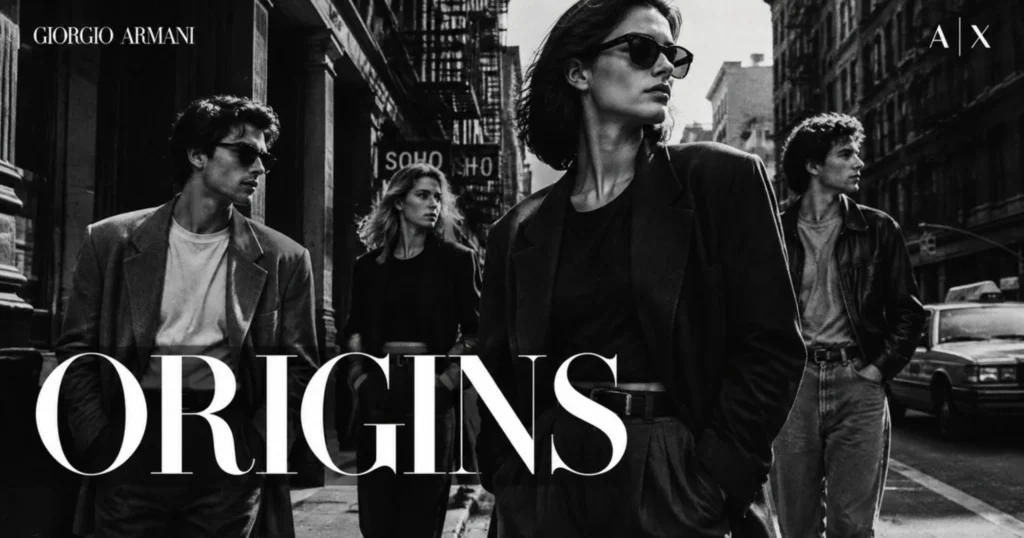
Every major fashion house eventually faces the same question: how do you reach a younger audience without diluting what made the original brand special?
How Armani Exchange Was Created in 1991
Armani entered a manufacturing and distribution license with Simint in 1991, the same year A|X Armani Exchange launched. The first store opened that September in the SoHo district of Manhattan, a location that still stands as the brand’s flagship today. Choosing SoHo wasn’t incidental either. The neighbourhood had already become a meeting point for art, music, and emerging street fashion in the early 1990s. As a result, it attracted the exact crowd the new label wanted to reach first.
Why Giorgio Armani Wanted a More Accessible Youth-Oriented Brand
The main Armani designer lines, Giorgio Armani and Emporio Armani, showed at Milan Fashion Week and carried price points that put them out of reach for a lot of younger shoppers. This filled that gap deliberately, offering a more accessible entry point into the label’s design language without asking people to spend luxury-tier prices on their first purchase.
This kind of move wasn’t unique to Armani specifically. Several major fashion houses around the same era began experimenting with lower-priced diffusion lines, a way to build brand loyalty early with shoppers who might graduate to the main collections later in life.
How Armani Exchange Developed a Different Armani Identity
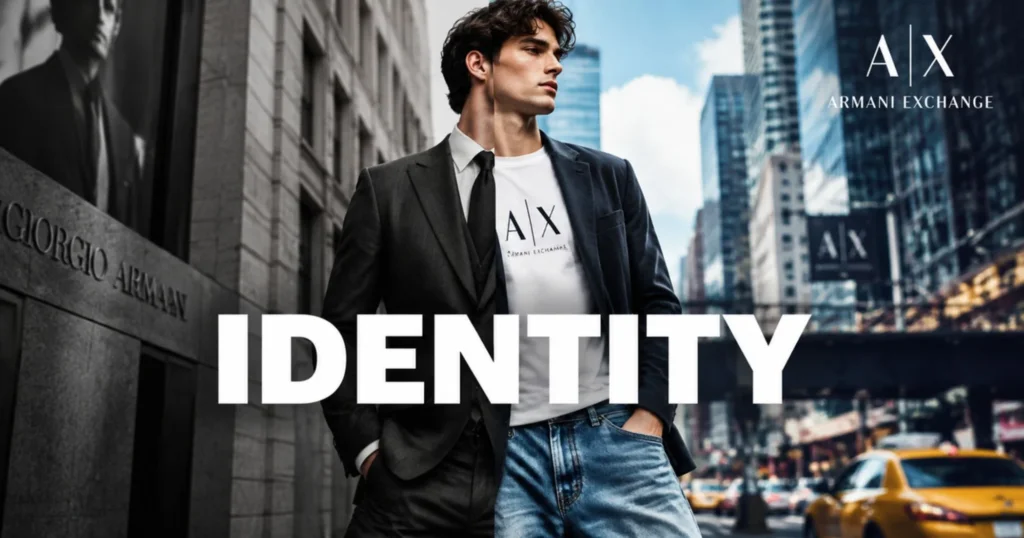
It didn’t just cost less. It looked and felt like a genuinely different brand, built around a different set of references entirely.
Moving From Traditional Armani Design to Youth Fashion
Where the main house leaned on quiet, restrained tailoring, A|X translated that same aesthetic sensibility into something more immediate and direct. According to the brand’s own history page, Armani Exchange interprets a more urban, dynamic, and contemporary style, oriented toward everyday lifestyle rather than formal wear.
How Urban Culture Influenced Armani Exchange Clothing
The name itself carries meaning. The name “Exchange” reflected cultural exchange and the way fashion, music, and street culture influenced one another. It also showed the brand’s openness to global influences. The brand drew inspiration specifically from the laid-back street style Armani observed across his favorite cities, Milan, New York, London, and Tokyo.
That global reference point shows up in how the brand still talks about itself today. Rather than tying its identity to one specific city or scene, A|X positions itself as something that moves easily between different urban contexts, which is part of why the label has traveled so well internationally over the decades.
How Armani Exchange Connected Fashion With Youth Culture
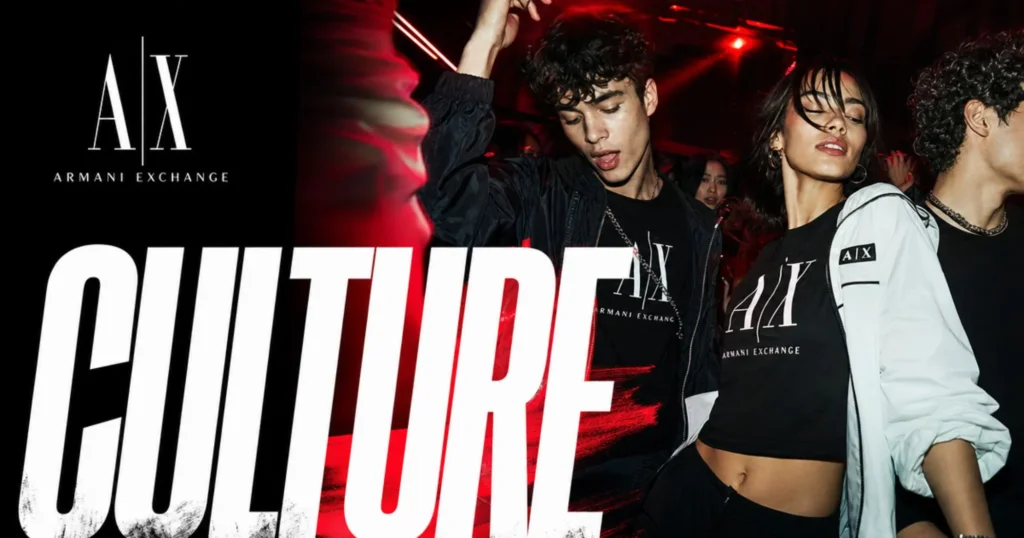
Unlike a lot of designer diffusion lines, A|X leaned directly into nightlife and music culture from the start.
The Influence of Music, Nightlife, and Urban Style
The brand has been described as inspired by street fashion and dance music specifically, and it built a reputation for occasionally provocative advertising campaigns that stood apart from the more restrained marketing associated with the main Armani house.
How the Brand Reached Younger Fashion Consumers
That willingness to court controversy and lean into nightlife imagery helped A|X build genuine cultural relevance with younger shoppers, people who wanted the Armani name but wanted it delivered in a louder, more accessible package. Where the main house sold restraint, it sold energy, and that distinction mattered a lot to a generation that didn’t necessarily want to dress like their parents.
Armani Exchange Clothing and Its Signature Style
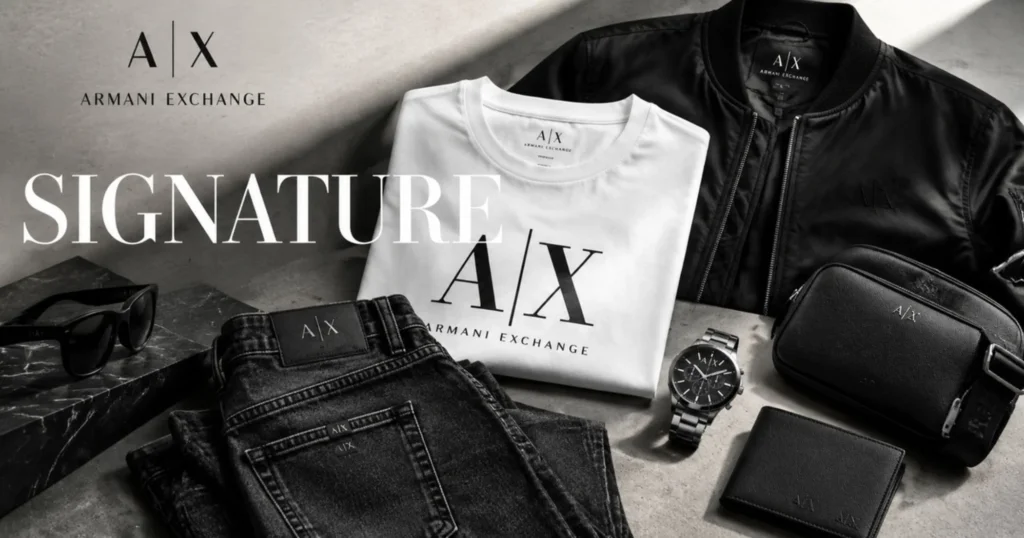
The Armani Exchange clothing lineup covers everyday essentials built around a consistently modern, relaxed fit.
Armani Exchange Shirts and Everyday Essentials
Armani Exchange shirts anchor the brand’s wardrobe staples, offering quality fabrics and clean construction at a price point well below the main Armani lines. Understanding fabric composition can also help explain how different materials affect the feel and construction of everyday clothing.
T-shirts, in particular, often carry the brand’s distinctive A|X logo prominently across the chest, a detail that made the brand instantly recognizable in a crowd long before social media turned logo-spotting into its own casual sport.
Armani Exchange Jackets and Casual Layering
The jackets extend that same relaxed, contemporary approach into outerwear, giving shoppers a layering option that still carries the brand’s recognizable design language without the formality of a traditional Armani coat. Bomber-style jackets and structured casual blazers have both shown up regularly across the brand’s collections, giving shoppers something between streetwear and tailoring.
Armani Jeans and Modern Denim Styles
Armani jeans originally existed as a separate label within the wider Armani group. In 2017, following a broader reduction in the number of fashion lines the house maintained, Armani Jeans folded directly into A/X, consolidating denim under the youth-focused label rather than keeping it as a standalone line. That consolidation made practical sense too, since the two labels already targeted overlapping, style-conscious younger customers.
Armani Exchange Women and the Growth of Youth Fashion
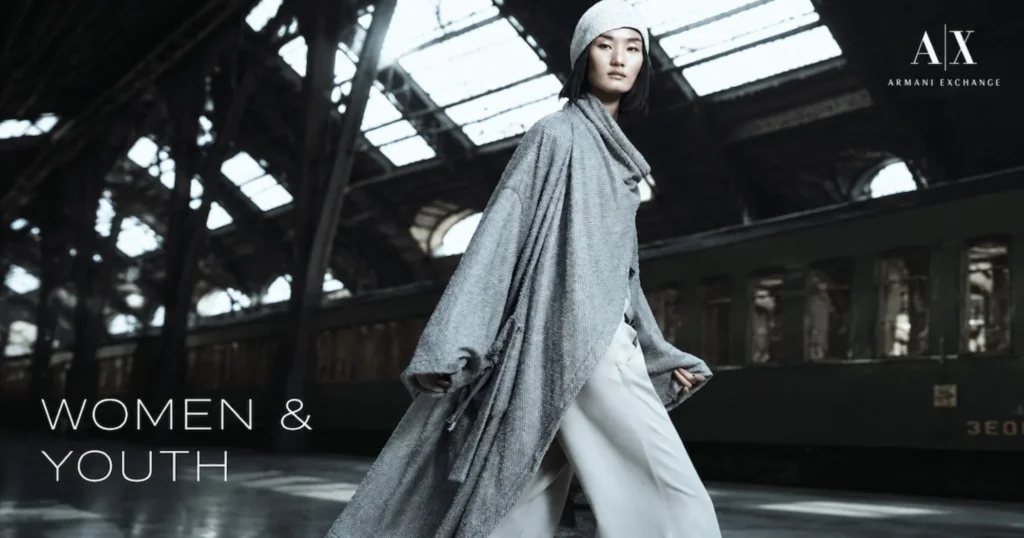
The brand built out a full womenswear offering alongside its menswear collections from early on.
How A|X Women’s Collections Evolved
Armani exchange women’s collections explore versatile silhouettes that combine practicality with femininity, according to the brand’s own description of its design approach, giving the line a distinct identity separate from menswear rather than treating it as an afterthought.
Creating Outfits for Modern Young Adults
The goal across both men’s and women’s lines has stayed consistent: clean lines, contemporary cuts, and a construction that prioritizes comfort and versatility, pieces built to move easily between different contexts and cities rather than serving one narrow occasion. A A|X outfits built around a fitted tee, straight denim, and a structured jacket can shift from daytime to evening without much extra thought, which is really the point of the whole collection.
Armani Exchange Accessories and Lifestyle Fashion
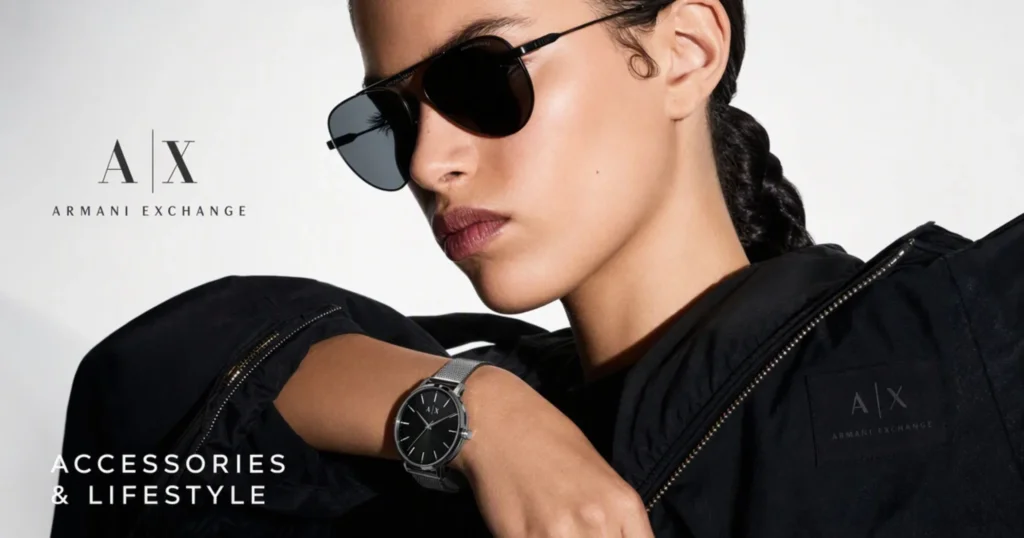
Clothing was only ever part of the picture. Armani Exchange grew into a genuine lifestyle brand over time.
Armani Exchange Sunglasses and Statement Accessories
The brand’s sunglasses range became one of the brand’s most visible accessory categories. Its bold, logo-forward designs reflect the style seen across the clothing line. These accessories also give shoppers an easy way to enjoy the brand without committing to a full outfit. Sunglasses also travel well across seasons and climates, which made them a natural entry point for shoppers outside the brand’s original American and European markets.
Armani Exchange Watches and the Expansion Into Lifestyle Products
The brand expanded into armani exchange watches starting in 2008, blending modern design with the brand’s signature aesthetic. The first Armani Exchange retail store had already opened in New York back in 1997, well before the watch expansion, giving the brand a physical retail presence that helped support this move into accessories and lifestyle products more broadly.
How Armani Exchange Made Designer Fashion More Accessible
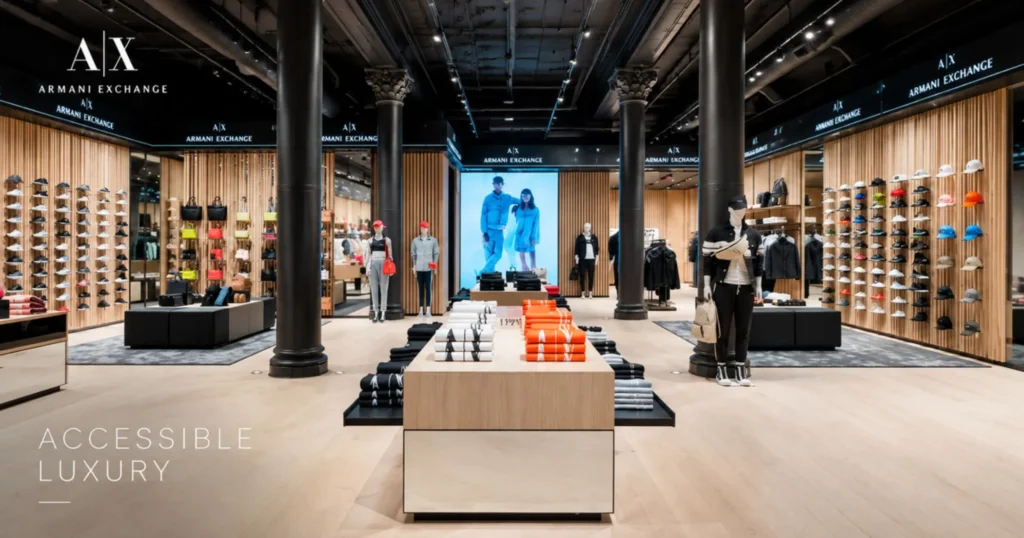
Positioning it correctly within the wider Armani group meant drawing a clear line between it and the house’s more expensive lines.
Connecting Armani Heritage With a Younger Price Point
A|X remains the most affordable label within the Giorgio Armani group, sitting below both Giorgio Armani and Emporio Armani on price while still carrying the same underlying fashion aesthetic that built the house’s reputation in the first place.
The Difference Between Armani Exchange and Armani Designer Collections
Emporio Armani sits in the middle of the three main lines, positioned between the luxury aesthetic of Giorgio Armani and the more accessible A|X. Understanding this three-tier structure helps explain why A|X can carry the Armani name while feeling so different in price and attitude from the main runway collections. A shopper moving from Armani Exchange into Emporio Armani, and eventually into the Giorgio Armani main line, is essentially following the exact path the house built the pricing structure to encourage.
Armani Exchange and the Evolution of Youth Streetwear
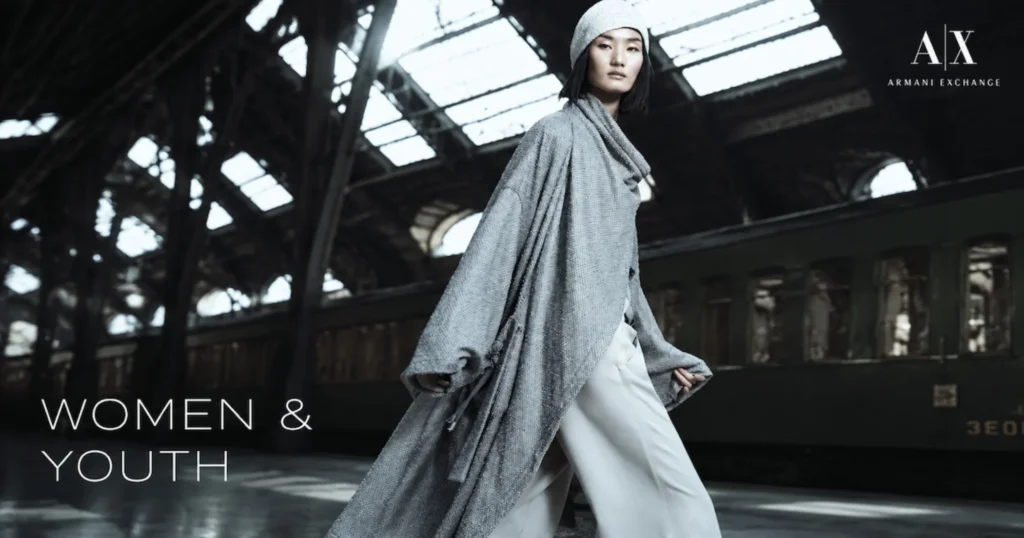
As youth streetwear grew into a genuine global fashion category, Armani Exchange sat in an interesting position, a designer label that had built its identity on urban culture from day one.
Blending Casual Clothing With Fashion-Led Design
The brand’s approach, wardrobe staples elevated through quality fabric and a distinctive logo, mirrored a lot of what streetwear culture more broadly was doing at the same time, treating casual pieces as genuine fashion statements rather than afterthoughts.
How Youth Fashion Trends Shaped the Brand
As youth fashion trends shifted over the decades, from 1990s nightlife influence toward today’s more digitally driven style conversations, A|X adapted its marketing and product mix while keeping its core identity, accessible, urban, unmistakably Armani, intact. That consistency is worth noting, since a lot of similar diffusion lines from other houses either faded out entirely or drifted so far from their parent brand that the connection stopped mattering to shoppers.
How Armani Exchange Reached New Generations
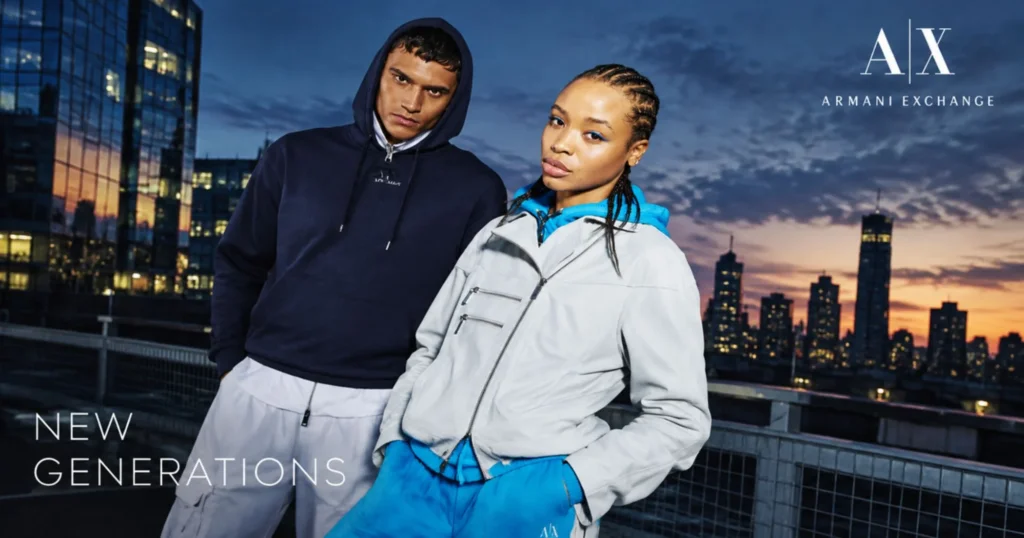
Ownership changes throughout the 2000s and 2010s gave Armani Exchange more room to grow on its own terms.
From Young Adults to Today’s Gen Z Fashion Consumers
Giorgio Armani co-established the joint venture Presidio Holdings in 2005 to accelerate the brand’s development, initially holding a 25 percent stake. He acquired an additional 25 percent in 2008, then took full ownership in 2014, giving the house complete control over how the brand positioned itself for gen z fashion consumers and beyond.
How Digital Culture Changed Armani Exchange Fashion
That full ownership arrived just as digital and social platforms were reshaping how younger consumers discovered and shopped fashion brands, giving it a more direct relationship with its audience than the brand had in its earlier decades of joint-venture management. Gen z clothing habits lean heavily on discovery through short-form video and social feeds rather than print advertising, and a brand built around bold, logo-forward pieces translates naturally into that kind of visual, fast-scrolling environment.
Building an Outfit Around Armani Exchange Today
For shoppers new to the brand, a simple starting point works best before branching into bolder pieces. A fitted Armani Exchange tee, a pair of straight-leg jeans, and clean sneakers cover most casual days without much extra thought. Add an Armani Exchange jacket for cooler weather, or swap in a pair of sunglasses to finish a simple outfit with a bit more polish.
For a dressier direction, pairing a structured shirt with tailored trousers and a watch pushes the same wardrobe toward something closer to smart casual, proof that the brand’s range covers more ground than its youth-focused reputation might suggest at first glance.
The Bottom Line: How Armani Exchange Built a Youth Fashion Identity
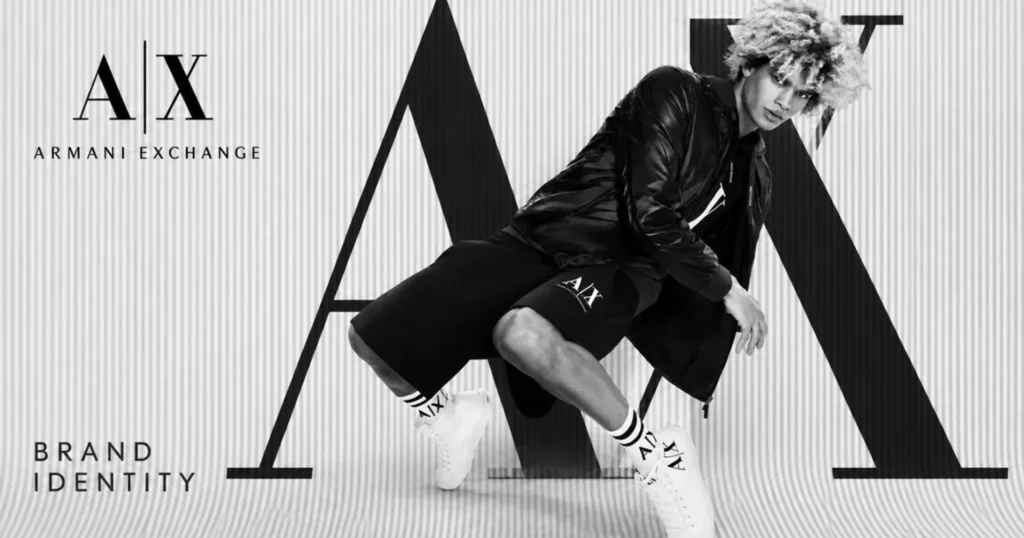
Armani Exchange proved something a lot of legacy fashion houses have struggled with since: that a design philosophy built on restraint and quality could translate into something louder, more urban, and genuinely youth-focused without losing what made the original name matter. More than three decades after that first SoHo store opened, the label still carries that same balance, Armani’s design DNA, filtered through street culture and built for a generation that wanted both at once.
FAQs
What is Armani Exchange known for?
Armani Exchange is famous for accessible, urban-inspired fashion that translates Giorgio Armani’s design sensibility into everyday, youth-focused clothing and accessories.
When was Armani Exchange founded?
A|X launched in 1991, with its first flagship store opening that September in New York’s SoHo district.
Is Armani Exchange part of Armani?
Yes. It is often written as A|X, is one of three main lines within the Giorgio Armani group, alongside Giorgio Armani and Emporio Armani.
What is the difference between Armani and Armani Exchange?
Giorgio Armani represents the house’s luxury runway collections, while A|X is the most accessible, youth-oriented line, priced lower and styled around urban, street-inspired design.
What does Armani Exchange sell?
The brand sells clothing, denim, jackets, accessories, sunglasses, watches, and lifestyle products for both men and women.
Is Armani Exchange considered a youth fashion brand?
Yes, it specifically appealed to a younger, style-conscious, metropolitan audience distinct from the house’s traditional luxury customer base.
Who is Armani Exchange designed for?
The brand targets a connected, trend-aware younger generation drawn to global urban culture, music, and street style, alongside Armani’s design heritage.
Armani Exchange is famous for accessible, urban-inspired fashion that translates Giorgio Armani’s design sensibility into everyday, youth-focused clothing and accessories.
A|X launched in 1991, with its first flagship store opening that September in New York’s SoHo district.
Yes. It is often written as A|X, is one of three main lines within the Giorgio Armani group, alongside Giorgio Armani and Emporio Armani.
Giorgio Armani represents the house’s luxury runway collections, while A|X is the most accessible, youth-oriented line, priced lower and styled around urban, street-inspired design.
The brand sells clothing, denim, jackets, accessories, sunglasses, watches, and lifestyle products for both men and women.
Yes, it specifically appealed to a younger, style-conscious, metropolitan audience distinct from the house’s traditional luxury customer base.
The brand targets a connected, trend-aware younger generation drawn to global urban culture, music, and street style, alongside Armani’s design heritage.
Tags:

Smit Rangras
Product Associate, NineE
Smit works on the product team at NineE, helping shape how the platform is built and how it serves t...
Read More
Get Latest Fashion Insights, Before Everyone Else.