Updated on Oct 4, 2026
Adidas: From Athletic Shoes to a Global Fashion Powerhouse
Brand StoriesChirag Pariyani13 Mins reading time
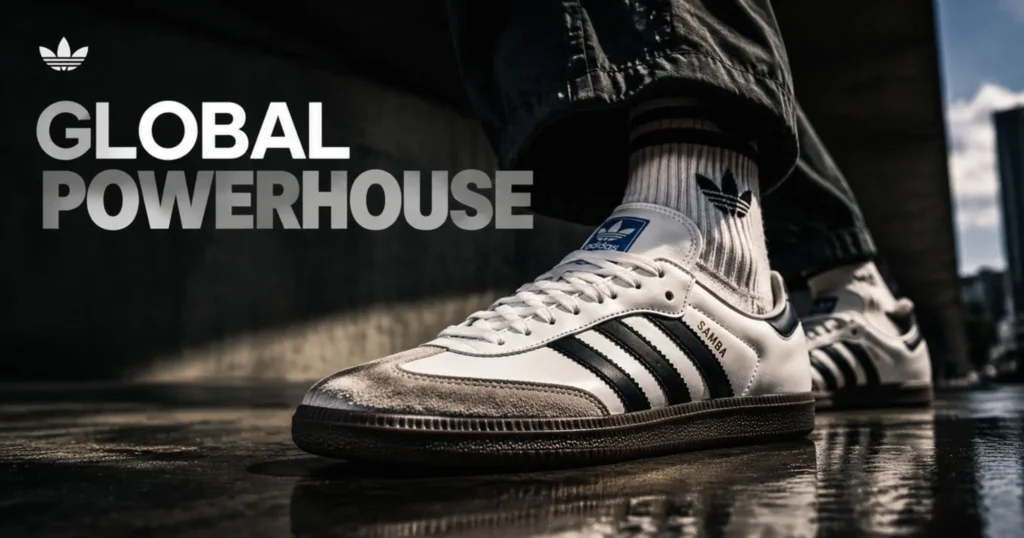
Adidas began in a tiny German workshop, not a boardroom. The company grew from the work of a shoemaker’s son who focused on athletes’ needs. Nearly a century later, the name appears on football boots, tracksuits, and sneakers. People now wear Adidas shoes far beyond football pitches and running tracks. Here’s the full arc of how it got there.
TL;DR – How Adidas Grew From Sports Shoes to Global Fashion
- Adolf “Adi” Dassler started making shoes for local athletes in Herzogenaurach, Germany, in 1924. He worked with his brother Rudolf under the name Gebrüder Dassler Schuhfabrik.
- A bitter falling-out between the brothers split the company in the late 1940s. Adi registered his own business on August 18, 1949, and Rudolf went on to found Puma.
- West Germany won the 1954 World Cup wearing Dassler’s screw-in studded boots. The victory quickly raised the brand’s international profile.
- The tracksuit joined the product range in 1967, marking the company’s real move from footwear alone into full apparel.
- Run-D.M.C.’s 1986 song “My Adidas” helped turn the Superstar into a hip-hop symbol and strengthened its link with streetwear.
- Collaborations with Kanye West, Pharrell Williams, and Stella McCartney have helped Adidas stay connected to modern sneaker and fashion culture.
The Origins of Adidas in Herzogenaurach, Germany
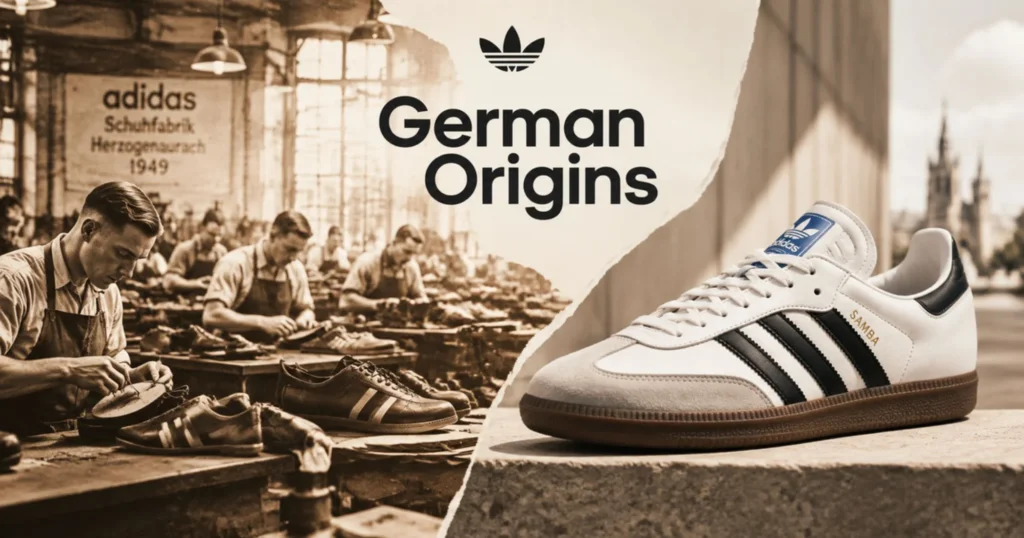
Every huge brand starts somewhere small. This one started in a converted laundry room.
How Adolf Dassler Started Making Shoes for Athletes
Adolf Dassler was born in 1900 in Herzogenaurach, a small Bavarian town with a long shoemaking tradition. After the First World War, he began making shoes by hand in his mother’s washroom. He tested designs on local runners and improved them based on their feedback. He focused on what helped athletes, rather than what looked good on paper. This hands-on approach stayed with him throughout his career.
How the Dassler Brothers Built Their First Sports Shoe Company
In 1924, his older brother Rudolf joined him, and together they registered Gebrüder Dassler Schuhfabrik, the Dassler Brothers Shoe Factory. The business grew steadily over the next two decades. By the years before the Second World War, the brothers reportedly sold around 200,000 pairs yearly. Their success also included a dark chapter. Both brothers were Nazi Party members. During the war, their factory produced anti-tank weapons instead of athletic shoes. Adidas acknowledges this documented part of its history today.
How Adi Dassler Founded the Adidas Brand
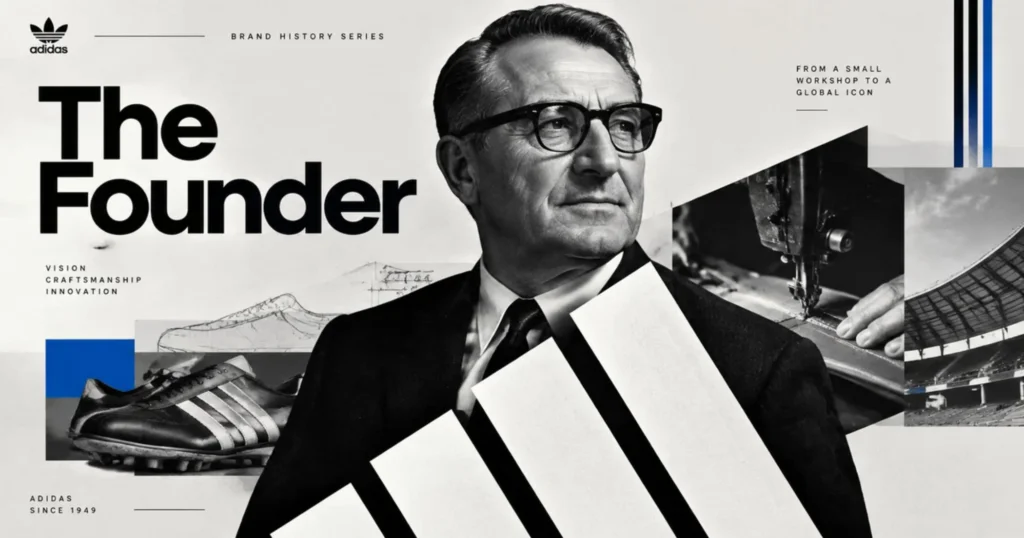
Partnership and family don’t always survive a business. This one didn’t.
Why Adi Dassler Started a New Company in 1949
After the war, tension between the brothers finally ended their partnership. Some disagreements were personal, while others came from wartime disputes. Rudolf left and started his own company, which became Puma. Adi registered “Adolf Dassler adidas Sportschuhfabrik” on August 18, 1949. The new company began with just 47 employees. The name itself is simple once you know it: Adi, plus Das from Dassler.
How the Three Stripes Became the Adidas Brand Symbol
That same year, Adi registered a shoe featuring three stripes along the side. He reportedly acquired the design rights from Finnish company Karhu Sports. The deal reportedly involved a small sum and a couple of whiskey bottles. The stripes began as a practical way to strengthen shoes. They later became Adidas’ most recognisable brand symbol.
How Adidas Built Its Reputation Through Sports Innovation

A logo means nothing without a product behind it. Adi Dassler kept his focus squarely on that product.
Adidas Sports Shoes and the Growth of Athletic Footwear
Dassler treated every shoe as a problem to solve for a specific athlete rather than a generic item to mass-produce. Interchangeable spikes, better traction, lighter materials, these weren’t marketing gimmicks. They came out of actual conversations with runners, footballers, and other competitors who told him exactly what wasn’t working.
How Football Boots Helped Adidas Reach Global Audiences
Adidas football boots became the company’s real breakthrough category. Dassler developed screw-in studs that let players swap cleats depending on field conditions, wet grass, hard ground, whatever the day called for, instead of being stuck with one fixed sole. That single innovation would soon put the brand in front of a global audience in the most dramatic way possible.
How Adidas Expanded From Sports Shoes Into Apparel

Shoes built the company’s name. Clothing is what eventually turned it into a full sportswear business.
The Launch of the Adidas Tracksuit in 1967
In 1967, the product range expanded to include apparel and balls for the first time, with the tracksuit becoming an early and lasting staple. That move mattered more than it might look on paper, since it shifted the company from a footwear specialist into a brand capable of dressing an athlete head to toe.
How Adidas Clothing Connected Sport With Everyday Fashion
Once tracksuits existed, they didn’t stay confined to warm-ups and training sessions for long. Comfortable, recognizable, and durable, they crossed over into everyday wardrobes, becoming part of the wardrobe essentials people relied on for casual dressing, well before “athleisure” was ever a marketing term anyone used.
How Adidas Became a Major Football Brand

Sometimes a single sporting moment changes everything for a company. This was that moment.
The 1954 World Cup and the Rise of Adidas Shoes
At the 1954 World Cup in Switzerland, the West German team wore Dassler’s screw-in studded boots and pulled off a stunning upset over the heavily favored Hungarian side, a result still remembered in Germany as the “Miracle of Bern.” Because the tournament was among the first widely followed on television and radio, the win handed the brand an enormous, almost accidental burst of international attention.
How Adidas Became Linked With Football Around the World
From that tournament onward, the association between the three stripes and football only deepened, through World Cup sponsorships, official match balls like the Telstar in 1970, and decades of boot deals with some of the sport’s biggest stars. Football essentially became the brand’s home turf, the sport it’s still most associated with globally.
How Adidas Entered Fashion and Streetwear Culture

Somewhere between the football pitch and the hip-hop stage, this brand crossed into an entirely different cultural lane.
How Adidas Superstar Moved From Basketball to Streetwear
The adidas Originals Superstar shoe launched as a low-top basketball shoe, known for its shell-toe design and herringbone outsole. Hip-hop culture picked it up well outside any gym or court, and rap group Run-D.M.C. started wearing the sneakers, without laces, as part of their own street-inspired style rather than typical performance stage outfits.
Run-DMC and the Growth of Adidas Streetwear
Their 1986 single “My Adidas” turned that personal habit into a cultural statement, and the brand responded with a reported $1.6 million endorsement deal, the first million-dollar sneaker partnership in hip-hop history. It set a template that later carried through to deals with Kanye West, Pharrell Williams, and plenty of others, proving athletic sneakers could sell just as well through music and street culture as through sport itself.
How Adidas Built Its Iconic Sneaker Portfolio

Superstar wasn’t the only shoe carrying the brand’s identity into fashion.
Adidas Stan Smith and the Rise of Lifestyle Sneakers
Adidas Stan Smith, originally launched in 1965 as a tennis shoe named after French player Robert Haillet, the shoe was renamed after American tennis star Stan Smith in 1978. It’s gone on to sell more than 100 million pairs, evolving from performance tennis gear into one of the most recognizable minimalist sneakers in fashion, well outside any tennis court.
Adidas Samba, Campus, and the Growth of Sneaker Culture
Adidas Samba and Adidas Campus followed similar paths, moving from their original training and casual-wear roots into genuine wardrobe staples decades later. Both shoes now cycle in and out of mainstream fashion trends regularly, proof that a well-designed sneaker rarely fully disappears, it just waits for its next moment.
How Adidas Used Collaboration to Shape Modern Fashion

At some point, the company realized outside creative partners could push its designs somewhere it couldn’t reach alone.
Working With Musicians, Designers, and Creative Partners
Beyond Run-D.M.C., collaborations expanded to include high-fashion designers like Yohji Yamamoto, whose Y-3 line blended performance materials with runway design, alongside partnerships with Stella McCartney, Rick Owens, and streetwear labels like A Bathing Ape and Palace Skateboards.
How Collaborations Expanded Adidas Fashion
The Kanye West Yeezy partnership, launched in 2015, became one of the most commercially significant sneaker collaborations ever, reportedly generating around $2 billion in annual revenue at its peak before the partnership ended in 2022. Pharrell Williams has maintained a long-running creative relationship too, producing collections tied to Superstar and Stan Smith anniversaries.
How Adidas Expanded Its Sportswear and Lifestyle Range

Football and sneakers built the brand’s reputation. Everything else kept it relevant across nearly every sport imaginable.
Adidas Running Shoes, Golf Shoes, and Performance Apparel
Adidas golf shoes, running shoes, and Adidas clothing apparel expanded the brand’s sports range. These products helped Adidas compete across sports beyond its football roots. The wider range also helped the brand meet athletes’ changing needs.
Adidas Hoodies, Track Pants, Leggings, and Everyday Clothing
Hoodies, track pants, and leggings extended the same design language into daily wardrobes, giving customers a reason to wear the three stripes on days that had nothing to do with training or competition at all.
How Adidas Connected Sportswear With Global Fashion
Decades of expansion eventually blurred the line between athletic gear and everyday style almost completely.
From Athletic Wear to Sportswear Fashion
What began as functional training gear gradually became a genuine fashion category of its own, sportswear fashion, worn as much for its look as for its original performance purpose.
How Adidas Became Part of Modern Streetwear Culture
Between hip-hop’s early embrace of the Superstar and decades of designer collaborations since, the brand carved out a permanent seat in streetwear culture, one that shows no real sign of fading even as trends shift around it.
The Bottom Line: How Adidas Built a Global Sports and Fashion Brand
From a converted wash room in a small Bavarian town to a name recognized on nearly every continent, this brand’s story really comes down to one habit that never changed: paying close attention to what athletes actually needed, then building around it. The screw-in stud, the tracksuit, the Superstar, the Yeezy line, each one grew out of that same instinct applied to a new decade. A shoemaker’s son who once tested designs on local runners ended up building a company that shaped how football, sneakers, and streetwear all look today.
FAQs
When was Adidas founded?
The company traces back to 1924 as Gebrüder Dassler Schuhfabrik, and was formally registered under the Adidas name on August 18, 1949.
Who founded Adidas?
Adolf “Adi” Dassler founded it, after splitting from his brother Rudolf, who went on to found Puma.
Where did Adidas start?
It started in Herzogenaurach, Germany, a small Bavarian town where the company still keeps its headquarters today.
What is Adidas known for?
Football boots, the three-stripe logo, and sneakers like the Superstar, Stan Smith, and Samba, alongside a long history in streetwear and music culture.
What is the history of the Adidas three stripes?
Adi Dassler registered a shoe featuring three stripes in 1949, having acquired the design rights from Finnish company Karhu Sports, and it became the brand’s core visual identity.
Why is Adidas Superstar famous?
Originally a basketball shoe, it became a hip-hop icon after Run-D.M.C.’s 1986 song “My Adidas” and the endorsement deal that followed.
What is the history of Adidas Stan Smith?
Launched in 1963 as a tennis shoe, it was renamed after tennis star Stan Smith in 1978 and has since sold more than 100 million pairs.
Why are Adidas Samba shoes popular?
Originally designed for training, the Samba has cycled repeatedly into mainstream fashion over the decades, prized for its simple, versatile look.
How did Adidas become part of streetwear culture?
Run-D.M.C.’s embrace of the Superstar in the 1980s opened the door, followed by decades of collaborations with musicians, designers, and streetwear labels.
What makes Adidas different from other sportswear brands?
A long-standing habit of designing closely with athletes first, then extending those same innovations into fashion, music, and streetwear over time.
The company traces back to 1924 as Gebrüder Dassler Schuhfabrik, and was formally registered under the Adidas name on August 18, 1949.
Adolf “Adi” Dassler founded it, after splitting from his brother Rudolf, who went on to found Puma.
It started in Herzogenaurach, Germany, a small Bavarian town where the company still keeps its headquarters today.
Football boots, the three-stripe logo, and sneakers like the Superstar, Stan Smith, and Samba, alongside a long history in streetwear and music culture.
Adi Dassler registered a shoe featuring three stripes in 1949, having acquired the design rights from Finnish company Karhu Sports, and it became the brand’s core visual identity.
Originally a basketball shoe, it became a hip-hop icon after Run-D.M.C.’s 1986 song “My Adidas” and the endorsement deal that followed.
Launched in 1963 as a tennis shoe, it was renamed after tennis star Stan Smith in 1978 and has since sold more than 100 million pairs.
Originally designed for training, the Samba has cycled repeatedly into mainstream fashion over the decades, prized for its simple, versatile look.
Run-D.M.C.’s embrace of the Superstar in the 1980s opened the door, followed by decades of collaborations with musicians, designers, and streetwear labels.
A long-standing habit of designing closely with athletes first, then extending those same innovations into fashion, music, and streetwear over time.
Tags:

Chirag Pariyani
AI Engineer, NineE
Chirag is part of the engineering team at NineE, working on the technology that powers the product —...
Read More
Get Latest Fashion Insights, Before Everyone Else.