Updated on Oct 13, 2026
How Nudie Jeans Turned Sustainable Denim Into a Global Fashion Movement
Brand StoriesSmit Rangras15 Mins reading time
Denim has a dirty secret. Conventional jeans can use thousands of liters of water before reaching stores. Much of the environmental impact of fashion happens during production, creating serious environmental concerns.
One Swedish brand decided this trade-off was unacceptable and chose a different approach. Nudie Jeans built its business by showing that denim companies can make jeans more responsibly.
This is the story of how Nudie Jeans made that change possible. It also explains why sustainable clothing matters in today’s fashion conversation.
TL;DR – What Actually Makes Nudie Jeans a Sustainable Denim Brand
- Organic cotton: Nudie Jeans says it has used 100% certified organic cotton across its denim since 2012.
- Repair: The brand offers free repairs for Nudie Jeans denim through its Repair Shops, Shop-in-Shops, and repair partners.
- Reuse and recycling: Customers can return unrepairable jeans through Nudie’s Re-use program or recycling system.
- Supply-chain transparency: Nudie publishes supplier information and provides product-level data on emissions and water use.
- Climate targets: Nudie aims to cut Scope 1, 2, and 3 emissions by 51% by 2030, using 2018 as the base year. Scope 3 excludes the user phase.
- Circularity: Repair, resale, and recycling are important parts of the model, but they do not make the company fully circular.
- Next step: Nudie is increasing its use of regenerative organic cotton, with certified sources including Chetna Organic, Bossa, and Akasya.
Where Nudie Jeans Started – A Swedish Denim Brand Built on Values, Not Trends
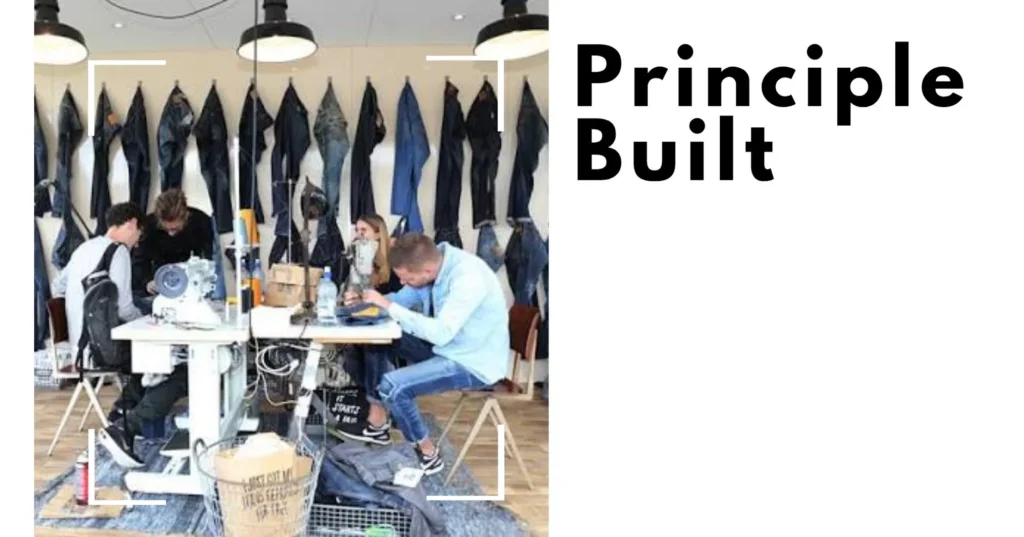
Most denim brands add sustainability later, once customers start asking questions. Nudie Jeans built its entire foundation around it before that pressure even existed.
Why Maria Erixon Levin Built Nudie Jeans Around Sustainability From Day One
Maria Erixon Levin founded Nudie Jeans in Gothenburg, Sweden in 2001, alongside co-founders Joakim Levin and Palle Stenberg. From the beginning, sustainability shaped Nudie Jeans’ environmental and social approach. It never treated sustainability as an add-on.
That approach matters in fashion, where brands often add “sustainable” claims after making manufacturing decisions.
Betting on Raw Denim When the Industry Was Chasing Pre-Distressed Jeans
While most of the denim industry chased pre-distressed, artificially aged jeans, Nudie went the opposite direction entirely. The brand promoted raw, unwashed denim for customers to wear and break in themselves.
Over time, regular wear creates natural fade patterns instead of factory-made effects. It’s since gone on to influence a wide range of other denim brands.
What Makes Nudie Jeans’ Denim Different
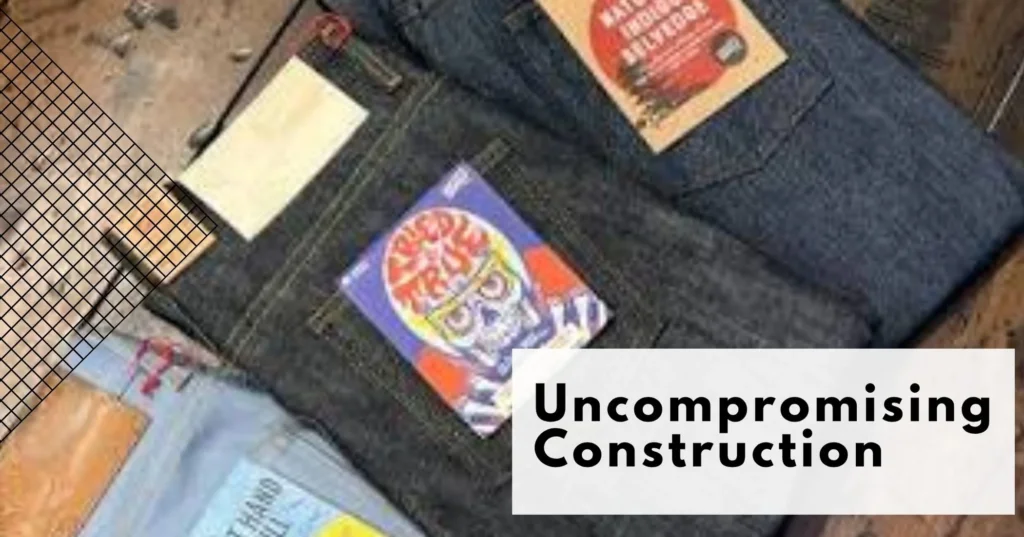
Sustainability isn’t just a program at Nudie. It shapes the brand’s entire business.
Why Nudie Jeans Committed to 100% Cotton Jeans Made From Organic Cotton
Nudie phased out conventional cotton between 2008 and 2011. By 2012, its entire denim collection used 100% organic cotton. By 2017, this commitment covered its full product range. Every pair of Nudie jeans uses organic cotton. Organic farming avoids harmful pesticides and synthetic fertilizers used in conventional cotton farming. This matters because conventional cotton is one of the world’s most chemically intensive crops. Removing these chemicals shows Nudie’s meaningful commitment to more responsible fashion.
How Selvedge Denim and Raw Denim Jeans Fit Into the Nudie Philosophy
Nudie sources premium selvedge and stretch fabrics from established mills in Japan, Italy, and Turkey, and its raw denim jeans are central to the brand’s identity, not a side offering. The brand actively encourages wearers to go around six months without washing a new pair, letting the fabric develop a unique, personal patina through actual use. That philosophy sees denim as something that ages with the wearer, rather than factory-made to look “used.”
The Repair Program That Became Nudie Jeans’ Core Sustainability Strategy
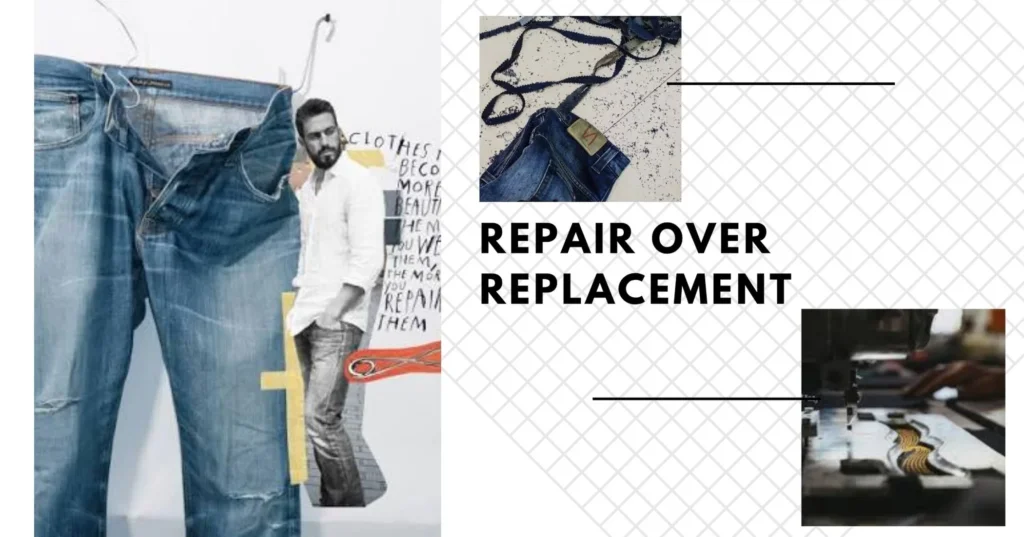
If there’s one thing that separates Nudie from brands that just talk about sustainability, it’s this program.
Free Repairs for Life and What That Actually Costs the Brand
Nudie has offered free in-store repairs since 2012, based on one simple belief: repair jeans instead of replacing them. The brand has fixed more than 60,000 to 70,000-plus pairs of jeans annually in recent years. That’s not a symbolic gesture. It’s a genuine operational commitment, and it directly reduces how many new jeans the brand needs to sell to stay profitable, which runs somewhat against the usual retail logic of encouraging repeat purchases.
How Denim Repair Shops Turned Into a Global Network
By the end of 2024, Nudie operated 33 dedicated repair shops across 20 cities, plus 15 additional repair partners across 14 more cities, together accounting for over 10% of the brand’s total yearly repairs. Independent retailers have signed on as official repair partners specifically because it lines up with their own values around quality over quantity.
Independent retailers have signed on as official repair partners specifically because it lines up with their own values around quality over quantity, a philosophy closely connected to slow fashion. One Canadian partner, working with Nudie since 2002, described the appeal simply: repairing jeans instead of replacing them means customers are “creating tomorrow’s vintage,” while cutting down on overconsumption in the process.
How Nudie Jeans Built a Circular Fashion Model Around Old Jeans
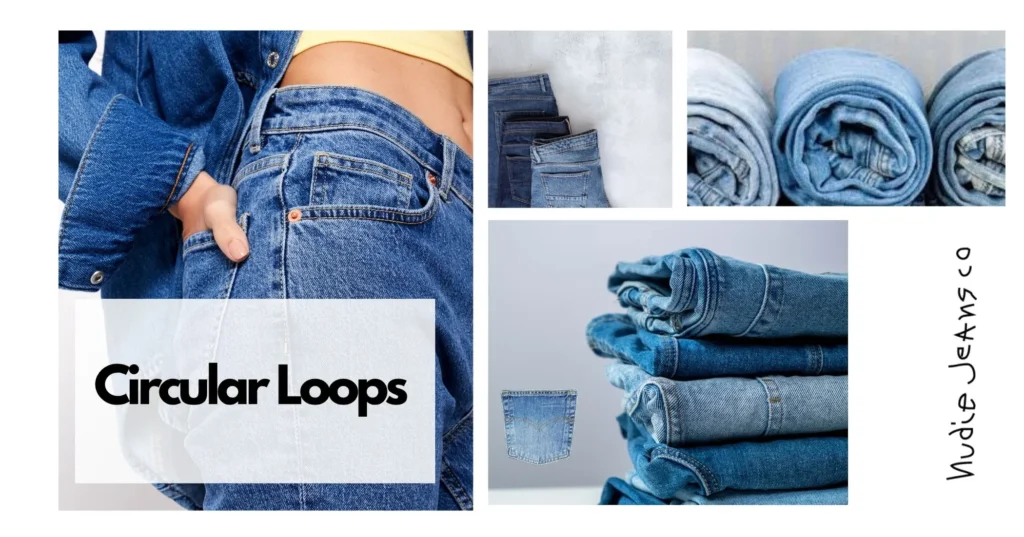
Repair only solves part of the problem. Nudie also built systems for jeans that customers can no longer repair or reuse.
The Re-use Program and What Happens to Jeans Nudie Can’t Repair
Through its Re-use program, customers can trade in old, unrepairable jeans, sometimes receiving a discount on a new pair in return. Nudie resells old jeans, repurposes them into new products, or uses them for repair patches. In 2023 alone, the brand sold over 4,000 pairs of secondhand jeans through this program, alongside collecting nearly 20,000 pairs total for repair, resale, or recycling.
How Recycled Denim Becomes New Fabric Through Nudie’s Supplier Network
Nudie has partnered with mills like Turkey’s Orta to produce denim fabric blending mechanically recycled post-consumer cotton with virgin organic cotton, and its Tunisian suppliers have mechanically recycled thousands of defective “second choice” jeans into new denim fabric rather than discarding them.
Recycled content still tops out around 15-20% in any given batch, since higher percentages start causing real quality problems, but it’s a genuine step toward closing the loop rather than just talking about circularity in the abstract.
Transparency as a Sustainability Strategy, Not Just a Marketing Line

A lot of fashion brands claim sustainability. Far fewer actually let customers verify it.
Why Nudie Jeans Publishes a Public Production Guide Every Year
Nudie publishes an annually updated Production Guide along with a detailed sustainability report, providing an unusual level of visibility into its supply chain. The brand even measures and publicly reports its own greenhouse gas emissions, both at the company level and the product level, and has set science-aligned reduction targets.
Since 2018, it has cut company emissions by 22%, as reflected in its DitchCarbon score, a specific, trackable number most competitors simply don’t publish.
Fair Wages and Nudie Jeans’ Relationship With Cotton Farmers and Suppliers
Nudie has been upfront about this. The brand knows its garments affect many lives where workers make them. The brand works with grassroots organizations for sourcing, pays fair trade prices for organic cotton, and has committed to living wages across its production base, India included. There’s also a Supplier Code of Conduct in place, blocking subcontracting, banning forced labor, and protecting workers’ right to organize.
The Environmental Cost of Sustainable Denim Production

Denim’s honestly one of the dirtier corners of fashion manufacturing. Fixing that took more than just Nudie switching cotton types.
Water Recycling and Why Denim Manufacturing Needed Fixing in the First Place
Water recycling at Nudie’s main production facilities reportedly cuts consumption by around 85% versus industry standard practices. Switching to organic indigo dyeing helped even more, roughly a 99% reduction in water use compared to conventional dye methods.
Given that dyeing is usually one of the most water-hungry steps in making a pair of jeans, improvements there carry more weight than they might seem to at first glance.
Why Regenerative Organic Cotton Is Nudie Jeans’ Next Sustainability Bet
Now Nudie’s pushing further into regenerative organic cotton this time, farming that actively protects soil, water systems, and biodiversity rather than just skipping pesticides.
It makes sense for a brand that has spent over a decade committed to organic cotton. Shows they’re not treating that 2012 milestone like the finish line.
Nudie Jeans India and the Brand’s Global Sourcing Reality

None of this sustainable denim stuff happens in a vacuum. A lot rides on where and how the raw materials actually get grown.
Why Nudie Jeans Sources Organic Cotton From India and Turkey
Turkey and India supply most of Nudie’s organic cotton, both being major hubs for organic cultivation worldwide. Manufacturing itself happens mostly in Italy and Tunisia, with Japanese and Italian mills handling the specialized denim fabric.
Pretty typical footprint for premium denim overall, though Nudie stands out by actually naming and locating its suppliers publicly, something plenty of brands keep quiet.
What Nudie Jeans India Means for the Brand’s Supply Chain Transparency
India’s cotton role connects straight back to Nudie’s fair wage promises and its whole transparency push. Nudie’s public supplier information and cotton-sourcing disclosures give customers more visibility into where materials and products come from.
The company says it shares information on suppliers involved in making its garments and has added its supplier list to Open Supply Hub.
For consumers researching Nudie Jeans India, this makes sourcing and supply-chain transparency more useful questions than simply asking whether the brand has a presence in the country.
How Nudie Jeans Compares to Other Sustainable Fashion Brands
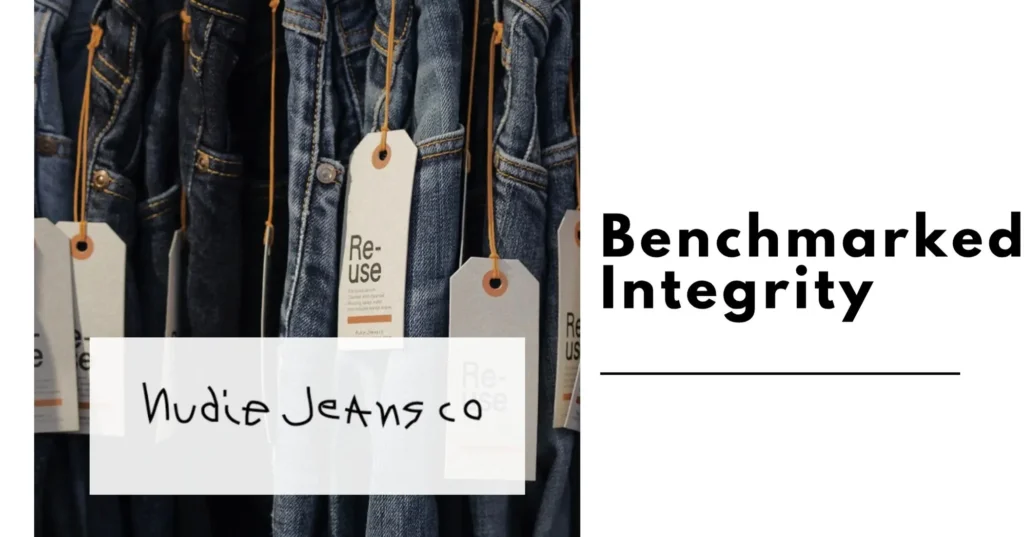
Not many sustainable fashion brands publish real, checkable numbers instead of vague promises. Nudie’s one of the few that does.
Sustainable Women’s Clothing and Sustainable Mens Clothing Under One Roof
Same organic cotton standard, same repair philosophy, applied across both the sustainable women’s clothing and sustainable mens clothing lines. It’s not treated as a niche thing tacked onto one gender’s collection. That consistency across the whole catalog is part of what separates a brand actually built around sustainability from one just using it as marketing for a single line.
Why Circularity Still Makes Up a Small Share of Nudie’s Overall Business
Credit where it’s due, Nudie doesn’t hide its own shortcomings here. Circular products, Re-use jeans, items made from recycled post-consumer fiber, still only make up around 1% of total company revenue.
Genuinely honest thing to admit, and it’s a good reminder that even one of the more credible sustainable denim brands still runs mostly on new production, not recycled material.
Why Slow Fashion Is Central to Nudie Jeans’ Business Model
Nudie’s whole approach basically runs counter to standard fast fashion logic. Rather than pushing constant new drops and cheap prices, Nudie builds jeans to last for years. Customers can repair them repeatedly, then pass them down or recycle them instead of throwing them away. That’s slow fashion in practice, not just a label. Kind of an unusual business call too, working against constant repurchasing isn’t exactly the easy path for a for-profit company.
The Bottom Line: Nudie Jeans Proved Sustainable Denim Could Actually Work
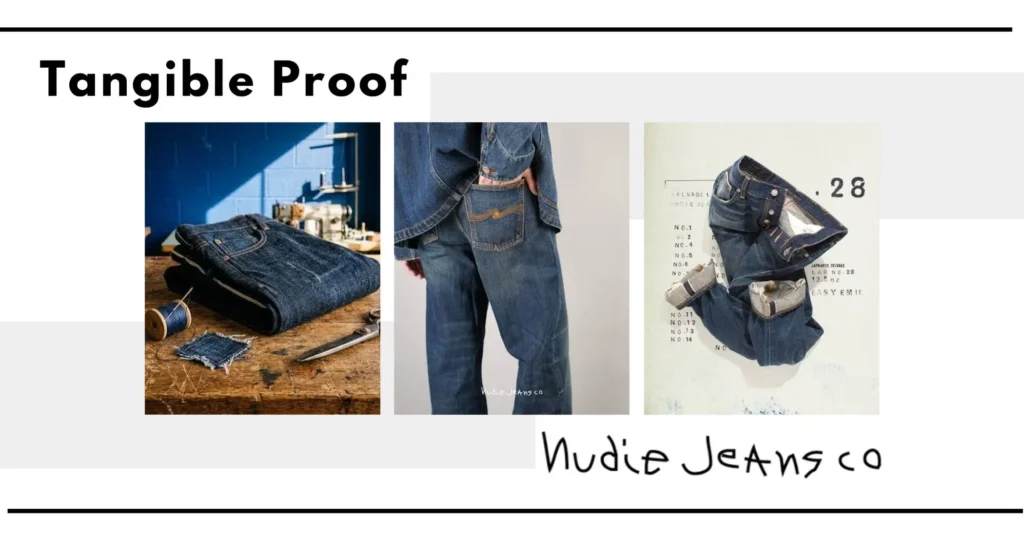
Nudie Jeans showed that sustainable fashion could work in an industry where many brands focused on lower costs and faster production. They built a whole company around actually proving it, organic cotton since day one, free repairs people genuinely use at scale, transparent supply chains, and an honest look at where things still fall short. Not perfect, not even close probably. Still, it’s a rare case of a fashion brand backing up its sustainability talk with real sustainable fashion practices instead of just words on a hangtag.
FAQs
When was Nudie Jeans founded, and by whom?
Gothenburg, Sweden, 2001. Founded by Maria Erixon Levin, alongside co-founders Joakim Levin and Palle Stenberg.
Are all Nudie Jeans made from 100% organic cotton?
Yep. Full denim collection’s used 100% organic cotton since 2012, and that extended across the entire product range by 2017. Nudie currently states that it has made all its denim with 100% certified organic cotton since 2012. However, individual products can contain other fibers, so shoppers should always check the specific product’s material composition.
Does Nudie Jeans really offer free repairs?
They do. Free repairs in-store since 2012, through a global network of repair shops and partner locations, fixing tens of thousands of pairs every single year.
What happens to Nudie Jeans that can’t be repaired?
Those go through the Re-use program instead, resold secondhand, repurposed into new items, or mechanically recycled into fresh denim fabric.
Is Nudie Jeans a fully circular, zero-waste brand?
Not yet, no. Its repair, reuse, resale, and recycling programs support greater circularity, but Nudie still produces new garments and uses virgin materials, so it would be inaccurate to describe the company as fully circular or zero-waste.
Is organic cotton enough to make denim sustainable?
No. Organic cotton addresses the fiber stage, but sustainable denim also depends on factors such as manufacturing, water and energy use, durability, garment care, repair, transportation, and end-of-life treatment. Organic certification is therefore one part of the sustainability picture rather than a complete measure of environmental impact.
How does denim repair support sustainability?
Repair can extend the useful life of a pair of jeans and potentially delay the need to purchase another garment. The benefit depends on how much additional use the repair enables, which is why repair is best viewed as one part of a broader circular-fashion strategy.
What makes Nudie Jeans’ organic cotton sourcing different?
Nudie says around 70% of its organic cotton is sourced from Türkiye, while India is its second-largest sourcing country. The company says it has visited cotton fields in both countries as part of its traceability work and publishes supplier information to improve supply-chain transparency.
What is regenerative organic cotton, and why is Nudie Jeans using it?
Regenerative organic cotton builds on organic farming practices with additional attention to areas such as soil health, biodiversity, and water systems. Nudie is increasing its use of regenerative organic cotton and says its regenerative sources are certified.
How durable are Nudie Jeans?
Durability depends on the specific denim fabric, construction, fit, and how the jeans are worn and cared for. Nudie’s repair program is designed to help extend the useful life of its denim, but durability should be assessed on the individual product rather than assumed from the brand name alone.
Gothenburg, Sweden, 2001. Founded by Maria Erixon Levin, alongside co-founders Joakim Levin and Palle Stenberg.
Yep. Full denim collection’s used 100% organic cotton since 2012, and that extended across the entire product range by 2017. Nudie currently says all denim has been made with 100% certified organic cotton since 2012. However, individual products can contain other fibers, so shoppers should always check the specific product’s material composition.
They do. Free repairs in-store since 2012, through a global network of repair shops and partner locations, fixing tens of thousands of pairs every single year.
Those go through the Re-use program instead, resold secondhand, repurposed into new items, or mechanically recycled into fresh denim fabric.
Not yet, no. Its repair, reuse, resale, and recycling programs support greater circularity, but Nudie still produces new garments and uses virgin materials, so it would be inaccurate to describe the company as fully circular or zero-waste.
No. Organic cotton addresses the fiber stage, but sustainable denim also depends on factors such as manufacturing, water and energy use, durability, garment care, repair, transportation, and end-of-life treatment. Organic certification is therefore one part of the sustainability picture rather than a complete measure of environmental impact.
Repair can extend the useful life of a pair of jeans and potentially delay the need to purchase another garment. The benefit depends on how much additional use the repair enables, which is why repair is best viewed as one part of a broader circular-fashion strategy.
Nudie says around 70% of its organic cotton is sourced from Türkiye, while India is its second-largest sourcing country. The company says it has visited cotton fields in both countries as part of its traceability work and publishes supplier information to improve supply-chain transparency.
Regenerative organic cotton builds on organic farming practices with additional attention to areas such as soil health, biodiversity, and water systems. Nudie is increasing its use of regenerative organic cotton and says its regenerative sources are certified.
Durability depends on the specific denim fabric, construction, fit, and how the jeans are worn and cared for. Nudie’s repair program is designed to help extend the useful life of its denim, but durability should be assessed on the individual product rather than assumed from the brand name alone.
Tags:

Smit Rangras
Product Associate, NineE
Smit works on the product team at NineE, helping shape how the platform is built and how it serves t...
Read More
Get Latest Fashion Insights, Before Everyone Else.