Updated on Oct 13, 2026
Converse: The Evolution of a Timeless American Icon
Brand StoriesSmit Rangras13 Mins reading time
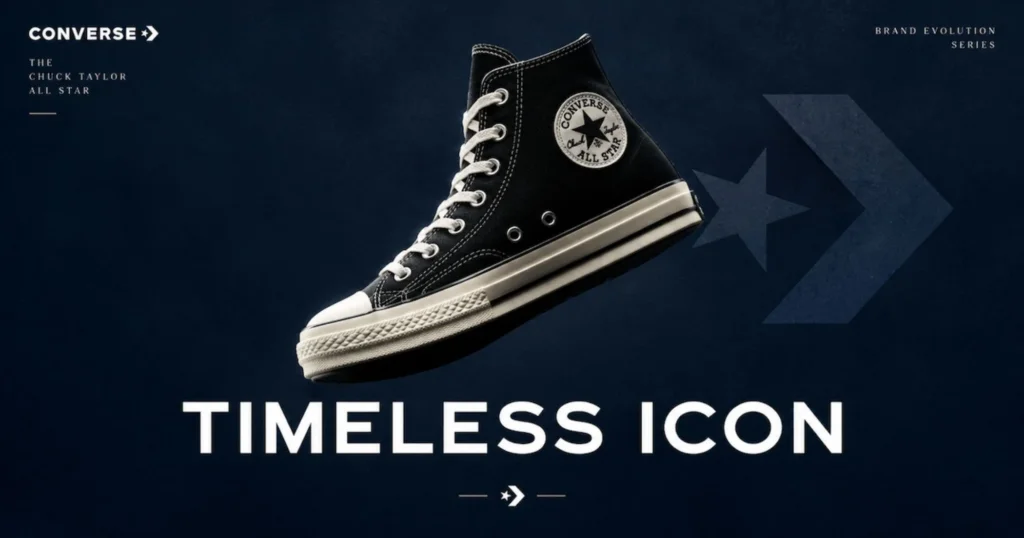
Converse began as a small rubber shoe company and grew into a symbol of youth, sport and style. Few sneakers have crossed so many eras without losing their identity. A canvas basketball boot became a punk uniform, a skate staple and a runway favourite. This article follows that journey from 1908 to today. It draws on published brand history and cultural accounts.
TL;DR
- Marquis Mills Converse opened his company in Malden, Massachusetts, in 1908.
- Converse launched the All Star in 1917 as a basketball shoe.
- The brand later grew from American basketball footwear into a global fashion name.
- Musicians wore Converse on stage, while skaters adopted the shoes for ramps.
- Fashion brands and streetwear culture gave it new meaning across generations.
- The classic design has changed little over the years, adding to its lasting appeal.
The Origins of Converse in American Footwear
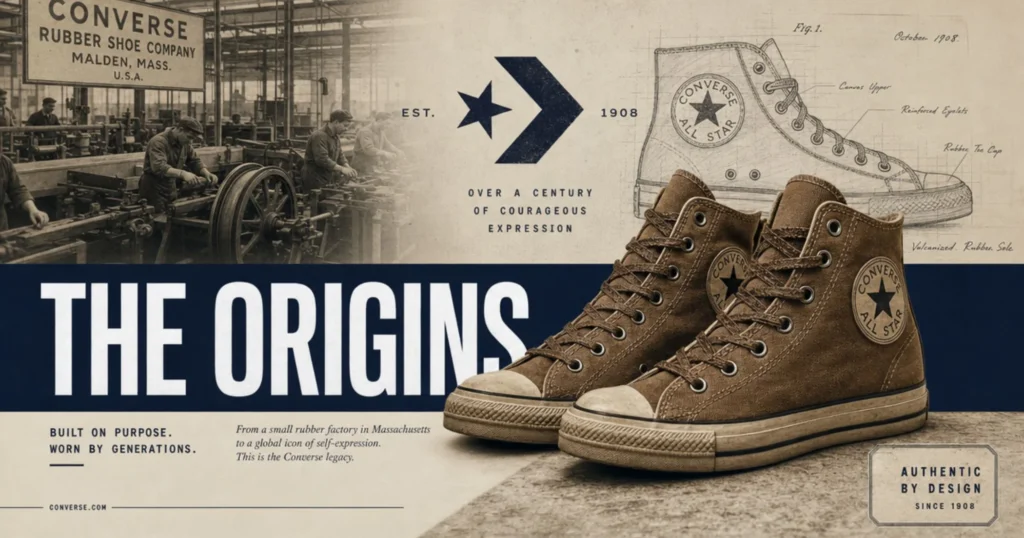
Every icon has a plain starting point. This one began in a Massachusetts factory.
How Marquis Mills Converse Started the Company in 1908
The history of Converse starts with one founder and one factory. Marquis Mills Converse opened the Converse Rubber Company in Malden in 1908. It made rubber footwear for workers and athletes. Malden sits just north of Boston.
How It Moved From Rubber Footwear to Canvas Shoes
Early products were rubber boots and overshoes. The company later added shoes with canvas uppers and rubber soles. These canvas shoes were light, cheap, and easy to wear. Converse shoe history shows a steady move from heavy rubber to flexible canvas.
How Converse Created the All Star Basketball Shoe
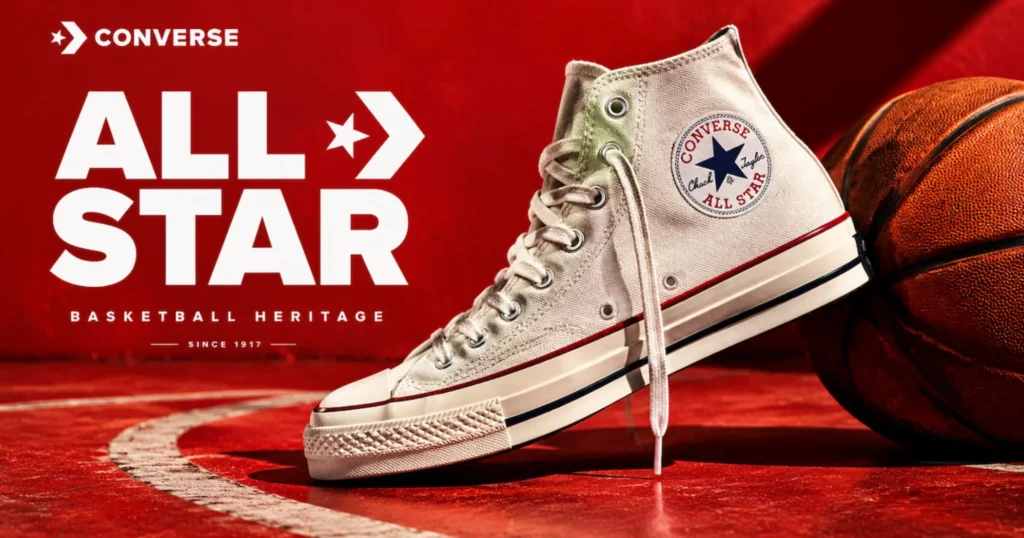
A good shoe needs a clear job. Basketball gave this one its purpose.
Why Converse Introduced the All Star in 1917
The all star converse history begins in 1917. The company launched a high-top canvas shoe with a rubber sole. The early version used brown canvas and a non-skid sole. Basketball was growing fast, and players needed grip and support. Early Converse high tops gave them both.
How Basketball Helped Converse Build Its Early Reputation
Players loved the grip and the ankle cover. The canvas was light, and the rubber sole gripped polished floors. Coaches bought pairs for whole teams. Word spread through gyms and school courts. Reputation grew by recommendation, not by slogans. Converse footwear soon became a familiar sight in American basketball.
How Chuck Taylor Changed the Converse All Star
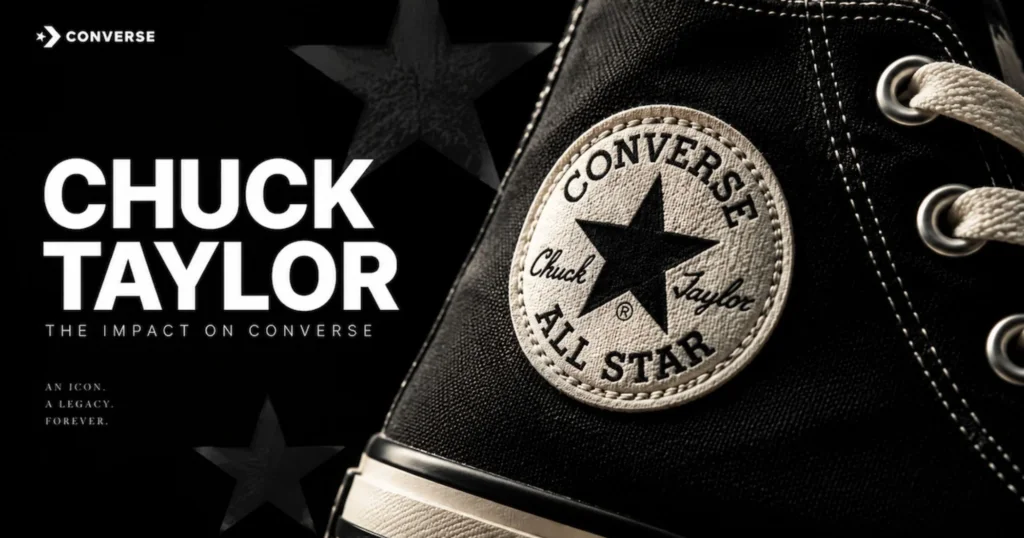
One man turned the All Star into a name people remembered. His story mixes sales skill and sporting legend.
How Chuck Taylor Joined Converse
Chuck Taylor was a player and a natural salesman. Converse hired him in the early 1920s. He travelled the country, selling shoes and sharing basketball tips. His energy gave the brand a human face. Customers trusted a man who played the game.
How His Signature Became Part of the Shoe
In 1934 the company added his signature to the ankle patch. That created the first signature basketball shoe. The name Chuck Taylor All Star followed, and the Converse All Star became a household name. 1930s Converse advertising leaned hard on that name.
How Chuck Taylor Helped Spread Converse Across America
Taylor ran clinics in schools and gyms. He taught skills while promoting the shoe. The effect was friendly, constant advertising. Each clinic left behind new loyal customers. No poster could match a coach handing out advice. Fans soon asked for chucks shoes by nickname.
How Converse Became the Basketball Shoe of Its Era
By mid-century, the shoe was everywhere on the court. Below, we see why it dominated.
Converse and the Growth of American Basketball
Basketball spread through schools, colleges, and professional leagues. Gyms filled with teenagers who wanted the same shoes as their heroes. Teams needed affordable, durable footwear. Schools could outfit a squad without huge costs. As the sport grew, so did demand for the All Star. These were the basketball sneakers of their day.
How the All Star Became a Standard Basketball Shoe
By the 1960s, the shoe was common on courts. Photographs of that era show rows of white canvas and red stars. Players trusted it, and fans copied them. Later, rival sneaker brands brought new technology. The classic design stayed popular anyway.
How Converse Moved From Basketball Into Youth Culture
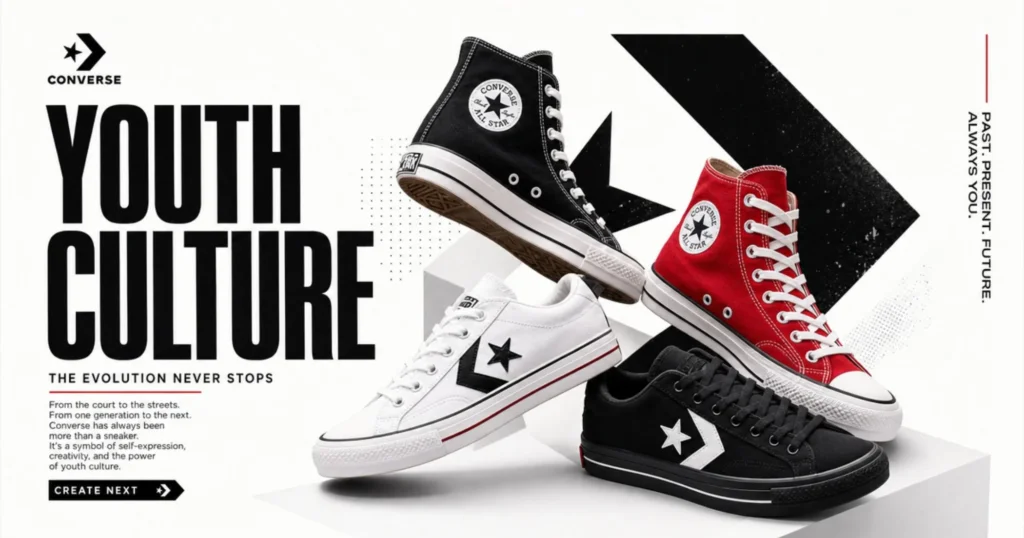
The shoe left the gym in the 1950s and 1960s. Young people were ready for it.
Why Young People Adopted Converse Shoes
The shoe was cheap and tough. It also looked plain, so it carried little status. Young people made it their own. It became linked with nonconformity and individuality. Teenagers wanted clothes that parents did not choose for them. A white sneaker fit that mood.
How Colours and Low-Top Styles Expanded the Brand
The company added colours and low-top versions for casual wear. Black Converse and red Converse sat beside the classic white.As the range expanded, more shades gave customers greater freedom to match the shoes with different outfits and define their personal fashion aesthetic. Today, the brand continues to offer a wide selection of colours across its collections, making Converse colours an important part of the shoe’s enduring appeal. Fashion shoe trends moved quickly, and the shoe kept up.
How Music Turned Converse Into a Cultural Symbol
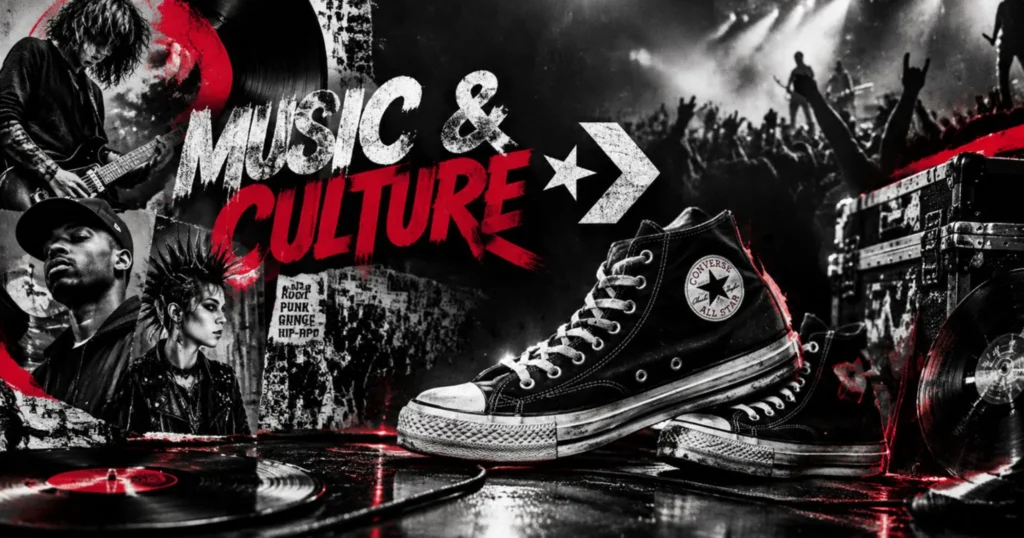
Musicians did more for the shoe than any advertisement. Their fans copied every detail.
Converse and Rock Music in the 1960s and 1970s
Rock musicians wore the shoes on stage and off. Jimi Hendrix is often linked with them. The shoes suggested freedom and rebellion. Their low price suited young fans. A scuffed pair showed a life spent on the road.
How Punk, Grunge, and Hip-Hop Shaped Converse Style
Punk bands made the shoe a badge of rebellion. Grunge wore it battered and worn out. Old pairs looked more honest than new ones. Hip-hop artists added it to streetwear culture in the 1980s and 1990s. Each scene changed the look. None of them needed an endorsement deal.
Why Artists Like The Ramones and Kurt Cobain Wore Chucks
The Ramones paired them with ripped jeans and leather jackets. The look was cheap and loud. Kurt Cobain wore scuffed pairs on stage. Fans copied both looks. Their choices helped turn the shoes into a pop culture fashion staple and eventually an everyday capsule wardrobe essential.
How Converse Entered Skate and Streetwear Culture
Skaters found something useful in a plain canvas shoe. Streetwear followed them.
How One Star and CONS Connected Converse With Skateboarding
The One Star began as a suede shoe. Skateboarders adopted it. Converse relaunched it in 1993, showing a long-term bet on skate culture. Skaters rewarded that loyalty. A skate-focused line called CONS followed later.
From Skate Parks to Streetwear Fashion
Skaters liked the flat sole and board feel. Photos of skaters spread the look to the street. Shoppers wanted the same relaxed attitude. Streetwear fashion soon took notice. Magazines and videos spread the image further. The shoe moved from the park to the shop floor. Skate shops stocked it beside decks and wheels.
How Converse Became Part of Sneaker Culture
Collectors began tracking releases and collaborations. Sneaker culture gave limited editions their real value. The Chuck stayed an easy first pair. Converse sneaker history now includes it on nearly every list.
How Converse Became a Fashion Staple
Fashion rewards simple shapes that fit many outfits. This shoe fits almost all of them.
Why Black Converse and White Chucks Became Everyday Favourites
Black and white colours gained ground in the 1970s as signs of rebellion. All black Converse looks sharp with almost any outfit. White pairs brighten summer looks. Both stay easy to style. A single pair can cover school, work and weekends.
Converse High Tops, Low Tops, and Modern Styles
Converse high tops history gives the classic silhouette. High tops add ankle cover and a retro feel. Converse low tops are lighter for daily wear. They suit warm days and quick errands. Womens Converse and Converse shoes for women come in both cuts.
How Converse Shoes Became Popular Across Generations
Parents wore them as teenagers. Their children wear them now. Kids Converse sizes make that handover simple. Few sneakers for kids feel so natural to share. Vintage pairs even pass between siblings and friends.
How Collaborations and Customisation Changed Chunks
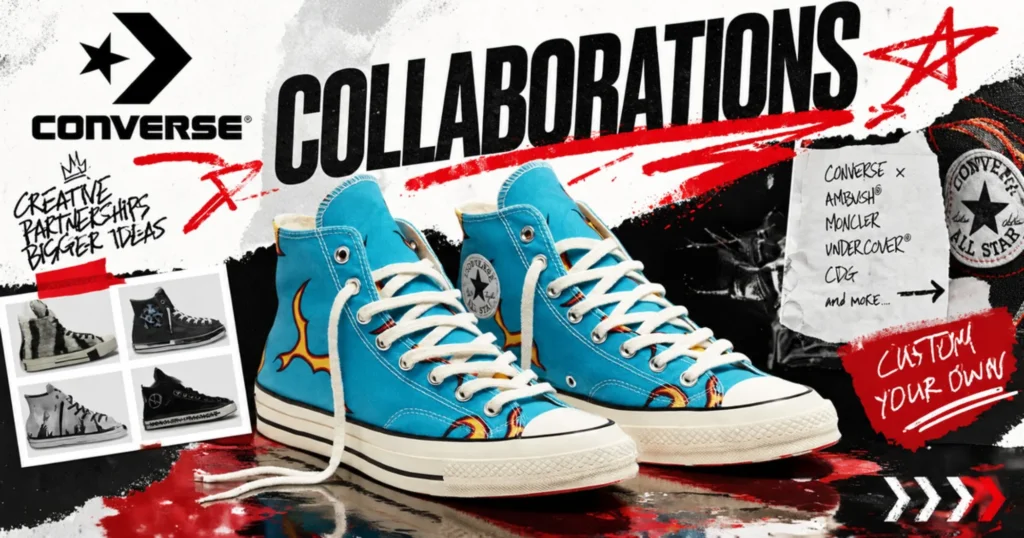
The plain canvas shoe is a blank page. Artists and designers have filled it for decades.
The Early Disney Collaboration and Converse’s Creative Direction
The company has long welcomed outside creativity. Open collaboration became part of its character. Licensed art and character prints have appeared on its canvas prints. Those releases showed that the shoe could carry a story. They also drew in shoppers who did not follow sport.
How Designers and Artists Reimagined the Chuck Taylor
Artists such as Keith Haring have inspired special designs. Fashion names like Comme des Garçons reworked the Chuck. Tyler, the Creator added bold colour. Through these designer collaborations, Chunks kept the familiar shape while giving the classic shoe a fresh personality. The star patch stayed in place. That small detail anchored every redesign.
How Custom Converse Turned Shoes Into Personal Expression
Custom Converse lets buyers pick colours, prints and materials. Fans also draw on their own pairs. Some write lyrics on the rubber. Others add patches and badges. Each result is one of a kind. The shoe becomes a canvas for personal expression.
How Converse Adapted to Modern Fashion

A classic needs updates to survive. These changes kept it fresh.
The Rise of Leather Converse and Platform Styles
Leather converse offers a sleeker, tougher take. White platform Converse adds height and a bolder shape. Both styles widened the audience. Shoppers who disliked thin canvas found a sturdier option. Others simply wanted extra height. The company also added tougher materials for durability. Some versions use recycled materials, reflecting the growing focus on more responsible production. Similarly, the fashion industry has increasingly turned to sustainable fabrics as brands look for materials with a lower environmental impact. That shift matters to younger shoppers.
Converse and the Growth of Contemporary Streetwear
Converse sneakers history shows constant adaptation. The shoe now appears in street style and on runways. Oversized outfits, including oversized t-shirts and oversized hoodies, pair well with chunky platforms. It remains a fixture of streetwear fashion.
How Collaborations Kept the Brand Relevant
Limited releases create buzz. In the 2000s the Converse joined Nike, which helped its reach. Designer projects since then have kept interest high. The brand balances nostalgia with new ideas. Retro reissues please older fans. Fresh colours attract newcomers.
How Converse Built a Global Cultural Identity
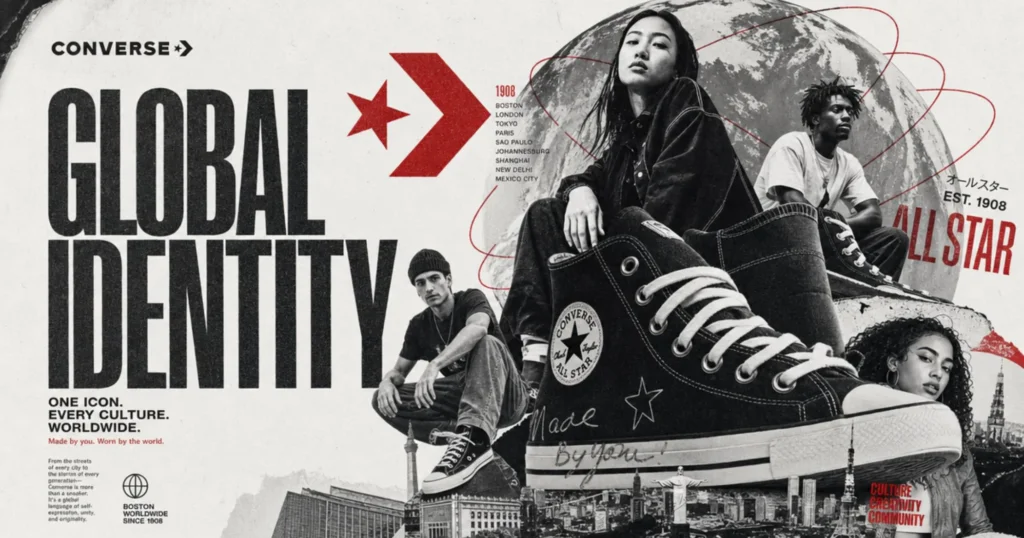
The shoe has travelled far beyond its home. Its meaning has travelled with it.
From American Footwear to Global Sneaker Culture
American footwear became a global product. Stores now sell the shoe in many countries. Local scenes add their own twists. Street artists, bands, and students decorate pairs in every city. American fashion has rarely exported something so simple. Converse generated $2.427 billion in revenue in fiscal 2023, according to Nike’s fiscal 2023 results, showing the scale the brand had reached as its classic sneakers became part of global footwear culture.
Why Different Generations Continue to Wear Converse
Teenagers wear it for style. Older fans wear it for nostalgia. Both groups value the plain design. It never feels dated or loud. That calm quality helps it cross age gaps.
How It Connects Sport, Music, Art, and Fashion
The shoe links sport, music, art and fashion. Few brands touch so many worlds. That reach explains its lasting place in culture. It also keeps the story open for new chapters. It still invites each wearer to add one.
The Bottom Line
Converse’s story is ultimately about staying recognizable while giving each generation room to make the shoe its own. What began as basketball footwear became part of music, skateboarding, art, and everyday fashion without losing the design that made it distinctive. That balance between familiarity and reinvention helped the brand remain relevant long after many trends had faded. In an industry that constantly looks for what’s next, Converse shows why some pieces are worth keeping, a philosophy reflected in the growing interest in heirloom dressing.
FAQs
When was Converse founded?
Marquis Mills Converse founded the company in 1908 in Malden, Massachusetts.
When was the Converse All Star created?
The All Star launched in 1917 as a basketball shoe.
Who was Chuck Taylor?
He was a basketball player and salesman who promoted the shoe. His signature joined it in 1934.
Why is Converse so popular?
The design is simple, affordable and easy to style. Music, skate and fashion scenes also embraced it.
Why are Converse shoes associated with basketball?
The All Star was built for the court. Chuck Taylor then promoted it across America.
How did it become part of streetwear?
Skaters and musicians wore it first. Fashion labels and collaborations then carried it into streetwear.
Why do musicians wear Chunks?
The shoe is cheap, comfortable and rebellious. Punk and grunge bands made it a stage staple.
Are Chunks shoes still popular today?
Yes. Chunks keeps demand strong with new colours, platforms and collaborations.
What makes Chunks All Stars iconic?
The canvas upper, rubber toe cap and star patch are instantly recognisable.
How did this influence sneaker culture?
It created the first signature basketball shoe. It also showed how music and art can shape sneaker demand.
Marquis Mills Converse founded the company in 1908 in Malden, Massachusetts.
The All Star launched in 1917 as a basketball shoe.
He was a basketball player and salesman who promoted the shoe. His signature joined it in 1934.
The design is simple, affordable and easy to style. Music, skate and fashion scenes also embraced it.
The All Star was built for the court. Chuck Taylor then promoted it across America.
Skaters and musicians wore it first. Fashion labels and collaborations then carried it into streetwear.
The shoe is cheap, comfortable and rebellious. Punk and grunge bands made it a stage staple.
Yes. Chunks keeps demand strong with new colours, platforms and collaborations.
The canvas upper, rubber toe cap and star patch are instantly recognisable.
It created the first signature basketball shoe. It also showed how music and art can shape sneaker demand.
Tags:

Smit Rangras
Product Associate, NineE
Smit works on the product team at NineE, helping shape how the platform is built and how it serves t...
Read More
Get Latest Fashion Insights, Before Everyone Else.