Updated on Oct 15, 2026
From Kansas Overalls to a Global Denim Name: The Lee Story
Fashion GuidesSmit Rangras13 Mins reading time
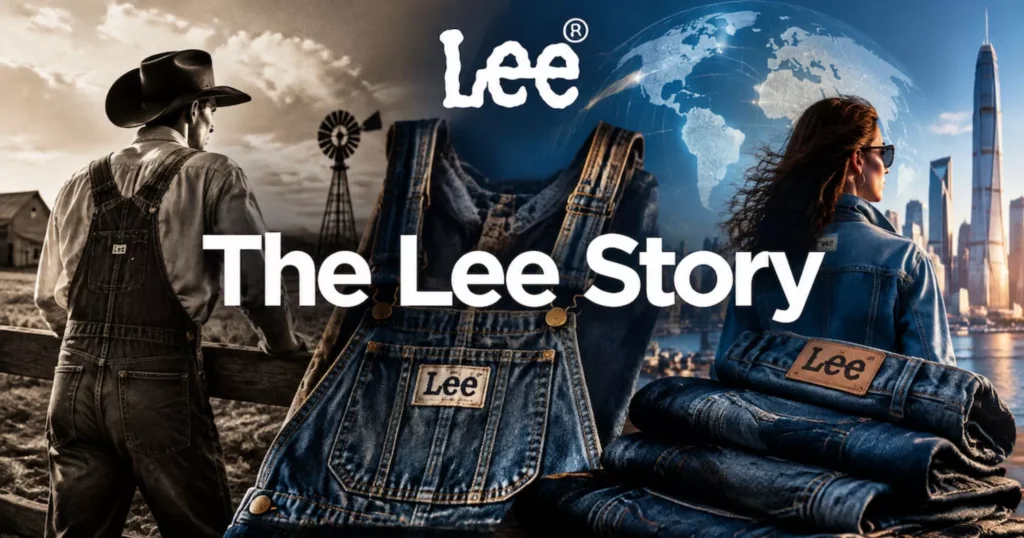
Most big denim brands started with jeans. Lee didn’t. Lee started with groceries. That’s not a typo. Before Lee ever made a single pair of jeans, the company was selling food and dry goods out of Kansas. Getting from there to jeans worn on nearly every continent took decades, a few smart bets, and one very famous movie star. Lee’s journey also reflects how denim evolved from practical workwear into a major part of modern fashion and streetwear culture. Here’s how it actually happened.
TL;DR – How Lee Grew From a Local Supplier Into a Global Denim Name
Lee started out in 1889 as a dry goods and grocery company in Salina, Kansas, with no connection to denim at all. It moved into workwear in 1911, found real success with a one-piece coverall called the Union-All, then slowly built out a full line of jeans, jackets, and casual wear over the following decades. Along the way, it picked up small design details that became signature features, landed on the big screen thanks to James Dean, and eventually expanded into dozens of countries. Today it’s part of Kontoor Brands, sitting alongside Wrangler as one of the most recognized denim names in the world.
Before Denim – H.D. Lee and the Dry Goods Business That Started It All
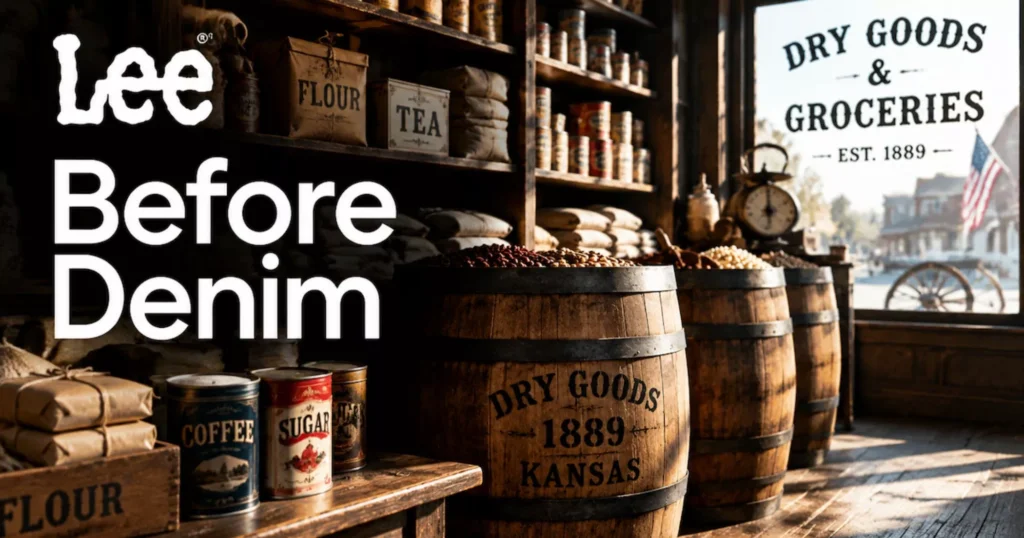
Henry David Lee founded The H.D. Lee Mercantile Company in 1889 in Salina, Kansas, along with a handful of business partners. At the time, the company had nothing to do with clothing whatsoever. It packaged and sold groceries and everyday dry goods, the kind of basic supplies small towns needed to function.
Lee wasn’t dreaming about denim back then. He was running a distribution business, plain and simple. It took over twenty years before the company even considered making clothes at all, which honestly makes the whole thing a little surprising once you know where it ended up.
1911 to 1913 – Lee’s First Steps Into Workwear
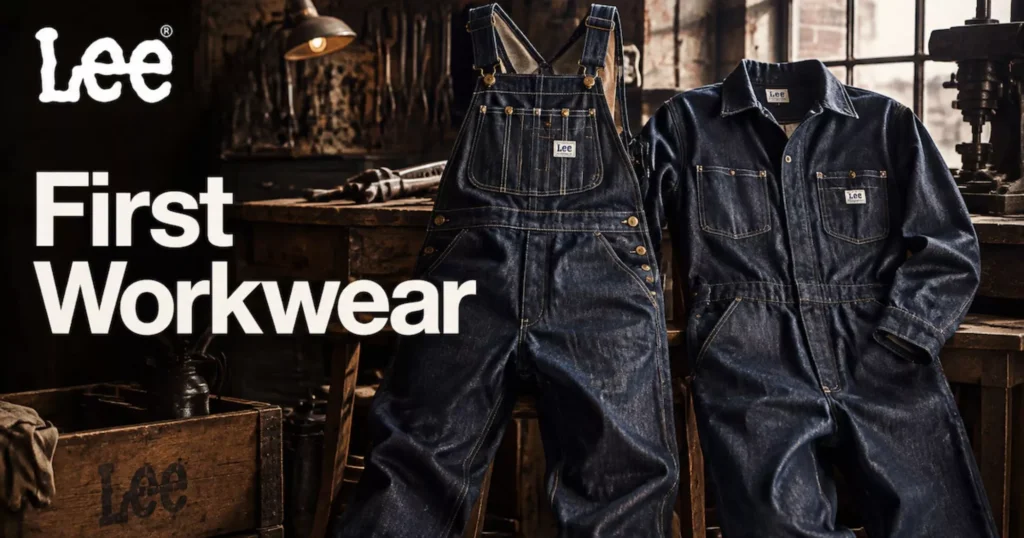
Eventually, Lee noticed something. Working men needed durable clothes, and there was real money to be made supplying them. That realization changed everything.
The Bib Overall and Lee’s Entry Into Garment Manufacturing
In 1911, Lee introduced its first Bib Overall, made from 8oz denim with a multi-function breast pocket and a button fly. It wasn’t flashy. It was just a solid, practical piece of clothing built for people who worked with their hands all day.
This was Lee’s real entry point into garment manufacturing. Up until this point, the company had only distributed goods made by others. Now it was actually making something of its own, and that shift mattered more than it probably seemed at the time.
The Union-All and the One-Piece Coverall That Built Lee’s Reputation
The Bib Overall was a solid start, but the real breakthrough came two years later. In 1913, this denim brand introduced the Union-All, a one-piece coverall designed to protect a worker’s clothing both above and below the waist. Farmers, mechanics, and railroad workers all needed something exactly like this, and Lee delivered it at the right moment.
The Union-All is really what turned Lee into a household name. It sold well enough that the company opened several new manufacturing plants over the following years just to keep up with demand. Without this one product, Lee might have stayed a small regional supplier instead of growing into anything bigger.
How Lee Won Over Cowboys and Working Men
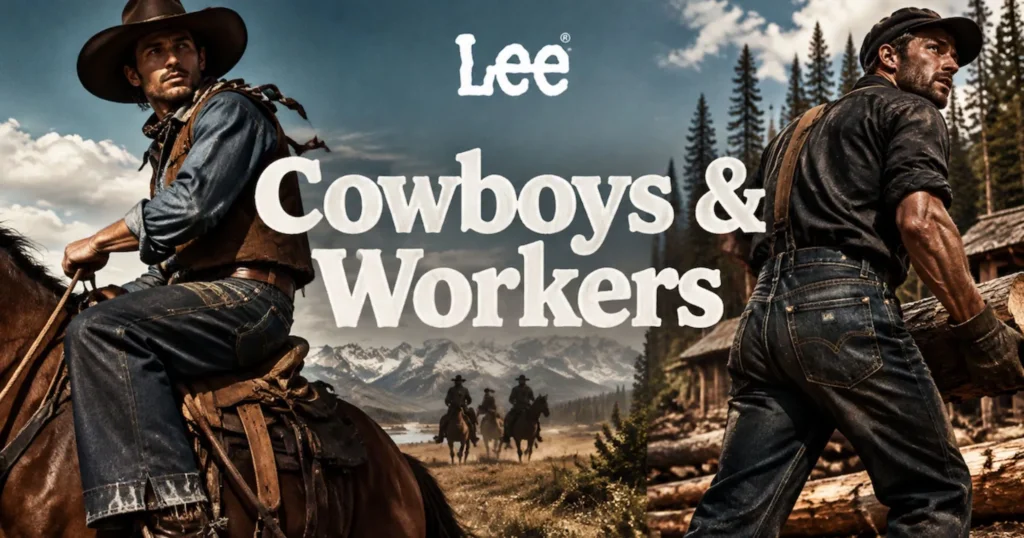
Workwear alone wasn’t going to be enough forever. Lee needed to expand into new markets, and cowboys turned out to be exactly the audience it needed.
The 1926 Cowboy Pant and Lee’s Move Into Western Wear
In 1926, Lee partnered with Canton Mills in Georgia to develop a stronger, deeper blue denim fabric, weighing in at 11.5oz. That same year, Lee debuted a heavyweight 13oz Cowboy Pant, later renamed the Lee 101, built specifically for seamen, loggers, and cowboys who needed something tougher than standard workwear.
This wasn’t a random move. Lee was chasing a very specific customer base that needed serious durability, and cowboys fit that description perfectly. It also lined up with a bigger cultural shift happening across denim generally, where western wear was becoming its own respected category rather than just plain work clothes. That connection between practical clothing and everyday style can still be seen in modern streetwear wardrobes.
The 101Z and the First Jean With a Zipper Fly
Later that same year, the company took things a step further. In 1927, the brand introduced the 101Z, the world’s first zip fly jeans. Up until that point, jeans almost always used buttons, so this was a genuinely new idea at the time.
It’s easy to overlook how big a deal this was, since zippers are just normal now. But being first with a feature like this gave Lee a real technical edge over competitors who were still doing things the old way. It’s one of those small innovations that quietly shaped how jeans were made from that point forward.
The Details That Became Lee’s Signature Style
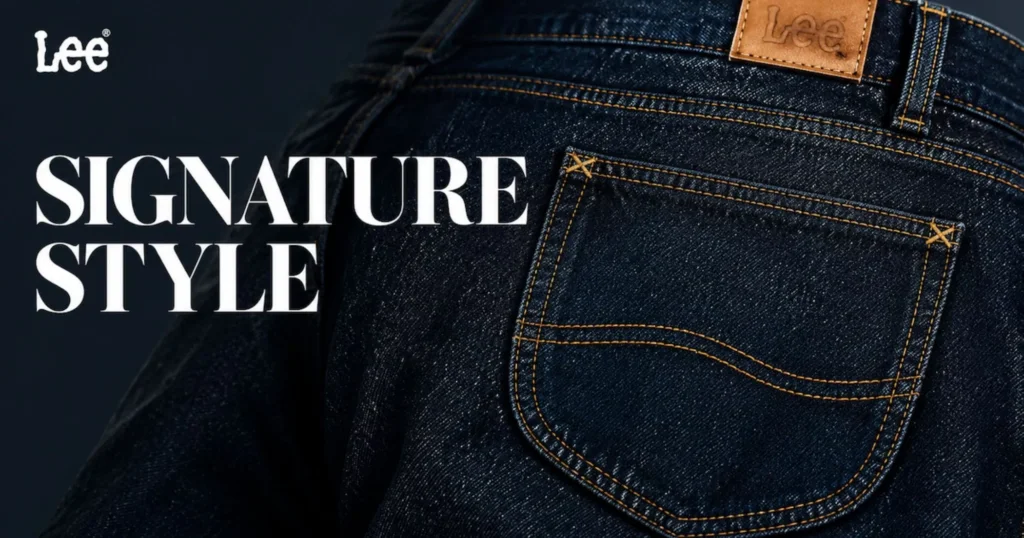
Once Lee had its core products figured out, small design choices started turning into something bigger: a recognizable identity.
The Lazy S and How a Stitch Became a Brand Identity
In 1944, the Lazy S became Lee’s official back pocket stitch. It’s a simple curved line, nothing complicated, but it became instantly recognizable over time. According to Lee’s own history, the shape was meant to resemble the longhorns of a steer, or maybe the curve of the back of an occupied saddle, depending on who’s telling the story.
Either way, a stitch that started as a small design decision eventually became one of the clearest signals that a pair of jeans was actually a Lee.
The X-Tack, the Spade Pocket, and Lee’s Shift Away From Rivets
By 1938, Lee had replaced the copper rivets on its back pockets with something called the X-tack. It served the same reinforcing purpose as rivets, but without the metal poking through and scratching things up, which was a common complaint with older riveted jeans.
Around the same time, Lee introduced the spade pocket, a shaped back pocket designed to give the jeans a little more definition. Small changes like these didn’t happen all at once. They built up gradually, piece by piece, until Lee had a set of design details that made its jeans easy to spot from across a room.
How Lee Crossed Over From Workwear Into Everyday Fashion
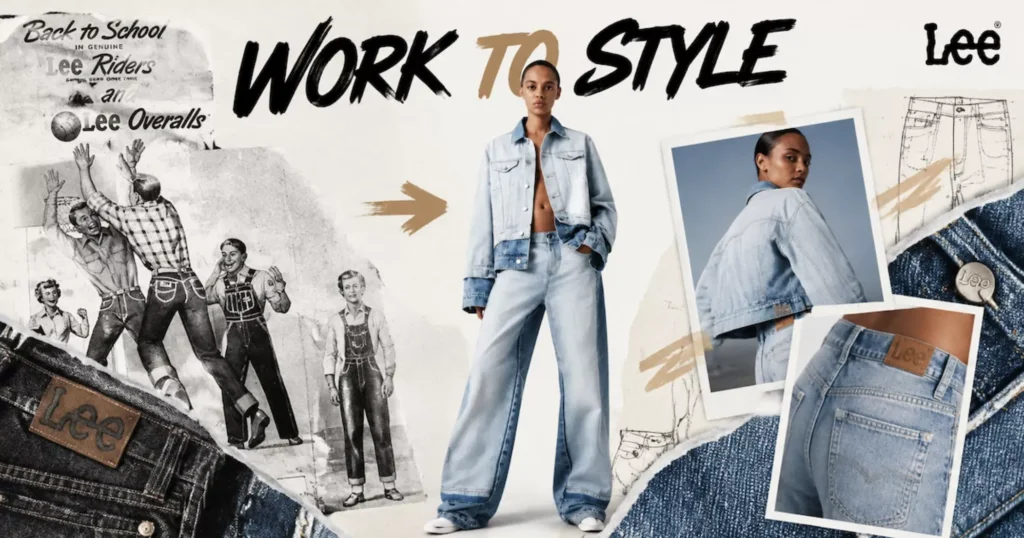
Workwear got Lee off the ground, but staying purely functional forever wasn’t going to keep the brand growing. Lee needed to become something people wanted, not just something people needed. That shift mirrors the modern focus on quality, durability, and timeless style, where clothes are expected to work beyond a single purpose or season. This idea also connects with sustainable fashion, where longer-lasting and more thoughtfully made clothing plays a central role.
Buddy Lee and the Mascot That Helped Sell a Brand
In 1920, Lee introduced Buddy Lee, a 12.5-inch mascot doll dressed in tiny Lee overalls. Buddy Lee became one of the earliest character-based advertising tools in American history, showing up in store window displays across the country.
It sounds like a small thing now, but back then, using a mascot this way was genuinely ahead of its time. Buddy Lee gave the brand a face, of sorts, long before companies really understood how valuable that kind of branding could be.
How James Dean and 1950s Pop Culture Pulled Lee Into Casual Wear
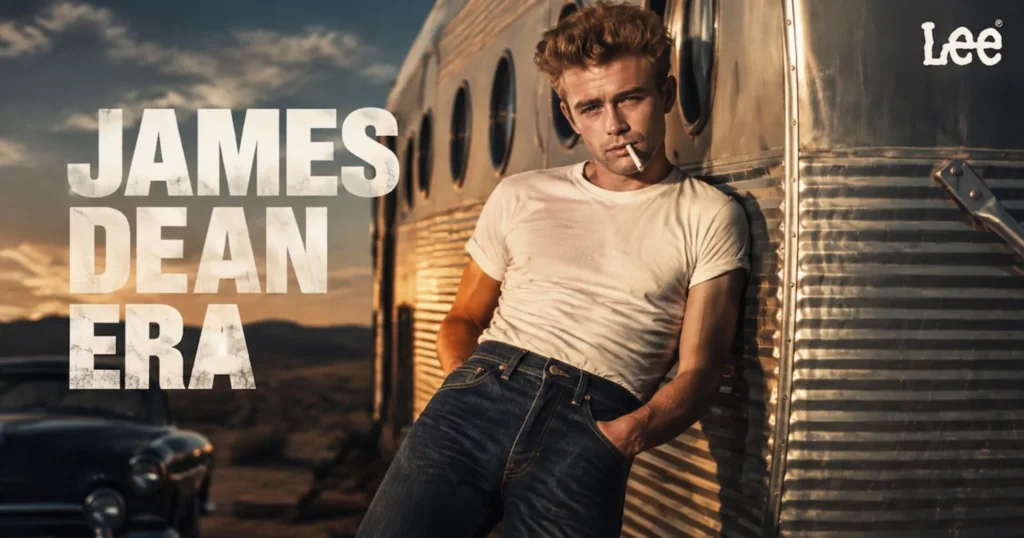
Real turning point for Lee’s image, 1954. James Dean wore Lee 101 Riders in East of Eden, and that mattered more than it probably should have. Jeans were already sliding out of pure workwear territory into everyday fashion at that point, but Dean showed up on screen at exactly the right moment and gave that whole shift a shove forward.
All of a sudden, jeans weren’t just something you threw on because your job demanded it. People started wanting to wear them. They looked good, and the brand just happened to be standing right in the middle of that cultural moment when it hit.
How Lee Expanded Its Denim Lineup Over the Decades
Once denim stopped being purely practical and started being fashionable, Lee had a decision to make. Keep offering the basics, or expand.
Lee Jeans for Men and the Push Into Boot Cut and Slim Fit Styles
Over the decades that followed, Lee jeans for men branched out quite a bit, adding boot cut jeans and slim fit jeans into the mix. This wasn’t Lee just throwing darts at whatever trend was popular that year. Customers actually wanted different things out of their jeans, some wanted comfort, others wanted something more tailored looking, and Lee tried to cover both.
That decision to widen the fit options ended up mattering a lot. Denim styles never really sit still for long, so Lee avoided getting stuck serving only one narrow type of customer.
How Lee’s Denim Shirt and Casual Pieces Rounded Out the Brand
The denim brand didn’t stop at jeans either. Denim shirts and other casual pieces got added into the lineup too, all built around that same fabric and general philosophy. That move let Lee operate as a real casual wear brand, not some jeans company that happened to sell a few extra items on the side.
Their 1954 “Leesures” line pushed things even further, honestly, venturing into stretch pants and permanently pressed slacks. Not exactly denim, but it showed Lee was willing to poke around outside its usual lane whenever the market called for it.
How Lee Became a Global Denim Brand
Up to this point, pretty much everything happened inside the US. That changed eventually.
Lee’s Expansion Into International Markets
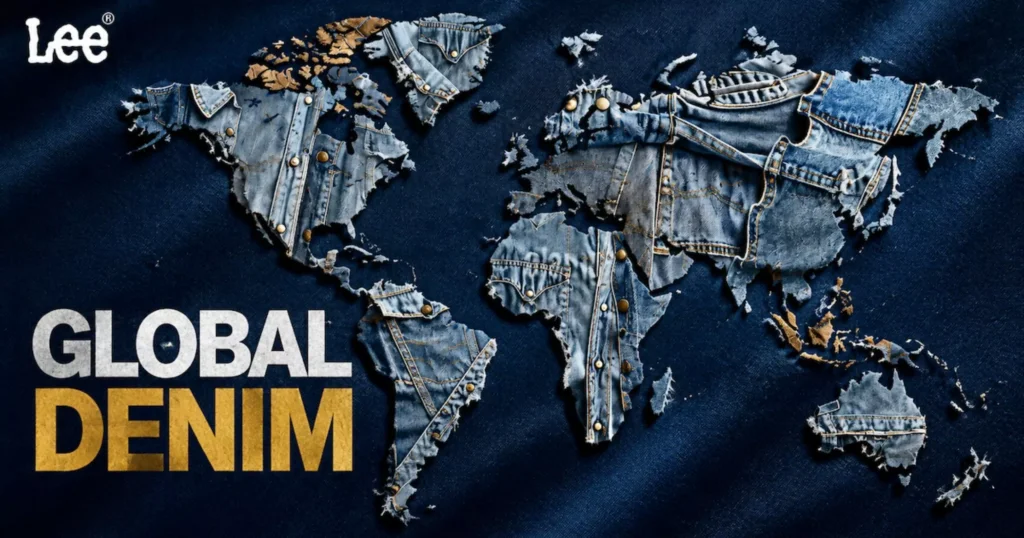
By 1970, Lee was shipping product out to more than 80 countries. Think about that for a second, a regional Kansas company that started out selling groceries less than a hundred years earlier, now reaching customers across the globe. Growth like that doesn’t happen in a single leap, but once it got moving, Lee’s name started popping up well outside American borders pretty fast.
How Lee Became Part of a Global Denim Portfolio Under Kontoor Brands
This brand spent close to 50 years under VF Corporation. Then in 2019, things shifted again. Lee became part of a brand new, publicly traded company called Kontoor Brands, alongside Wrangler and Rock & Republic. Along with that change came a literal move, Lee’s headquarters left Kansas for Greensboro, North Carolina, more than 130 years after the whole thing got started.
Joining a denim-focused portfolio like Kontoor gave Lee access to more resources and a wider reach, which helped push it further into being an actual global denim brand, not just a solid American export story.
Why Lee Still Holds Its Place Among Global Denim Brands
Denim brands rise and fall constantly, always have. Lee’s stuck around for a fairly simple reason honestly, it adapted without completely abandoning what it already was.
Boot cut, slim fit, denim shirts, even the occasional denim skirt, Lee kept finding small ways to stay relevant no matter what era or customer base it was dealing with. It never tried chasing every single trend at once, but it also didn’t cling stubbornly to one look for too long either.
That balancing act, staying consistent while still adapting, is a big reason Lee still carries real weight in denim today. Over 130 years since it began, and it’s still hanging around.
The Bottom Line: Lee Went From a Dry Goods Store to a Global Denim Name
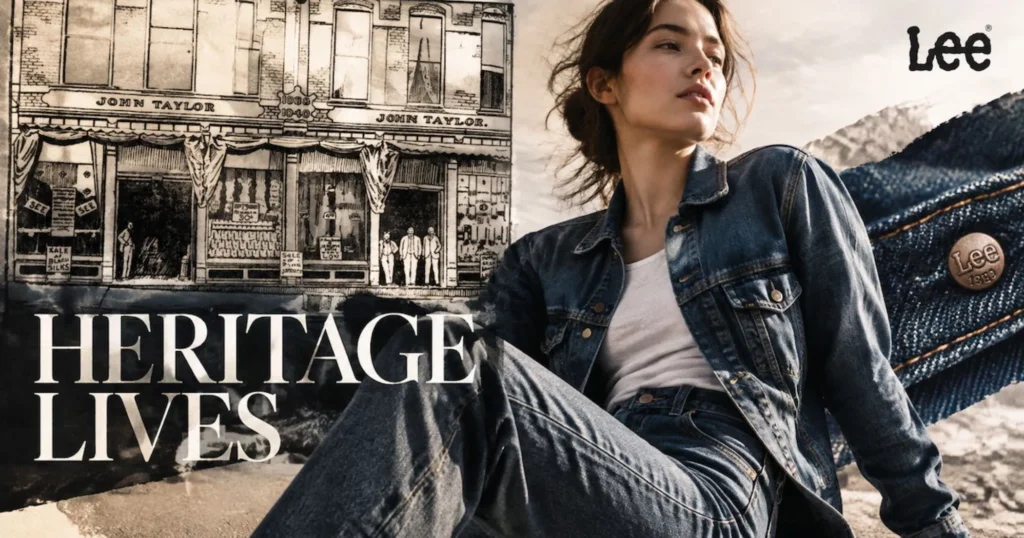
Lee’s whole story is kind of a good reminder, big brands don’t always start out big, or even remotely connected to what they end up being known for. A company that began by hauling around food and dry goods somehow ended up building one of the most recognized denim names on the planet. One small decision after another, really.
From the Union-All all the way to the 101Z, from Buddy Lee to James Dean, this brand just kept finding ways to grow, without losing track of where it actually came from. That’s probably the real reason it’s still around, worn by people everywhere who have zero idea it all started with a small grocery supplier out of Kansas. And that’s the interesting thing about a denim brand like Lee: over time, what starts as practical workwear can become part of someone’s personal style and fashion aesthetic.
FAQs
When was Lee founded, and what did the company originally sell?
1889, Salina, Kansas. Started off as a dry goods and grocery distribution business. No denim involved at all in the beginning.
What was Lee’s first major clothing success?
The Union-All. A one-piece coverall that came out in 1913, and it’s generally seen as the product that actually turned Lee into a household name.
What makes the Lee 101Z historically significant?
It was the first jean ever made with a zipper fly, back in 1926. Pretty big innovation at the time, even if it seems obvious now.
Who is Buddy Lee?
A 12.5-inch mascot doll, introduced by Lee back in 1920. Considered one of the earliest character-based advertising tools in American history.
Is Lee still an independent company today?
Nope. Lee’s part of Kontoor Brands now, which formed in 2019 after spinning off from VF Corporation, right alongside Wrangler and Rock & Republic.
1889, Salina, Kansas. Started off as a dry goods and grocery distribution business. No denim involved at all in the beginning.
The Union-All. A one-piece coverall that came out in 1913, and it’s generally seen as the product that actually turned Lee into a household name.
It was the first jean ever made with a zipper fly, back in 1926. Pretty big innovation at the time, even if it seems obvious now.
A 12.5-inch mascot doll, introduced by Lee back in 1920. Considered one of the earliest character-based advertising tools in American history.
Nope. Lee’s part of Kontoor Brands now, which formed in 2019 after spinning off from VF Corporation, right alongside Wrangler and Rock & Republic.
Tags:

Smit Rangras
Product Associate, NineE
Smit works on the product team at NineE, helping shape how the platform is built and how it serves t...
Read More
Get Latest Fashion Insights, Before Everyone Else.