Updated on Sep 29, 2026
How Eileen Fisher Made Sustainability a Fashion Staple
Brand StoriesChirag Pariyani18 Mins reading time
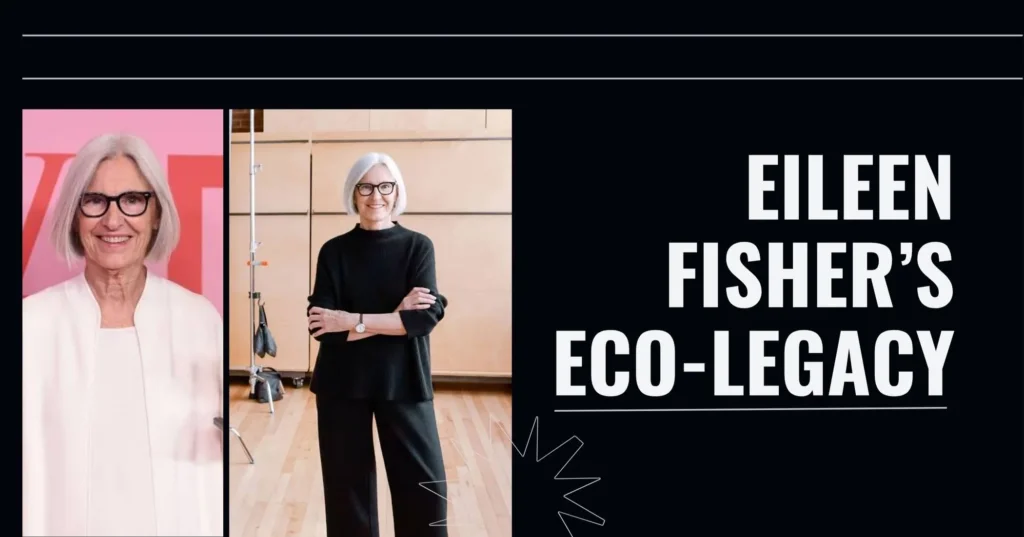
Eileen Fisher’s sustainability journey began with a simple design philosophy: make clothing that is easy to wear, easy to combine and worth keeping. Over time, that philosophy expanded into organic and regenerative materials, responsible production, repair, and Eileen Fisher Renew, its take-back and resale program.
The brand has made meaningful progress toward circular fashion, but it also acknowledges that its current system is not fully circular. Its story is therefore less about achieving perfection and more about building systems that keep improving.
The Beginning of Eileen Fisher’s Sustainable Fashion Journey
Why Eileen Fisher Started Rethinking Fashion
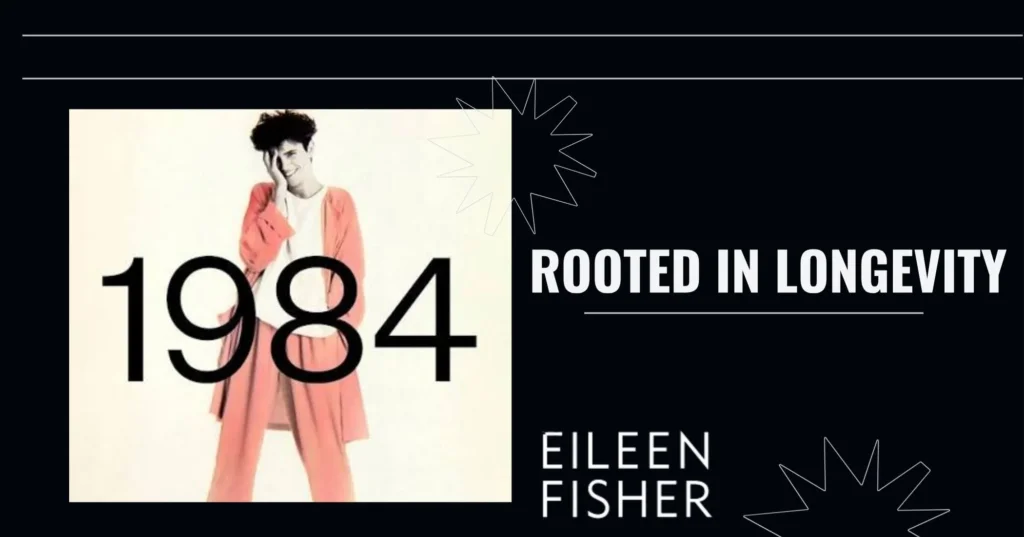
Reflecting the Future Since 1984 explains how Eileen Fisher’s story began in 1984 with a practical frustration: getting dressed felt unnecessarily complicated. She imagined a small set of simple shapes that could work together, then built a company around that idea.
The brand began with four pieces: a box-top, cropped pant, shell and vest, and that restrained starting point still influences its design language today. The same principle can be seen in white cotton T-shirts, where a familiar staple can remain useful across seasons.
That history matters when discussing Eileen Fisher sustainable fashion because sustainability was not added later as a marketing layer. A useful starting point is What Is Sustainable Fashion?, which frames sustainability as a broader system rather than a single material choice.
The company’s current approach grew from a product philosophy that already valued simplicity and repeat wear. The brand has continued revisiting those original shapes rather than constantly replacing them, creating continuity across decades.
Building a Brand Around Simplicity and Longevity
A simple wardrobe can reduce the pressure to buy something new every time a trend changes. It also connects with slow fashion and its emphasis on keeping clothing useful for longer.
Eileen Fisher has long focused on relaxed silhouettes, neutral colors and pieces designed to work together, making versatility part of the product proposition rather than an afterthought.
That approach is closely related to the principles behind a sustainable capsule wardrobe, where fewer, more adaptable pieces are chosen for repeated use. It also gives customers a practical reason to care for what they already own. When a garment works with several outfits and remains relevant across seasons, extending its useful life becomes easier.
From Design Philosophy to Sustainability Strategy
As the company grew, its responsibility agenda expanded from garment longevity to materials, manufacturing, workers and end-of-life systems. The company’s brand overview describes this broader systems approach.
Its 2024 history review describes this evolution as a move toward thinking about the whole clothing life cycle. That system’s perspective matters because no single material or recycling programme can solve fashion’s environmental problems.
How Eileen Fisher Put Sustainability at the Core of Its Brand
Eileen Fisher sustainability is best understood as a collection of connected practices rather than one signature initiative. Design, material sourcing, supply-chain standards and end-of-life programmes reinforce one another.
The core elements include:
- Designing simple garments that can be worn repeatedly.
- Increasing the use of organic, regenerative and recycled materials.
- Creating systems for repair, take-back, resale and material recovery.
Together, these choices move the brand toward circularity, although it does not claim to have eliminated the linear system.
Designing Clothes to Last
Longevity starts at the design stage. Eileen Fisher’s simple silhouettes and relatively restrained approach to seasonal change can make garments easier to keep in rotation instead of treating clothing as disposable trend pieces.
Repairing a small tear can be more meaningful than replacing a functional garment, making everyday care for clothes part of sustainability.
Choosing More Responsible Materials
Material choices have become a major part of the company’s environmental strategy. Eileen Fisher reported that 100% of its cotton was organically grown in 2024; 38% of the amount grown used organic and regenerative practices, while 85% of its wool came from regenerative farms. These figures describe progress within specific fiber categories rather than suggesting that every material used by the brand is regenerative.
The shift is better viewed as an ongoing progression: natural fibers alone are not enough, because farming, traceability and production practices also matter.
Reducing Waste Across the Supply Chain
Waste reduction becomes particularly visible when garments reach the end of their first useful life. Eileen Fisher has developed systems for sorting returned clothing, repairing pieces, remaking selected garments, recycling fibers and downcycling materials when higher-value options are not feasible.
For consumers, the same principle starts with buying thoughtfully, caring for clothing properly and decluttering clothes sustainably only when necessary.
Eileen Fisher Renew: Turning Old Clothes Into New Possibilities
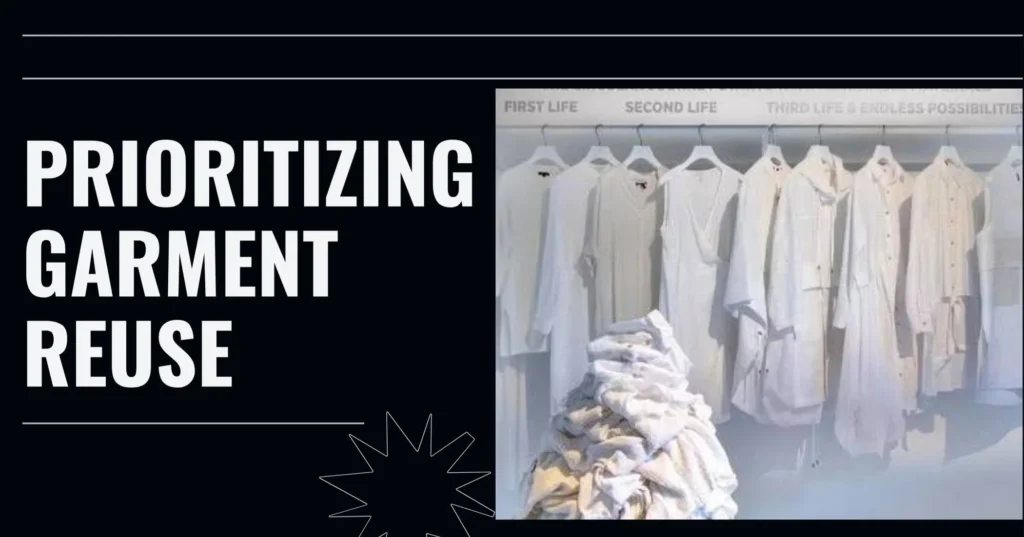
Eileen Fisher Renew is perhaps the clearest expression of the company’s circular ambitions. Launched in 2009, the programme takes back used Eileen Fisher garments and finds different next-life pathways depending on their condition.
In 2026, the company marked more than 3 million items brought back through Renew, showing how the programme has grown beyond a small pilot into a substantial reverse-logistics operation.
Take-back is more complicated than collection alone; sorting, cleaning, repair, resale, donation and recycling all require labor and infrastructure.
| Take-back | Sorting | Repair / Resale | Remake / Donation | Recycling / Downcycling |
| US customers return Eileen Fisher garments through stores or the Renew system. | Returned pieces are assessed for condition, wear, stains, holes and material. | Wearable pieces can be repaired or prepared for secondhand resale. | Selected garments are remade or directed to donation and other next-life uses. | Garments that cannot remain wearable may enter fiber recovery or downcycling as a last resort. |
How the Clothing Take-Back Program Works
Customers in the US can return Eileen Fisher garments through Renew and receive $5 in Renew Rewards for each piece, regardless of condition.
The company said in 2024 that Renew had resold, donated or remade more than 2.3 million garments; its 2026 milestone now puts total items brought back through the programme at more than 3 million.
Wearable pieces can move into resale, while damaged clothing may be repaired, remade, donated or sent into recycling or downcycling.
From Returned Garments to Renewed Clothing
Sorting reveals the work behind circular fashion: sellable pieces are cleaned and prepared for resale, while damaged items are assessed for other pathways.
Some become repaired or remade collections, while others enter fiber-to-fiber recycling. When those options are not possible, materials may be downcycled into insulation. The company’s textile-waste work describes this as a last resort because it reduces material value.
What Renew Reveals About Circular Fashion
Renew demonstrates that circularity is not simply a matter of telling customers to recycle their clothes. It requires product design, reverse logistics, sorting infrastructure, skilled labor and markets for recovered materials.
It also shows why resale and reuse can be more valuable than immediate recycling. A garment that can be worn again retains more of the work and resources already invested in making it. That is why Renew’s role is not only about waste reduction; it is also about extending garment longevity.
Eileen Fisher’s Approach to Circular Fashion
Moving Beyond the Traditional Take-Make-Waste Model
The conventional fashion system largely follows a linear path: resources are extracted, products are made, clothing is purchased and unwanted garments eventually leave the system. Circular fashion tries to keep products and materials in use for longer while reducing dependence on virgin resources.
The circular fashion framework from the Ellen MacArthur Foundation around keeping products and materials in use. Renew reflects that model through reuse, resale and material recovery.
Repair, Reuse, Resale, and Recycling
Circularity works best as a hierarchy: repair first, then resale or reuse, with recycling for garments that can no longer be worn.
Eileen Fisher’s model incorporates all of these pathways. Its repair programme and Renew collections are particularly important because they place reuse before material breakdown wherever possible.
Why Circularity Matters for the Fashion Industry
Circularity matters because fashion’s environmental footprint begins long before a garment reaches a shop. Fiber production, dyeing, manufacturing, transportation and use all require resources, while discarded clothing can create additional waste.
Materials Market Report 2025 estimates global fiber production rose from 125 million tons in 2023 to 132 million tons in 2024, making longer garment life increasingly important.
Materials, Manufacturing, and Environmental Responsibility
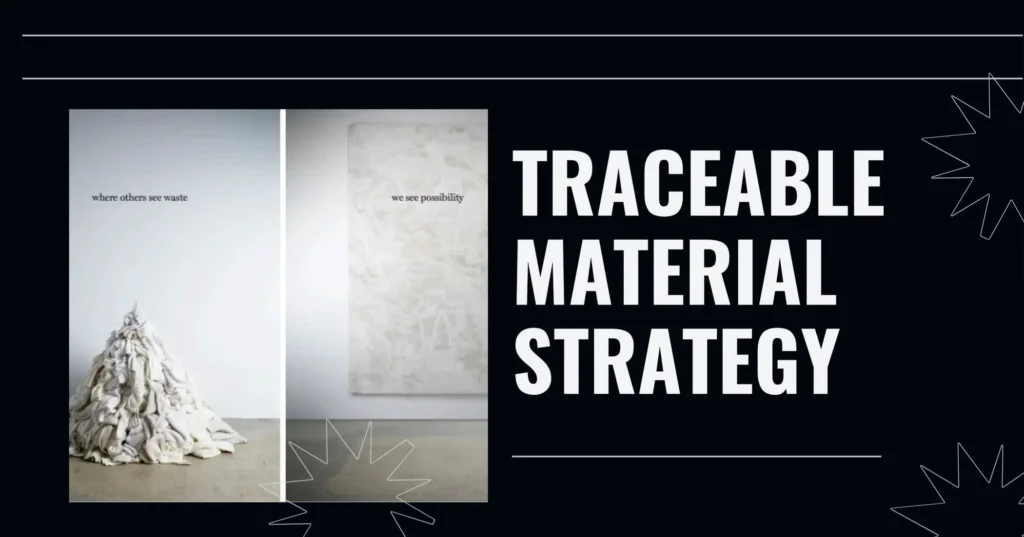
The materials side of Eileen Fisher sustainability shows another important shift: the goal is not simply to substitute one fiber for another, but to understand how fibers are grown, processed and eventually recovered.
The company’s material strategy increasingly focuses on:
- Organic and regenerative agriculture.
- Responsible wool and recycled fibers.
- Better traceability and supply-chain practices.
That supports a broader definition of responsible fashion that considers environmental and social impacts.
The Shift Toward Lower-Impact Materials
Eileen Fisher introduced its first organic cotton collection in 2004 and has continued expanding its use of organically grown fibers. Its current material strategy places particular emphasis on moving beyond conventional definitions of “natural” materials.
A natural fiber can still have impacts depending on how it is grown, processed and manufactured, so the complete material journey matters.
Exploring Regenerative and Recycled Fibers
Regenerative agriculture has become a major part of the brand’s future-facing material strategy. Eileen Fisher’s Regenerative Organic Certified cotton work focuses on soil health, biodiversity, traceability and farmer well-being.
Expert perspective
La Rhea Pepper, co-founder and former CEO of Textile Exchange and now a senior advisor to the Regenerative Organic Alliance, has spent more than two decades working on regenerative and organic textiles.
Her perspective reinforces an important point for Eileen Fisher: regenerative materials are not simply a label change; they connect fiber sourcing with soil health, ecological resilience and farmer well-being.
The company is also exploring recycled fibers as part of its circular design work. In 2024, it reported completing a wool fiber-to-fiber recycling pilot that produced a sweater containing 80% recycled wool spun from pre-loved Eileen Fisher garments.
Addressing Water, Waste, and Carbon Impacts
No material strategy removes every impact. Fiber choice, dyeing, finishing and transportation all matter.
The useful question is not only what a garment is made from, but how it is produced, how long it is used and what happens afterwards.
People and Purpose: The Social Side of Eileen Fisher’s Sustainability
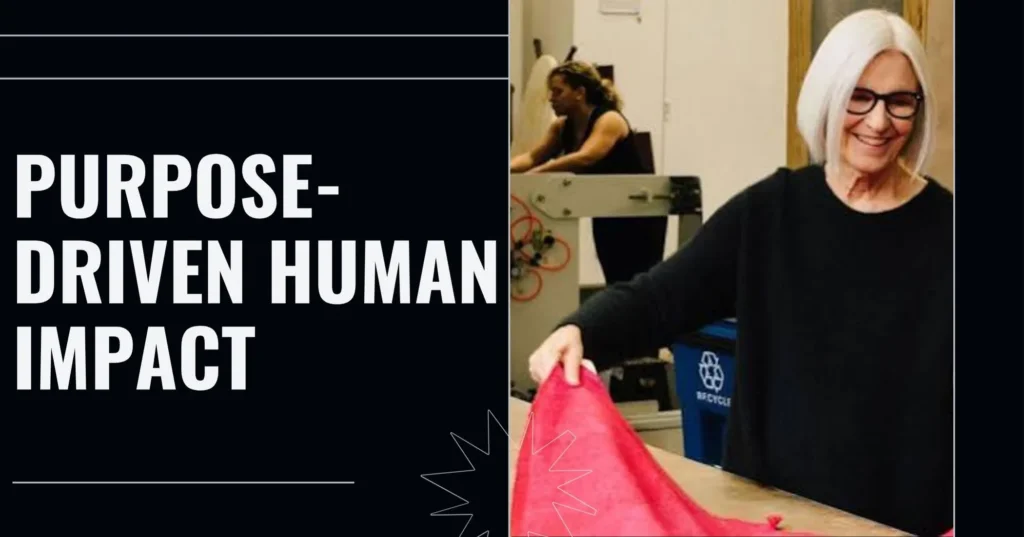
Sustainability also has a human dimension: environmental progress cannot be separated from worker conditions, community impact and governance.
Eileen Fisher’s approach includes:
- Fair Trade initiatives with selected factories and suppliers.
- A stated focus on workers, communities and women’s empowerment.
- A foundation that supports broader systems change around regenerative design.
Supporting Workers and Responsible Production
The company has increasingly connected environmental goals with supply-chain responsibility. In its 2024 Benefit Corporation Report, Eileen Fisher said 20% of its 2024 products were made in Fair Trade Certified™ factories.
Its 2024 history review also notes that three factories had joined the Fair Trade USA programme with the company’s support.
Ethical fashion cannot be reduced to fabric selection; wages, working conditions and purchasing practices also matter.
Women, Communities, and the Eileen Fisher Foundation
The Eileen Fisher Foundation extends the company’s impact beyond its own products. The Eileen Fisher Foundation’s regenerative design work supports work focused on women and girls and on systems that can help create a more regenerative future.
Its work reinforces a broader point: sustainability involves changing the systems that shape how products are designed, made, used and discarded.
Connecting Business Growth With Social Impact
Eileen Fisher has also formalized aspects of its purpose through benefit corporation status and B Corp certification. In 2024, the company reported an all-time-high 2024 B Impact update reports an all-time-high B Impact Score of 109 out of 200.
A certification is not proof that sustainability has been solved; it is better viewed as one mechanism for accountability and improvement.
Challenges and Criticism of Eileen Fisher’s Sustainability Model
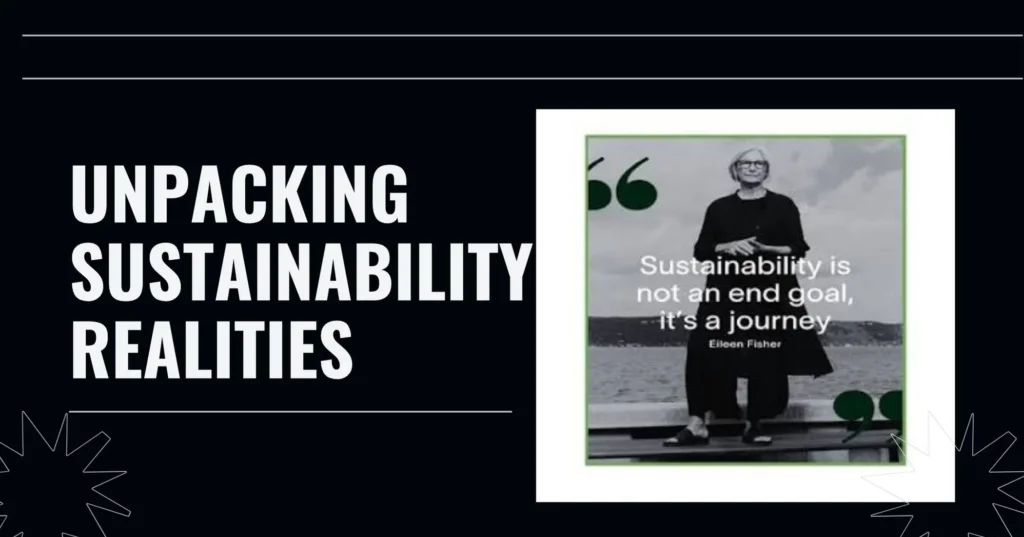
A credible discussion of Eileen Fisher sustainability needs to include its limitations. The company has made substantial investments in circular systems, but those systems still operate within a much larger linear fashion business.
Can a Fashion Brand Truly Be Sustainable?
No fashion brand can reasonably claim to have eliminated every environmental and social impact, and Eileen Fisher has acknowledged this limitation.
In 2023, the company noted that the two-million-garment Renew milestone represented only 5.4% of everything it had made during its previous 39 years. That places the programme’s achievements in context rather than presenting take-back as a complete solution.
The Challenges of Scaling Circular Fashion
Circular systems require collection networks, sorting facilities, skilled workers, repair capacity and reliable recycling technologies.
Eileen Fisher’s own textile-waste work illustrates the problem. The company receives large volumes of clothing, including significant quantities that are damaged, and not every garment can be economically returned to the same material cycle.
Why Transparency and Continuous Improvement Matter
Transparency can be more useful than absolute sustainability claims: publishing progress and acknowledging gaps gives consumers a clearer picture.
Eileen Fisher’s willingness to describe downcycling as a last resort and to acknowledge that its circular system is incomplete makes its sustainability story more credible, even while the work remains unfinished.
What Other Fashion Brands Can Learn From Eileen Fisher

Make Sustainability Part of the Business Model
Sustainability works better when it is connected to how a company designs, sells and manages products; a take-back programme alone has limited potential.
Eileen Fisher’s example suggests that circular thinking should influence product design, customer relationships, reverse logistics and after-sales services from the beginning.
Prioritize Longevity Over Trends
Longer garment life can be one of the most practical sustainability strategies available to brands and consumers. A well-made piece that remains useful for years does not need to be replaced simply because a seasonal trend has changed.
Whether someone is browsing women’s western wear, dresses or kurtis, tunics & tops, a purchase is more useful when the garment is genuinely wearable and worn often. For budget-conscious shoppers, women’s cotton kurtis can be evaluated through the same lens.
Build Systems for Garment Reuse and Recovery
Brands can learn from Renew’s emphasis on multiple next-life options. Not every garment needs the same solution, and designing a recovery system around resale, repair, reuse and recycling can prevent one pathway from carrying the entire burden.
For consumers, how to shop for sustainable clothing starts with buying less, choosing versatile pieces and learning how to care for clothes can extend useful life.
Treat Sustainability as a Long-Term Journey
Eileen Fisher’s history shows that sustainability is built through years of incremental decisions. The company began with simple design, added organic materials, developed take-back systems and is now experimenting with regenerative agriculture and fiber-to-fiber recycling.
Other sustainable fashion brands take different routes; Indian labels such as No Nasties and Doodlage offer useful examples, even though their models differ from Eileen Fisher’s.
The Future of Eileen Fisher and Sustainable Fashion

Where Circularity Could Take the Brand Next
The next challenge is scale: collecting more garments, increasing resale, improving fiber recovery and making circular design viable across more of the business.
Its 2024 Benefit Corporation Report shows both progress and opportunity: the company collected 296,276 garments and resold 107,802 Renew items. It also produced its first circular wool sweater using 80% recycled wool.
The Growing Role of Regenerative and Circular Design
Regenerative materials and circular design address different stages: improving ecological systems at the source and keeping products and materials in use after purchase.
The Eileen Fisher Foundation’s work on regenerative design takes this systems perspective further, focusing on how design decisions can influence environmental and social outcomes before products even enter the market.
What Eileen Fisher’s Journey Means for the Future of Fashion
Sustainable fashion will not be built through one breakthrough material or recycling programme; it requires better products, longer use, responsible production and recovery infrastructure.
That makes Eileen Fisher’s journey relevant beyond the brand itself. Its strongest contribution may be showing how sustainability can become part of the operating model rather than remaining a separate campaign.
Final Takeaway: Sustainability as an Ongoing Journey

Eileen Fisher’s sustainability story is not a story of a fashion brand that has solved every environmental problem. It is the story of a company that has gradually expanded a simple design philosophy into a broader system of responsible materials, garment longevity, repair, take-back, resale and circular experimentation.
The useful lesson is to think about the entire life of a garment. Durability, recovery systems and honest communication make sustainability a continuing business practice.
For consumers, the takeaway is practical: buy pieces you will wear repeatedly, care for them, repair them and consider resale or take-back before disposal.
Frequently Asked Questions
Is Eileen Fisher a sustainable fashion brand?
Eileen Fisher is widely recognized for its sustainability initiatives, including organic and regenerative materials, repair, take-back, resale and circular design. However, the company itself acknowledges that it is not fully circular, so it is more accurate to describe it as a brand working toward a more sustainable and circular model.
What is Eileen Fisher Renew?
Eileen Fisher Renew is the company’s take-back and resale programme, launched in 2009. Customers return used Eileen Fisher garments, which are then assessed for resale, donation, repair, remaking, recycling or other next-life options.
How does Eileen Fisher reduce textile waste?
The company uses several pathways, including resale, repair, remaking, fiber-to-fiber recycling and downcycling. Its approach depends on the condition and material composition of each returned garment.
Does Eileen Fisher use regenerative materials?
Yes. Eileen Fisher has introduced Regenerative Organic Certified cotton and is also working with regenerative wool. Its material strategy increasingly focuses on farming practices, soil health, biodiversity, traceability and farmer well-being.
Why is circular fashion important?
Circular fashion aims to keep products and materials in use for longer instead of following a linear take-make-waste model. In practice, that can mean designing for durability, repairing garments, reselling them and recovering materials when they can no longer be worn.
Can fashion ever be completely sustainable?
Probably not in an absolute sense. Fashion involves resource extraction, agriculture, energy, manufacturing, transport and waste. A more useful goal is to reduce impacts, extend product life, improve working conditions and build systems that continually reduce waste and resource use.
How does Eileen Fisher Renew work, and who is eligible to return clothing?
The current US Renew offer accepts Eileen Fisher clothing in any condition at participating Eileen Fisher or Renew stores, with $5 in Renew Rewards for each returned piece. Items are then assessed for resale, repair, remaking, donation, recycling or downcycling. Because the current take-back offer is explicitly US-based, shoppers outside the US should check local availability before assuming the same programme applies.
Is Eileen Fisher clothing worth buying if sustainability is a priority?
It can be, particularly when you choose a piece you expect to wear repeatedly, care for it well and keep it in use for years. Eileen Fisher’s longevity, repair and Renew systems strengthen that case, but they do not make a purchase impact-free.
The more useful sustainability test is whether the garment fits your wardrobe, earns frequent wears and remains useful long enough to justify the resources used to make it.
Eileen Fisher is widely recognized for its sustainability initiatives, including organic and regenerative materials, repair, take-back, resale and circular design. However, the company itself acknowledges that it is not fully circular, so it is more accurate to describe it as a brand working toward a more sustainable and circular model.
Eileen Fisher Renew is the company’s take-back and resale programme, launched in 2009. Customers return used Eileen Fisher garments, which are then assessed for resale, donation, repair, remaking, recycling or other next-life options.
The company uses several pathways, including resale, repair, remaking, fiber-to-fiber recycling and downcycling. Its approach depends on the condition and material composition of each returned garment.
Yes. Eileen Fisher has introduced Regenerative Organic Certified cotton and is also working with regenerative wool. Its material strategy increasingly focuses on farming practices, soil health, biodiversity, traceability and farmer well-being.
Circular fashion aims to keep products and materials in use for longer instead of following a linear take-make-waste model. In practice, that can mean designing for durability, repairing garments, reselling them and recovering materials when they can no longer be worn.
Probably not in an absolute sense. Fashion involves resource extraction, agriculture, energy, manufacturing, transport and waste. A more useful goal is to reduce impacts, extend product life, improve working conditions and build systems that continually reduce waste and resource use.
The current US Renew offer accepts Eileen Fisher clothing in any condition at participating Eileen Fisher or Renew stores, with $5 in Renew Rewards for each returned piece. Items are then assessed for resale, repair, remaking, donation, recycling or downcycling. Because the current take-back offer is explicitly US-based, shoppers outside the US should check local availability before assuming the same programme applies.
It can be, particularly when you choose a piece you expect to wear repeatedly, care for it well and keep it in use for years. Eileen Fisher’s longevity, repair and Renew systems strengthen that case, but they do not make a purchase impact-free. The more useful sustainability test is whether the garment fits your wardrobe, earns frequent wears and remains useful long enough to justify the resources used to make it.
Tags:

Chirag Pariyani
AI Engineer, NineE
Chirag is part of the engineering team at NineE, working on the technology that powers the product —...
Read More
Get Latest Fashion Insights, Before Everyone Else.