Updated on Jul 29, 2026
Capsule Wardrobe vs Minimalist Wardrobe: What’s the Difference?
Fashion GuidesAakash Jethwani15 Mins reading time
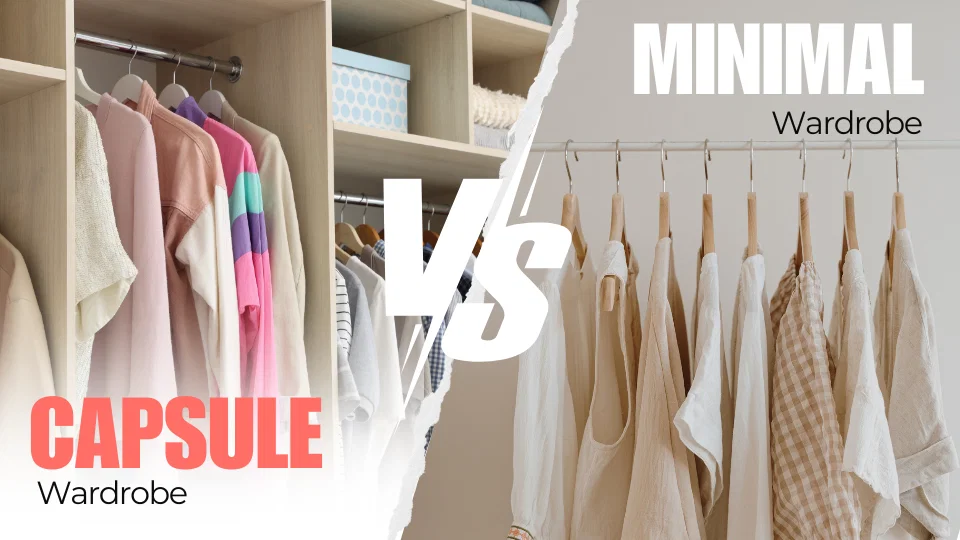
Capsule wardrobe and minimalist wardrobe are often used as if they mean the same thing. Browse YouTube, Pinterest, or fashion blogs, and you’ll see the terms used interchangeably. Both encourage buying with intention, reducing unnecessary purchases, and creating a wardrobe that feels easier to manage.
But they’re not trying to solve the same problem.
A capsule wardrobe is designed to make getting dressed easier by building a collection of clothes that work well together. A minimalist wardrobe is about owning less and simplifying what you have. Those goals often overlap, but they can lead to very different decisions about what stays in your closet and what doesn’t.
Understanding that distinction matters because choosing the wrong approach can leave you frustrated. You might reduce your wardrobe without making it easier to wear, or build a highly versatile wardrobe without actually achieving the simplicity you’re looking for.
If you’re wondering whether a capsule wardrobe or a minimalist wardrobe is the better fit, this guide breaks down the key differences, where the two approaches overlap, and how to decide which one aligns best with your lifestyle.
The Difference in One Minute

If you’re looking for the simplest way to understand the difference, think about the question each approach is trying to answer.
A capsule wardrobe asks:
“How can I build a wardrobe that makes getting dressed easier?”
A minimalist wardrobe asks:
“How can I own less while keeping only what I truly need?”
At first glance, those goals seem almost identical. Both encourage thoughtful shopping, fewer impulse purchases, and a more intentional relationship with clothing. That’s why the two concepts are so often confused.
The difference is in what they prioritize.
A capsule wardrobe measures success by how well your clothes work together. The focus is on versatility, outfit combinations, and creating a wardrobe that supports your everyday life.
A minimalist wardrobe measures success by simplicity. The emphasis is on reducing excess, owning only what adds value, and avoiding unnecessary possessions—even beyond clothing.
| Feature | Capsule Wardrobe | Minimalist Wardrobe |
| Primary goal | Make getting dressed easier | Own less and simplify possessions |
| Main focus | Versatile clothing that works together | Reducing excess and keeping only what’s necessary |
| Success looks like | A wardrobe where most pieces can be mixed and matched | A wardrobe with as few unnecessary items as possible |
| Shopping mindset | “Will this work with my existing wardrobe?” | “Do I really need this?” |
| Number of clothes | No fixed number | Often fewer items, but no universal rule |
| Personal style | Built around your lifestyle and style preferences | Often prioritizes simplicity over variety |
| Approach | A wardrobe planning system | A broader lifestyle philosophy |
| Best for | People who want easier outfit planning and intentional shopping | People who want to simplify their belongings and consumption |
Neither approach is inherently better. They simply solve different problems. Understanding which problem you’re trying to solve is the first step toward choosing the right one for your wardrobe.
Why People Confuse Capsule Wardrobes and Minimalist Wardrobes

At first glance, these two approaches seem almost identical.
Both encourage more intentional shopping, discourage impulse purchases, and help reduce wardrobe clutter. In practice, both often lead to owning fewer clothes than before, which makes them appear almost identical.
The difference isn’t what they encourage—it’s the question each approach is trying to answer.
A capsule wardrobe asks:
“How can I make my wardrobe work better?”
A minimalist wardrobe asks:
“How can I own only what I truly need?”
Those questions may sound similar, but they lead to different decisions.
Someone building a capsule wardrobe might happily keep an extra jacket because it creates more outfit combinations and gets worn regularly. A minimalist might decide they already have a jacket that serves the purpose and choose not to own another.
Neither decision is more correct. They’re simply driven by different priorities.
Understanding that distinction makes it much easier to decide which approach fits your own lifestyle, rather than following someone else’s philosophy.
Capsule Wardrobe vs Minimalist Wardrobe: The Real Differences

Although capsule wardrobes and minimalist wardrobes can look similar from the outside, they’re built around different priorities. The easiest way to understand the difference is to look at how each approach influences the decisions you make.
What Problem Is Each Approach Trying to Solve?
A capsule wardrobe is designed to solve a wardrobe problem.
If getting dressed feels difficult, your clothes don’t work well together, or shopping has become overwhelming, a capsule wardrobe helps create more outfit combinations with the clothes you own.
A minimalist wardrobe solves a different problem.
Its goal is to reduce excess by keeping only the possessions that genuinely add value. Clothing is simply one part of a broader minimalist philosophy.
In short, a capsule wardrobe asks, “How can my wardrobe work better?” A minimalist wardrobe asks, “How can I live with less?”
How Do They Influence Shopping Decisions?
Both approaches encourage buying with intention, but they define a “good purchase” differently.
Someone building a capsule wardrobe looks for clothes that fill genuine gaps, work with existing pieces, and increase outfit possibilities.
Someone following a minimalist wardrobe starts one step earlier by asking whether another purchase is necessary at all. Even a versatile item may not be worth buying if what’s already in the wardrobe serves the same purpose.
The difference isn’t just what you buy—it’s how you decide whether to buy anything in the first place.
Does the Number of Clothes Matter?
One of the biggest myths is that both approaches require a specific number of clothes.
In reality, neither does.
A capsule wardrobe might contain 30 pieces or 60, depending on your work, climate, hobbies, and lifestyle. The focus is on creating a wardrobe where most pieces work together.
A minimalist wardrobe may naturally contain fewer clothes because reducing possessions is one of its goals, but there’s still no universal number that defines success.
The number of clothes is simply the result of your priorities, not the goal itself.
How Do They Define Success?
Perhaps the simplest way to separate these two approaches is to look at what success looks like.
A successful capsule wardrobe is one that makes getting dressed feel effortless because most of your clothes work together.
A successful minimalist wardrobe is one that contains only the clothes you genuinely need, without unnecessary excess.
Both can lead to a smaller, more intentional wardrobe. They simply measure success in different ways.
Two People. Two Wardrobes.

Sometimes the easiest way to understand the difference is to look at how it plays out in real life.
Sarah Builds a Capsule Wardrobe
Sarah owns around 50 pieces of clothing.
She has enough options for work, weekends, travel, and special occasions, but almost everything works together. Her tops pair with most of her trousers, her jackets layer easily over different outfits, and her shoes suit multiple occasions.
When she shops, she isn’t trying to own less. She’s trying to make her wardrobe work better.
Before buying something new, she asks:
“Will this work with the clothes I already own?”
Her wardrobe isn’t necessarily small, but it’s highly functional.
Alex Follows a Minimalist Wardrobe
Alex owns around 25 pieces of clothing.
His goal isn’t to create the maximum number of outfit combinations. Instead, he wants to own only what he genuinely needs.
He avoids unnecessary purchases, replaces clothes only when required, and prefers keeping his wardrobe as simple as possible.
Before buying something new, he asks:
“Do I actually need this?”
His wardrobe reflects a broader commitment to living with less, not just dressing more efficiently.
Neither Approach Is More “Correct”
Sarah and Alex both shop intentionally.
They both avoid impulse purchases.
They both wear most of what they own.
The difference is the reason behind their decisions.
Sarah’s wardrobe is built around versatility and making everyday dressing easier.
Alex’s wardrobe is built around simplicity and reducing what he owns.
Both approaches can lead to a thoughtful, practical wardrobe. The better choice depends on the problem you’re trying to solve, not on how many clothes you own.
Which Approach Is Right for You?

There’s no universally better choice. The right approach depends on what you’re hoping to achieve.
Choose a Capsule Wardrobe If…
A capsule wardrobe is likely to suit you if your biggest frustration is getting dressed every day.
You don’t necessarily want fewer clothes—you want a wardrobe that feels more organized, more versatile, and easier to use. You enjoy having options, but you want those options to work together instead of competing for space.
A capsule wardrobe is a good fit if you want to:
- Spend less time deciding what to wear.
- Build more outfits with the clothes you already own.
- Shop with greater intention.
- Develop a wardrobe that reflects your personal style.
- Make future shopping decisions easier.
Choose a Minimalist Wardrobe If…
A minimalist wardrobe may be the better choice if your goal extends beyond clothing.
Perhaps you’re trying to reduce clutter, simplify your home, spend less, or embrace a more minimalist lifestyle overall. In that case, your wardrobe becomes one part of a much bigger philosophy.
A minimalist wardrobe is a good fit if you want to:
- Own fewer possessions overall.
- Reduce unnecessary consumption.
- Simplify your daily life.
- Feel comfortable living with only what you truly need.
You Don’t Have to Choose Just One
For many people, the best approach combines elements of both.
You might build a capsule wardrobe because you want clothes that work well together while also adopting minimalist habits that help you avoid unnecessary purchases.
In other words, your wardrobe can be highly versatile without being large, and intentionally small without following rigid rules.
The goal isn’t to fit neatly into one label. It’s to build a wardrobe that supports the way you live and makes everyday decisions a little easier.
Every Approach Has Trade-offs

Neither a capsule wardrobe nor a minimalist wardrobe is perfect. Each comes with its own strengths and compromises, which is why the right choice depends on what matters most to you.
| If you choose a… | Capsule Wardrobe | Minimalist Wardrobe |
| You’ll gain | Easier outfit planning and more versatility | Fewer possessions and a simpler wardrobe |
| You may give up | Some spontaneity when buying clothes | Greater variety in your outfit choices |
| Shopping becomes | More intentional because every purchase should work with your wardrobe | Less frequent because you buy only when something is genuinely needed |
| Works best for | People who want their wardrobe to work harder | People who want to simplify their lifestyle |
Neither set of trade-offs is better.
For example, if you’ve ever stood in front of a full wardrobe and still felt like you had nothing to wear, you’re probably trying to solve a wardrobe problem. A capsule wardrobe is designed for exactly that.
On the other hand, if your goal is to reduce clutter, spend less, and own fewer possessions across every part of your life, a minimalist wardrobe is likely to feel more rewarding.
Understanding these trade-offs is often more helpful than trying to decide which approach is “better.” The best choice is the one that solves the problem you’re actually facing.
Common Myths About Capsule and Minimalist Wardrobes

The growing popularity of both approaches has led to plenty of misconceptions.
Here are a few of the most common ones.
Myth 1: A Capsule Wardrobe Must Have Exactly 30 or 33 Pieces
There isn’t a universal number that defines a capsule wardrobe.
Some people are happy with around 30 carefully chosen pieces, while others need 50 or more because of their work, climate, or lifestyle. What makes a wardrobe “capsule” isn’t its size—it’s how well the pieces work together.
Myth 2: A Minimalist Wardrobe Means Wearing Only Neutral Colours
Minimalism isn’t defined by a colour palette.
While many minimalist wardrobes feature neutral tones because they’re easy to style, there’s nothing stopping someone from wearing colour, patterns, or statement pieces. The focus is on intentional ownership, not dressing in black, white, or beige.
Myth 3: You Have to Throw Most of Your Clothes Away
Neither approach requires starting from scratch.
Most people already own many of the pieces that will form the foundation of a better wardrobe. The process usually begins by understanding what you wear regularly before deciding what no longer serves a purpose.
Myth 4: One Approach Is Better Than the Other
This is perhaps the biggest misconception.
A capsule wardrobe and a minimalist wardrobe solve different problems. One focuses on creating a wardrobe that’s easier to wear, while the other focuses on simplifying what you own.
The better choice is simply the one that aligns with your goals and the way you want to live.
Capsule Wardrobes and Minimalist Wardrobes Solve Different Problems

It’s easy to think a capsule wardrobe and a minimalist wardrobe are simply different names for the same idea. In reality, they’re built around different priorities.
A capsule wardrobe helps you make the most of the clothes you own. It’s about creating a wardrobe that feels versatile, intentional, and easy to wear.
A minimalist wardrobe helps you simplify what you own. It’s part of a broader mindset that values keeping only what serves a genuine purpose.
Neither approach is trying to achieve the same outcome, which means neither is universally better.
If your biggest frustration is opening a full closet and still feeling like you have nothing to wear, a capsule wardrobe is likely to solve that problem.
If your goal is to reduce possessions, simplify your lifestyle, and become more intentional about what you own, a minimalist wardrobe may be the better fit.
Many people eventually find themselves somewhere in the middle. They build a capsule wardrobe that makes getting dressed easier while adopting minimalist habits that help them shop more thoughtfully and avoid unnecessary purchases.
The best wardrobe isn’t the one with the fewest clothes or the one with the most outfit combinations.
It’s the one that quietly does its job every morning without making you think about it.
If you’re ready to build a wardrobe that works for your lifestyle, continue with our guides on How to Build a Capsule Wardrobe, Capsule Wardrobe Essentials, and Capsule Wardrobe Checklist. They’ll help you turn these ideas into a wardrobe that’s practical, versatile, and built around the way you actually live.
Key Takeaways
- A capsule wardrobe focuses on creating a versatile collection of clothes that work well together and make getting dressed easier.
- A minimalist wardrobe focuses on owning less and keeping only the clothing that adds value to your life.
- Although the two approaches overlap, they solve different problems and are built around different priorities.
- Neither approach has a fixed number of clothes. Success depends on how well your wardrobe supports your lifestyle and goals.
- You don’t have to choose one approach exclusively. Many people combine the versatility of a capsule wardrobe with the intentional mindset of minimalism.
- The best wardrobe is the one that helps you dress with confidence, shop more intentionally, and suits the way you actually live.
Frequently Asked Questions
Is a capsule wardrobe the same as a minimalist wardrobe?
No. While both encourage intentional shopping and reducing unnecessary clothing, they have different goals. A capsule wardrobe focuses on creating a versatile collection of clothes that work well together, while a minimalist wardrobe focuses on owning less as part of a broader philosophy of simplicity.
Can you have a capsule wardrobe without being a minimalist?
Absolutely. Many people build a capsule wardrobe simply because they want getting dressed to be easier. They may still enjoy fashion, own clothes for different occasions, or regularly update their wardrobe without identifying as minimalists.
Can a minimalist wardrobe have more than 30 clothes?
Yes. Minimalism isn’t defined by a specific number of items. The right number depends on your lifestyle, climate, work, and personal needs. The goal is to own only what genuinely adds value, whether that’s 25 pieces or 50.
Which approach saves more money?
Both can help reduce unnecessary spending, but in different ways. A capsule wardrobe encourages buying versatile pieces that work with your existing wardrobe, while a minimalist wardrobe encourages buying less overall. The amount you save depends more on your shopping habits than the approach you choose.
Which approach is better if I enjoy fashion?
A capsule wardrobe is often the better fit for people who enjoy experimenting with style while keeping their wardrobe organized. It allows you to build around versatile foundations and introduce trend-led or statement pieces without losing cohesion.
Can I switch from a minimalist wardrobe to a capsule wardrobe?
Yes. Many people do as their lifestyle or priorities change. You don’t need to replace your entire wardrobe. Start by identifying the clothes you wear most often and gradually build a collection that creates more outfit combinations while continuing to shop intentionally.
Do I need to throw clothes away to start either approach?
No. In most cases, the best place to start is with the clothes you already own. Review what you wear regularly, identify what’s no longer serving a purpose, and make gradual changes instead of replacing everything at once.
Which approach is better for beginners?
If your biggest frustration is having plenty of clothes but feeling like you have nothing to wear, a capsule wardrobe is usually the easier place to start. If your goal is to simplify your lifestyle and reduce possessions across every area of your life, a minimalist wardrobe may be the better choice.
Tags:

Aakash Jethwani
Founder & CEO at NineE AI
Aakash Jethwani is the Founder & CEO of NineE AI, a Fashion Exploration Engine built to help peo...
Read More
Get Latest Fashion Insights, Before Everyone Else.