Create Your Agent

Updated on Nov 23, 2026
Stüssy: How It Turned Surf Culture Into a Global Streetwear Movement
Brand StoriesChirag Pariyani12 Mins reading time
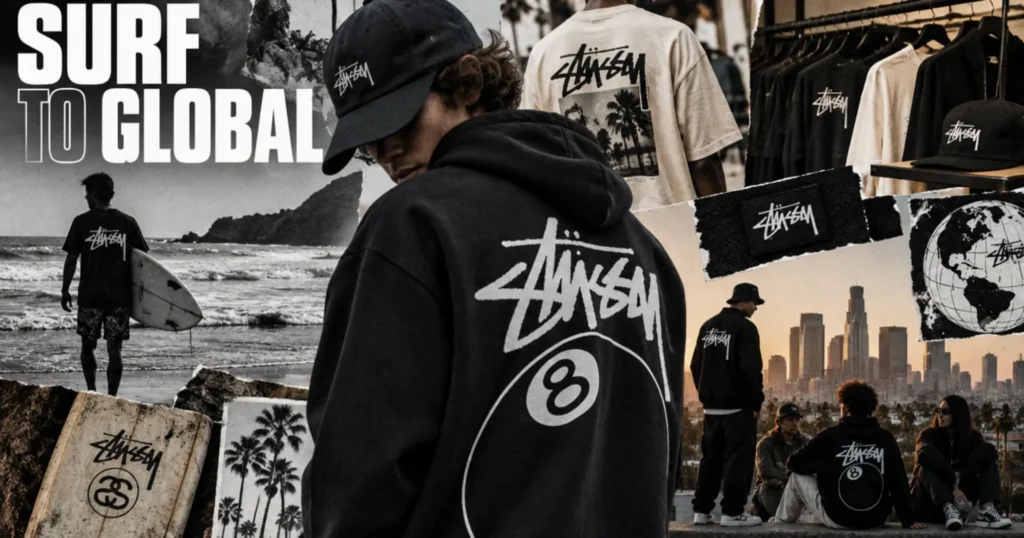
Stüssy started as a small surf label in California, yet it changed how the world dresses. Shawn Stüssy scribbled his name on surfboards, then he printed it on T-shirts. Soon, skaters, DJs, and club kids wore it too. That simple move helped build what we now call streetwear. Today, the label sits in stores, on runways, and in sneaker lines. How did one scribble grow so big? This blog follows the story, step by step.
TL;DR:
- A California surf shaper turned his handwritten name into a clothing label around 1980.
- The scribbled logo and bold graphic tees gave the brand a look that people spotted fast.
- Hip-hop, punk, reggae, and skate scenes shaped its style and its friends.
- Team-ups with Nike, Birkenstock, and others kept the label fresh for decades.
- Its ideas now guide many labels, from small shops to huge fashion houses.
How Stüssy Started Its Journey
The Story of Founder Shawn Stüssy
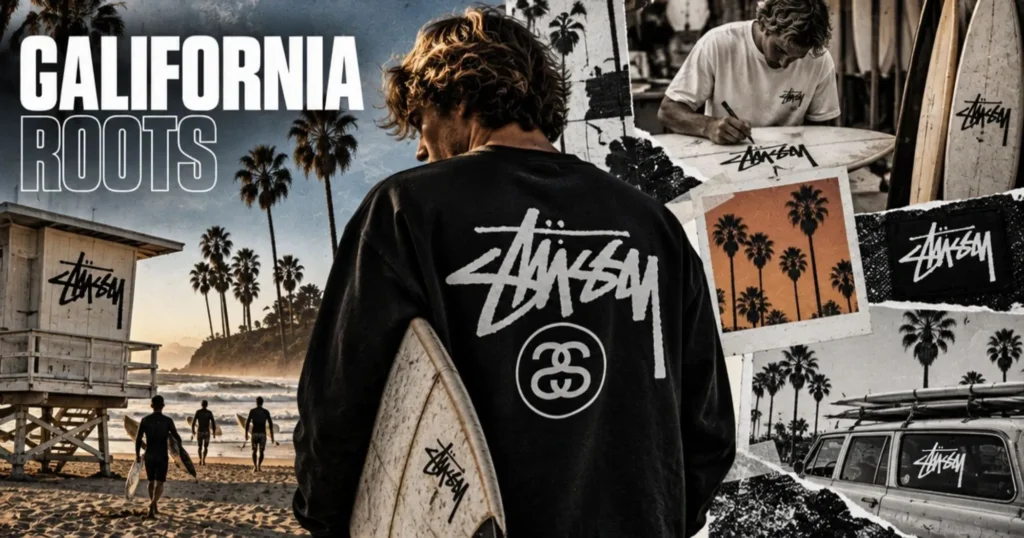
Shawn Stüssy grew up in California’s surf scene. He shaped custom surfboards, and he loved to paint them. His art mixed punk, reggae, and new wave. Instead of a plain logo, he used a quick, hand-drawn scribble of his own name. Around 1980, he put that scribble on T-shirts to promote his boards. Then a friend named Frank Sinatra Jr. joined him. Frank was an accountant, and he had no link to the singer. Together, they used their own money, with no outside investors.
How Surf Culture Inspired the Brand
Surf shaped the first ideas. Shawn spent summers shaping boards in Laguna. In winter, he skied at Mammoth Mountain, and that is where he met Frank. Yet he did not love every part of surf style. Surf clothes at the time were loud and flashy. So he chose a calmer path, with simple basics and clever graphics. His first line was workwear-inspired, like thrift-store work shirts. Therefore, early Stussy clothing felt plain, but it still had personality.
How Stüssy Moved Beyond Surfwear
By 1986, shoppers were tired of flashy beach looks. They wanted clothes for nights out, not only days at the beach. Meanwhile, Shawn travelled to New York, London, and Tokyo. There, he saw how people mixed skate, music, and art. So he followed them. Surf stayed in the brand’s roots, but the focus moved to city life. As a result, a beach label became a downtown favourite. Even the start date of Stüssy is debated. Most accounts say 1980, while some friends recall 1984.
How Stüssy Created Its Signature Streetwear Identity
How the Handwritten Logo Became Iconic
The logo is the heart of Stüssy. It is Shawn’s own handwriting, quick and loose. At first, it was only a signature on boards. Later, it became a symbol people trusted. He also drew two linked S shapes. Many people see a playful nod to the double C of Chanel. Shawn simply loved the polish of luxury names. Because the logo looked hand-made, it felt real. Fans could spot it from across the street. In short, the Stussy brand grew by sight, not by loud ads.
How Graphic T-Shirts Shaped Its Early Collections
T-shirts were the first big hit. Early designs paired the logo with bold, colourful New Wave art. One famous shirt even used a lyric from the hip-hop duo EPMD. Another, the World Tour tee, listed cities in plain Helvetica type. It showed the brand’s global reach, and it stayed affordable. Even now, Stussy T-shirts are the easiest way into the label. Other shoppers hunt for cute graphic tees with playful prints. These graphic t-shirts are never random. Each one points to music, art, or a city.
How Skate and Surf Culture Influenced Its Designs
Skate and surf both left marks. Early friends rode boards in the streets, so the clothes had to move. Roomy shapes let kids sag their pants and upsize their jackets. That oversized clothing look later spread worldwide. Oversized fits, graphic tees, and statement accessories continue to shape the look of modern streetwear. Explore our streetwear style guide to understand the key elements behind this fashion movement.
Hats mattered too. Shawn saw cool kids wearing white painter’s caps. So he made painter’s hats and baseball caps, both with his logo and bright colours. The famous Big Ol’ S snapback soon followed. Co-founder Frank Sinatra Jr. told Complex that hats grew to 20% of sales in the late 1980s. In 2000, Stüssy even formed a skate team. Riders like Keith Hufnagel joined it, and he later founded HUF.
How Music and Youth Culture Shaped Stüssy’s Growth
How Hip-Hop and Punk Influenced Its Style
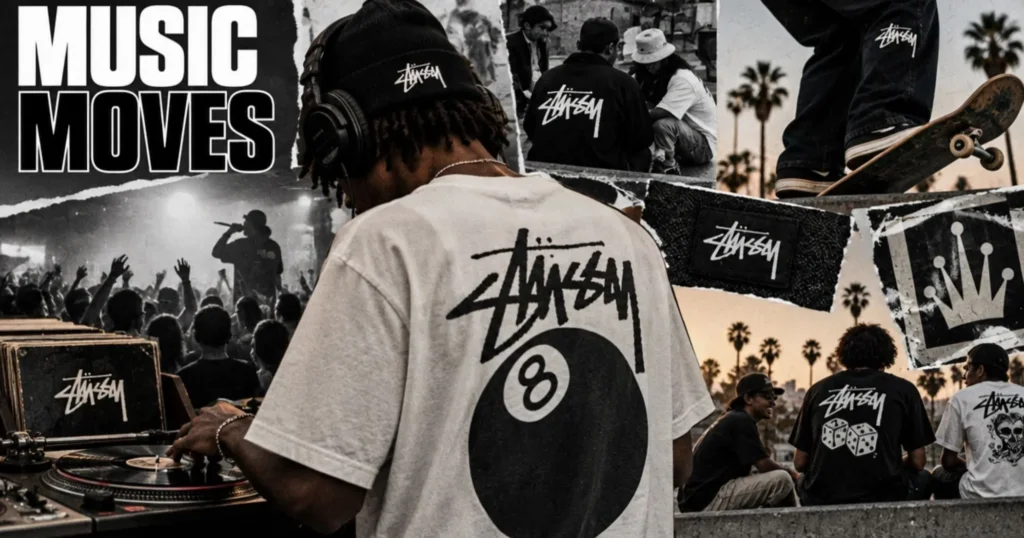
Music was the fuel. Shawn loved The Clash, reggae, punk, and hip-hop. In New York, he met kids who wore Carhartt, Timberland, and M-65 jackets. Those pieces were warm, cheap, and tough. Shawn mixed these ideas into his own clothes. As a result, fans of hip-hop fashion found gear that felt made for them. Meanwhile, punk fans found it too. One friend said you could wear it to a party, a trendy event, or a skate session. That range made Stüssy special. Meanwhile, Orchard Street shops in New York sold Lee jeans and Cazal glasses to early hip-hop fans.
How DJs and Creative Communities Supported the Brand
DJs became the first fans. Jules Gayton and Alex Turnbull, known as Alex Baby, flew between London and New York. Shawn sent them clothes. In return, they sent him mixtapes of hip-hop and reggae. No money changed hands. It was a friendship swap. Soon, artists, skaters, and shop owners joined in. The New York warehouse was only a few clothing rails at first. Even so, Alex left with a tee and beach pants that blew his mind.
How Stüssy Reached Global Youth Culture
Word of mouth did the rest. Stüssy skipped big ad budgets. Instead, fans in different cities told each other about it. In 1990, a big party in Tokyo brought the London, New York, and Japan crews together. Hiroshi Fujiwara, a Japanese streetwear leader, played music with friends. Japanese youth were already fascinated by American culture, so the style fit right in. Later, Japan became a safe harbour. When American sales slowed in the mid-1990s, Frank said Stüssy had about 15 to 20 stores in Japan. Those loyal fans helped it survive. Shawn left at the end of 1995, and rival labels were copying the look. Frank stayed and kept the company going with partners worldwide.
How Stüssy Helped Build Modern Streetwear Culture
How the International Stüssy Tribe Connected Different Communities
The International Stüssy Tribe was a club of friends in big cities. Members included DJs, skaters, stylists, and shop owners. Shawn handed out special varsity jackets with each member’s name on them. He paid for the first ones himself. Notably, he did not pay people to wear the clothes. A small number of jackets was the only reward. It felt organic and friendly. Today, brands call this influencer marketing. Shawn did it first, and he did it with heart. Members in London, New York, Tokyo, and Los Angeles all swapped ideas.
How Casual Clothing Became a Fashion Statement
Before Stüssy, many kids cut up old clothes or chased luxury labels. It showed another path. Basic pieces like tees, caps, and trousers could look sharp. Building a stylish everyday wardrobe often starts with versatile basics that are easy to mix and match. Explore these streetwear wardrobe essentials to see which key pieces help define the look.
Shawn once described his work as casual and formal pants, shirts, jackets, and hats. That calm answer hid real confidence, because his rule was quality over quantity. It also played with luxury ideas, such as the Chanel-style logo. Frank said the team praised luxury brands instead of mocking them. As a result, casual streetwear felt stylish and honest. Hip-hop fans loved that mix of street and status. Urban fashion became something you could own without a huge budget.
How the Brand Influenced Other Streetwear Labels
Many famous names share roots with Stüssy. James Jebbia ran the first New York store on Prince Street in 1990. He later founded Supreme. Former creative director Paul Mittleman says Supreme and A Bathing Ape would not exist without it. Meanwhile, Hiroshi Fujiwara helped lead streetwear in Japan. Phat Farm, Undefeated, and HUF also grew from the same circle. Still, Paul adds that the brand did not create the culture. It filled an empty space. Many now call it one of the American streetwear brands that set the template.
How Collaborations Kept Stüssy Relevant
How Stussy X Nike Reached Sneaker Fans
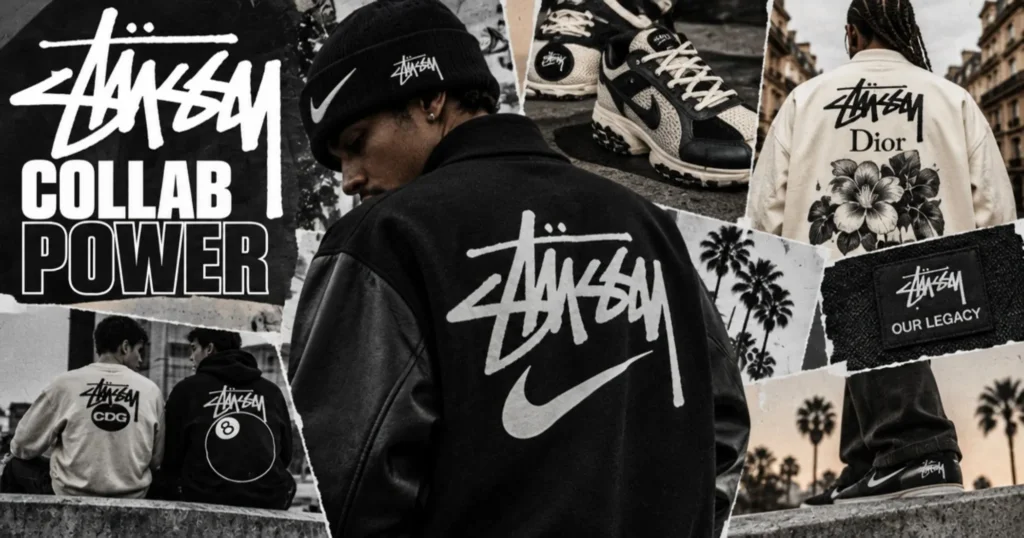
Nike was the big partner for Stüssy. In 2000, a Huarache project began with Michael Kopelman, who ran the London shop Gimme 5. Many call it one of the first sneaker collaborations. In 2001, the two made a Dunk with ostrich and snakeskin trim. Frank told Complex that 3,000 to 5,000 pairs sold out in two days. Lines formed outside stores. That moment fed early sneaker culture. Later came Air Force 1 and Air Max versions, plus fleece, caps, and bucket hats. Today, Stussy X Nike is a long-running partnership. Fans also love the roomy fleece crews and sweatpants from this line.
How Birkenstock and Other Partnerships Expanded Its Appeal
Not every team-up was a sneaker. In 2020, the label gave the Boston clog a corduroy upper. Later, the Stussy Birkenstock line added a suede Solana slip-on with shearling lining. Dr. Martens joined in 2018, and Our Legacy and Clarks followed. High fashion noticed too. Dior showed Shawn’s graphics in its Pre-Fall 2020 menswear collection. Kim Jones, who led that show, once worked at Gimme 5. Each partner fit Stüssy’s mix of craft and street style.
How Limited Collections Created Demand
Limited supply added hype. Early on, the founders worried about flooding stores. So shops sold only one or two hats per customer. That habit made each drop feel special. For the 40th anniversary, the World Tour tee returned with partners such as Off-White, Rick Owens, and Marc Jacobs. Fans hunted them down. Seasonal drops, small runs, and surprise partners keep the buzz going. Therefore, scarcity became part of the brand’s charm.
How Stüssy Expanded Its Clothing and Accessories
How Sweaters, Zip-Ups, and Work Pants Joined Its Collections
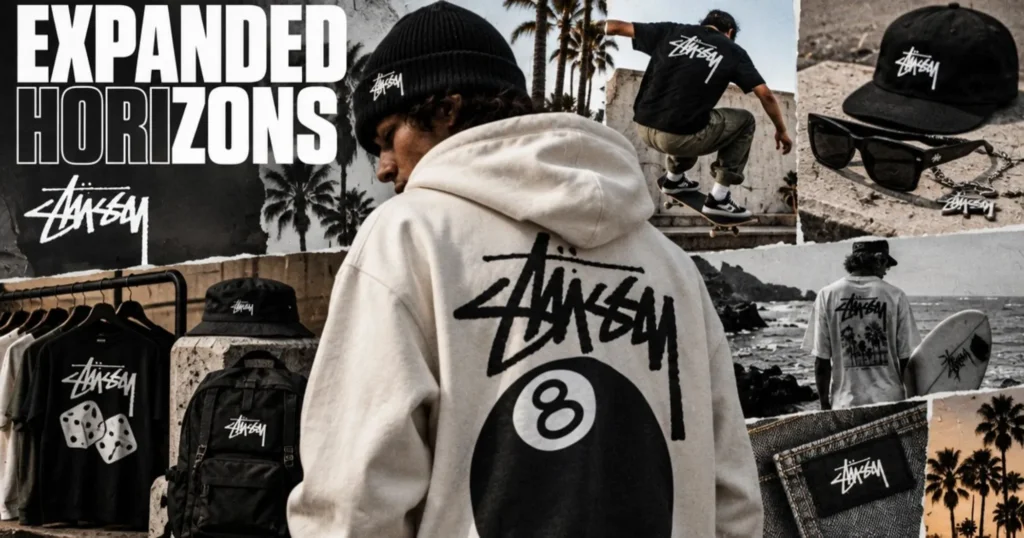
Beyond tees, the range grew wide. Knit pieces, including a chunky sweater, handle cold months. A Stussy sweater often carries a small logo or a bold graphic. Warm layers like a Stussy Zip-Up and fleece jackets and hoodies suit chilly mornings. The 8 Ball and Dragon styles show how a Stussy Sherpa jacket adds fuzzy comfort. Work pants return to the brand’s workwear roots. Stussy Work Pants are tough, roomy, and easy to wear daily. Together, these pieces make men’s urban clothing simple to build.
How Bucket Hats, Caps, and Sneakers Strengthened Its Style
For Stüssy, hats were the early engine, and they still matter. Eddie Cruz, a friend of the brand, says the Beastie Boys wore a Stussy Bucket Hat early on. Stussy hats and caps, from painter’s hats to snapbacks, put the logo on top. Fans collect them, and some people buy every single colour.
Nike versions also added bucket hats and beanies. On the feet, Stussy sneakers appear through Nike and other partners. The Stussy Sport line, started before Shawn left, offered his take on Ralph Lauren’s Polo Sport. It shows how the brand loved to remix big ideas.
How Classic Designs Continued to Attract New Generations
Old designs still sell. The logo tee, the World Tour tee, and the 8-ball graphic tee keep returning. New fans find them online, in shops, and on friends. Meanwhile, Stüssy throws parties with groups like Boiler Room and spotlights designers like Kiko Kostadinov. Its London store opened with a barbecue for old and new Tribe members. Because Stüssy respects its past, new fans feel welcome. One iconic tee, inspired by a Bob Marley lyric, even says you cannot forget your past.
The Bottom Line
From a surfboard scribble to a global label, this story is about community. Shawn mixed music, art, and sport. Frank kept the business steady. Friends around the world spread the word. In other words, good clothes grew with good friendships. Today, smart partnerships and classic tees keep Stüssy alive. Stüssy Streetwear is no longer a secret, yet it still feels personal. If you want to explore how everyday clothing, statement pieces, and personal style come together, start with our guide to building a streetwear wardrobe.
FAQs
When was Stüssy founded?
Most accounts say 1980. Some friends of the brand remember 1984, so the exact date is debated.
Who founded Stüssy?
Shawn Stüssy founded it, with help from accountant Frank Sinatra Jr.
How did Stüssy begin as a surfwear brand?
Shawn shaped surfboards and signed them with a scribble. Then he printed that scribble on T-shirts to promote his boards.
What makes the Stüssy logo recognisable?
It is Shawn’s own quick, loose handwriting. The linked S shapes also stand out.
How did hip-hop influence Stüssy’s popularity?
Shawn borrowed from New York style, like Carhartt and Timberland. DJs and rap fans then wore and shared the clothes.
What is the Stüssy Tribe?
It was a global club of friends, DJs, skaters, and shop owners. Members wore special jackets with their names.
Why are Stüssy collaborations popular?
They are limited, and the partners fit the brand. Nike and Birkenstock drops often sell out fast.
How did Stüssy influence modern streetwear?
It used word of mouth, limited drops, and logo hats. Its circle later helped build Supreme and other labels.
Most accounts say 1980. Some friends of the brand remember 1984, so the exact date is debated.
Shawn Stüssy founded it, with help from accountant Frank Sinatra Jr.
Shawn shaped surfboards and signed them with a scribble. Then he printed that scribble on T-shirts to promote his boards.
It is Shawn’s own quick, loose handwriting. The linked S shapes also stand out.
Shawn borrowed from New York style, like Carhartt and Timberland. DJs and rap fans then wore and shared the clothes.
It was a global club of friends, DJs, skaters, and shop owners. Members wore special jackets with their names.
They are limited, and the partners fit the brand. Nike and Birkenstock drops often sell out fast.
It used word of mouth, limited drops, and logo hats. Its circle later helped build Supreme and other labels.
Tags:

Chirag Pariyani
AI Engineer, NineE
Chirag is part of the engineering team at NineE, working on the technology that powers the product —...
Read More
Get Latest Fashion Insights, Before Everyone Else.