Create Your Agent

Updated on Nov 23, 2026
Dickies: How American Workwear Found Its Place in Modern Fashion
Brand StoriesSmit Rangras13 Mins reading time
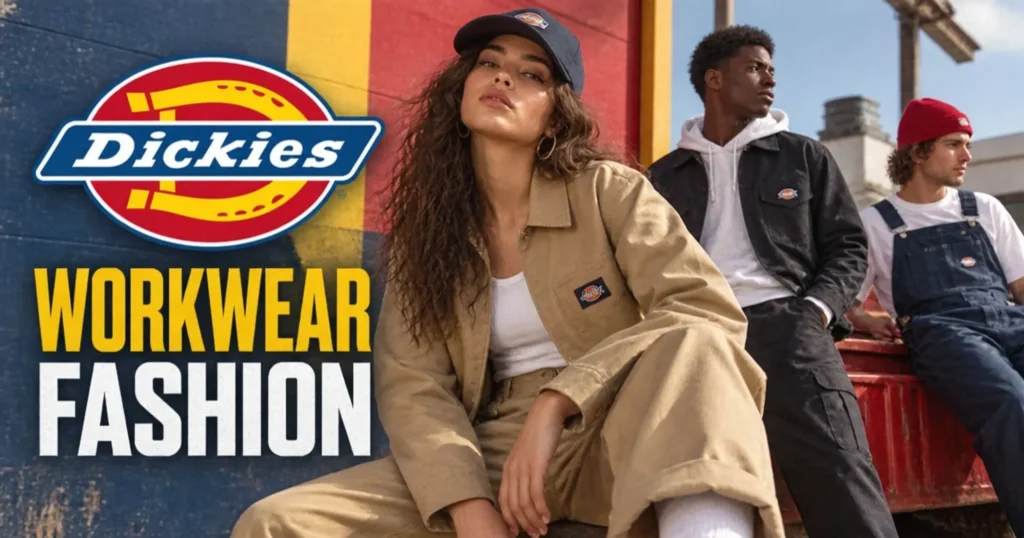
Dickies is a Texas workwear label that somehow ended up in skate parks, on stages, and at fashion shows. Not bad for a company that started out making bib overalls. Most people know the 874 work pants, even if they can’t name the brand. Here’s how a plain, hard-working label became a piece of American workwear history.
TL;DR:
- Two Texas cousins took over a small overall company in 1922.
- Tough fabric and practical details earned workers’ trust.
- The 874, launched in 1967, became the brand’s best-known pant.
- Skaters wanted pants that survived falls, and the look caught on.
- Music, collaborations, and streetwear took it well beyond job sites.
How Dickies Started Its Journey
The Founding Story of Dickies
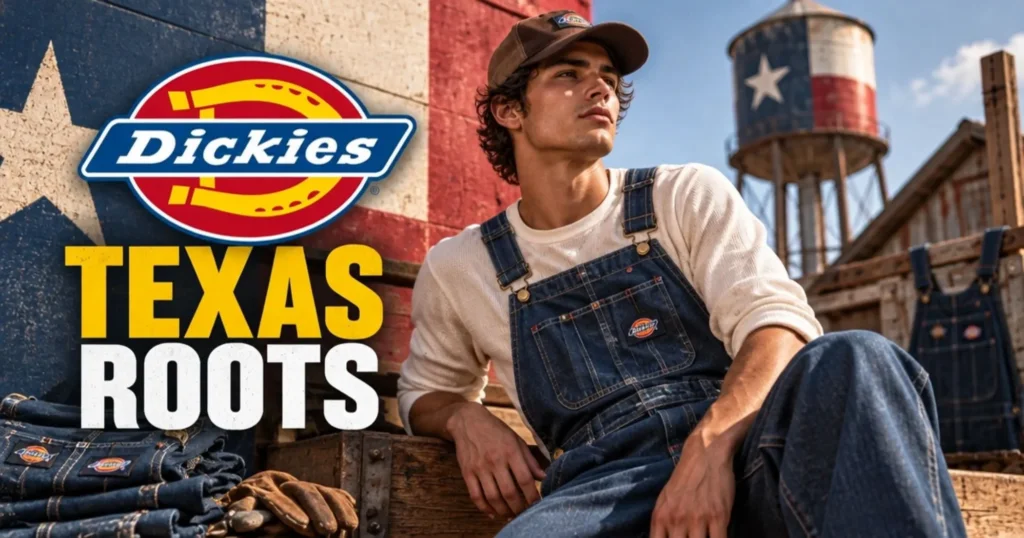
The business didn’t begin under its famous name. In 1918, a few friends set up the U.S. Overall Company in Fort Worth, Texas. Two of them were cousins, C. N. Williamson and E. E. “Colonel” Dickie. They’d spent years selling hats around the Texas Southwest, so they knew local customers well.
By 1922, the cousins had bought the company, along with Williamson’s son, C. D. Williamson. Each held a third. They renamed it Williamson-Dickie Manufacturing Company, and that’s the year the brand still counts as its start. The first product was plain and practical: Dickies overalls made of denim. Denim soon became an important part of casual fashion, influencing styles that later connected with streetwear. Explore the relationship between these two styles in our denim and streetwear guide.
Fort Worth stayed close to the brand for decades. At one point, the company even held naming rights to a local arena. That tells you how deep its Texas roots run.
How the Brand Entered the Workwear Market
Early customers were farm and ranch workers across the Southwest. Their jobs were hard on clothes. Cheap overalls tore fast, and nobody wanted to buy them twice. So the company used heavy denim and stitching that held up. Dickies workwear built its name on that simple promise.
The Great Depression slowed things down, but it didn’t stop them. People still needed something to wear to work. Climate mattered too. Summers were hot and dusty, so the clothes had to cope with sweat, dirt, and constant washing.
How Its Early Products Served American Workers
Bib overalls came first, and work pants and shirts followed. Each piece had a job to do. Overalls covered everything, while Dickies work trousers left room to bend and kneel. Pockets held tools. Thick seams took the strain.
World War II changed the scale of the business. The company turned out millions of uniforms for the U.S. armed forces. After the war, C. Don Williamson pushed growth hard, adding factories, warehouses, and sales territories. By the late 1950s, the brand had reached Europe and the Middle East. Texas oilmen helped by introducing it to oil fields abroad.
How Dickies Built Its Reputation for Durable Workwear
How Quality and Practical Design Shaped Its Products
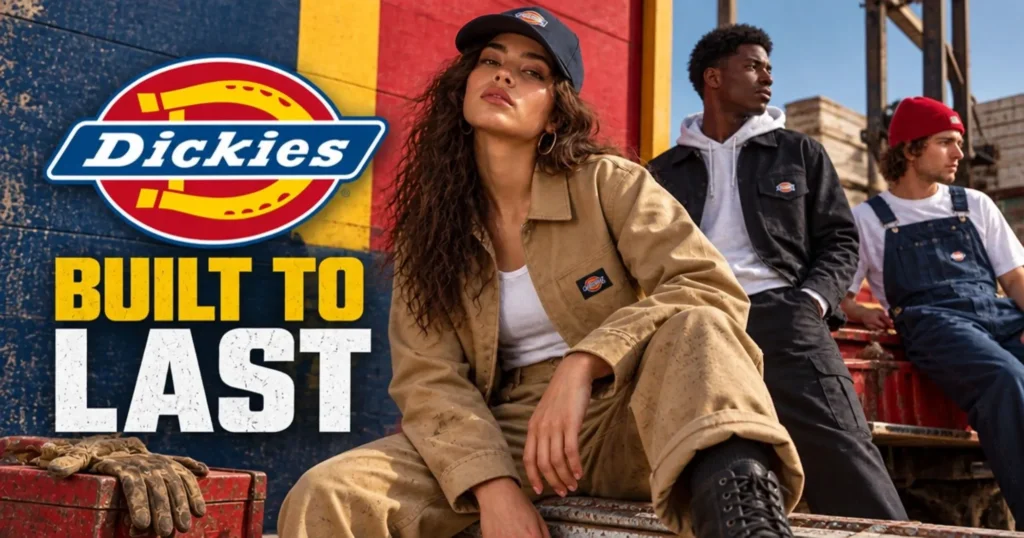
Quality is the whole point here. Dickies clothing uses tough fabric, reinforced seams, and roomy cuts. Designers thought about real jobs, like lifting, kneeling, and climbing. The clothes act more like tools than outfits, which makes them true utility clothing.
Later on, polyester-cotton blends added strength. Cotton is widely used in everyday clothing, but its production methods can differ. Read our guide to organic cotton to understand how it compares with conventional cotton.
Many pieces also resist wrinkles and stains, so workers can wash them often and still look neat. The company backs its products with a satisfaction guarantee. Small details help as well, such as strong stitching at stress points. That kind of rugged clothing explains why people stay loyal for years. Fans of vintage workwear still hunt for older pieces.
How Work Pants and Overalls Became Popular
The 874 Original Work Pant arrived in April 1967. Its name simply followed the 871, 872, and 873 styles. It has a straight leg and sits slightly high on the waist. It also resists wrinkles, which helps on long days.
Soon, Dickies work pants were everywhere: garages, farms, and building sites. Many Dickies pants also worked fine in shops and offices. These heavy-duty work pants were made for daily use. Bib overalls never disappeared either. The brand still makes them.
Fit takes a little care. The original 874 is baggy and relaxed. Many fans say it runs small, so they size up. Wash and wear them often. The fabric softens, but the shape stays.
Proper washing and care can help workwear maintain its fit and appearance over time. Follow our clothing care guide for simple tips on keeping your clothes in good condition.
In other words, the 874 was built as a work pant first and a style piece never. That’s partly why it looks so honest today.
How Uniforms Expanded Its Customer Base
Uniforms opened another door. Businesses wanted staff to look sharp and feel comfortable. So the company added scrubs, mechanic outfits, and tactical gear. Today it serves car shops, hotels, building sites, and hospitals. Dickies uniform pants are a common pick in those jobs.
Some jobs need special colours. Colour choices can also influence how people put together practical and versatile outfits. Explore our guide to wardrobe colour combinations for ideas on creating balanced looks. Painters want clean whites, while road crews need hi-vis. The brand has dedicated categories for both. That means one supplier can outfit a whole team, from the front desk to the loading dock.
How Dickies Became Known for Its Signature Clothing
How Double Knee Work Pants Gained Recognition
Knees wear out first, especially if you kneel all day. Dickies double knee work pants fix that with a second layer of fabric over each knee. It adds strength and a bit of padding, so the pants last longer.
Carpenters, painters, and floor layers got the point quickly. Skaters did too, later on. The doubled knees also give the pants a bold, practical look. You can spot them from across a job site.
How Work Shirts and Trousers Became Everyday Essentials
Dickies formal shirts follow the same logic. They have sturdy fabric, button fronts, and chest pockets for pens or small tools. Short sleeves keep people cool. Long sleeves protect from the sun. Many shirts leave room for a name patch, which suits teams.
Shirts and trousers became workwear essentials for good reason. You’ll see them in garages, kitchens, and on building sites. Eisenhower jackets and coveralls sit alongside them on the brand’s list of icons.
Want the classic look? Wear a work shirt untucked over a plain tee. Add boots, and roll the cuffs once. It’s simple, and it works almost anywhere.
How Khaki Pants and Chinos Expanded Its Collection
Not everyone works in a garage, of course. So the brand also makes cleaner, lighter looks. Dickies khaki pants suit restaurants, shops, and offices. Dickies chinos work for smart casual days. Both keep the brand’s tough feel.
Lines now match different needs. Pro Series and Tradebuilt aim at hard work and trades. The Off The Clock line leans relaxed and everyday, with denim included. A worker could start the morning in double knees and finish the evening in khakis. That flexibility keeps fans coming back.
How Dickies Moved From Workwear to Streetwear
How Skateboarders Adopted Dickies Clothing
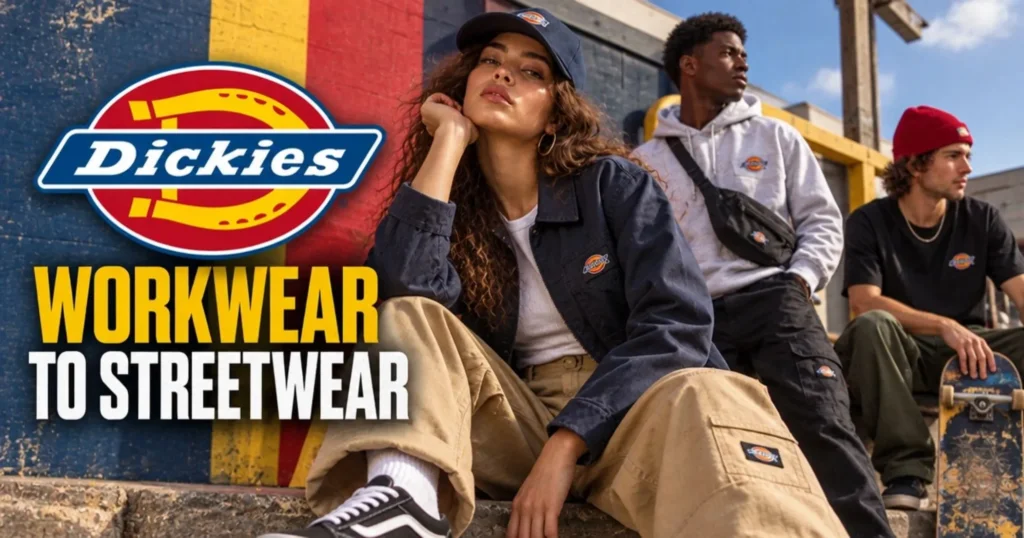
Skateboarders noticed something useful about work pants. In the 1980s, riders around Venice and Silver Lake in Los Angeles wore them. By the 1990s, the habit had spread. Concrete is rough on clothes, and skaters go through pants fast. A pair that survives falls is a big win.
Dickies skate pants solved that problem. The fabric was tough, and the cut was relaxed. Word traveled from park to park. Later, the brand launched a dedicated skate line and a team of riders. Its ties to Los Angeles fashion in the 1990s helped the look spread into skate and pop-punk scenes.
How Music and Youth Culture Influenced Its Image
Street culture gave the brand a second life. In the late 1970s, Latino communities in Southern California started wearing the pants. By the 1980s, they were a local staple. Oversized t-shirts and fitted tees finished the look. Members of N.W.A. wore the brand too. Punk and hip-hop didn’t share much, yet both crowds wanted tough, no-nonsense clothes.
The 1990s added punk and pop-punk. Gwen Stefani of No Doubt became a well-known fan, though her use of Chicana style sparked debate. Dickies T-shirts with bold logos let fans join in easily.
Women shaped the look as well. Many paired the pants with fitted tops for a pin-up feel. That showed workwear could be bold and stylish at once. Those street styles reached far beyond Southern California.
How Utility Fashion Reached Mainstream Style
Designers soon noticed. In 2006, Junya Watanabe featured the brand in a spring show. Stussy, OBEY, and Wacko Maria later made their own versions of the 874. In 2020, the Japanese brand FACETASM released a capsule collection.
So utility fashion moved from garages to runways. Workwear fashion became a real trend. Blue-collar fashion felt cool because it felt honest. People liked clothes with real roots.
It also helped that the brand never tried too hard. It just kept making the same dependable pants. Fashion came to it, not the other way round.
How Dickies Expanded Its Global Fashion Presence
How the Brand Reached International Markets
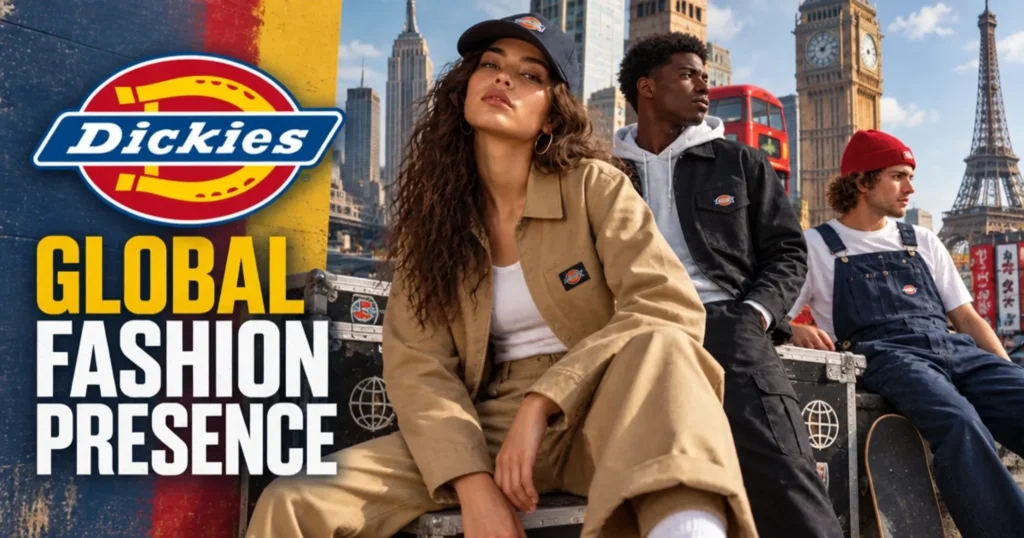
The brand spread step by step. Europe and the Middle East came first, in the late 1950s. More offices and partners followed. The company says it now sells in more than 100 countries. A U.K. arm in Somerset covers Europe and the Middle East for both workwear and streetwear. Streetwear has helped workwear-inspired clothing reach a wider fashion audience. Learn more about streetwear fashion and how it has evolved over time.
The name travels so well that people search for it by the common typo, Dikies. Markets use it differently, too. In some places it’s mainly for trades. In others, it’s a youth style staple. One label can serve a welder in one city and a student in another.
How New Collections Reached Different Audiences
New lines reached new buyers. Women’s Dickies pants now come in styles from classic work cuts to relaxed fits. Juniors’ apparel arrived through a licence in 2014. Dickies fleece jackets add warmth for cold shifts and cool evenings. Jackets, jeans, and tees round things out. Shoppers who want something warmer can look at fleece layers and outerwear.
Lifestyle lines like Off The Clock use denim, worn-in finishes, and premium threads. They keep a work feel but suit casual days. So a student, a mechanic, and a skater can all find something that fits.
How Dickies Balanced Workwear Roots With Modern Fashion
Ownership has changed over the years. VF Corporation bought the company in 2017. Then, in 2025, Bluestar Alliance took over, and the head office moved to California. The core idea hasn’t moved: tough clothes for real work.
The brand still makes bib overalls and still dresses workers. It also plays in fashion through collaborations and lifestyle lines. It even makes giant outfits for Big Tex, the Texas State Fair mascot. That odd mix keeps the label rooted and fresh. It ranks among the best-known American clothing brands.
The Bottom Line
Dickies proves that honest design can last. It began with bib overalls in Texas. Work pants earned trust on job sites, and then skaters, musicians, and designers wrote the next chapter. Few labels make that jump without losing their roots. This workwear brand did it by staying useful.
The takeaway is simple. Make clothes that work hard, and people will find new ways to wear them.
Shopping for a first pair? Start with the 874 or a double-knee style. Check the size chart first, because the fit can run small. Choosing the right fit makes a big difference in everyday styling. Our guide on choosing the right jeans explains how different fits can suit different body types. Then wear them hard. That’s what they were made for.
FAQs
When was Dickies founded?
Dickies traces its start to 1922 in Fort Worth, Texas. Its roots go back to the U.S. Overall Company, formed in 1918.
Who founded Dickies?
Cousins C. N. Williamson and E. E. “Colonel” Dickie founded it. Williamson’s son, C. D. Williamson, joined them as an owner in 1922.
What was Dickies originally known for?
It was first known for denim bib overalls made for farm and ranch workers. Work pants and work shirts came later.
Why are Dickies work pants so popular?
The 874 is tough, easy to care for, and easy to wear. It resists wrinkles and handles daily wear. Skaters and artists also turned it into a style staple.
What makes Dickies double knee pants different?
They have an extra layer of fabric over the knees. That adds strength where workers kneel most.
How did Dickies become popular in skate culture?
Skaters wanted tough, baggy pants that could handle falls. Work pants fit that need. By the 1990s, the look was common at skate parks.
Are Dickies clothes designed only for workers?
No. Plenty of people wear them for style, school, and travel. Skaters, musicians, and designers all widened its appeal.
What makes Dickies an iconic American workwear brand?
It pairs a long history with durable design and strong cultural ties. It also keeps making real work clothes, so its roots stay genuine. That mix is rare among fashion labels.
Dickies traces its start to 1922 in Fort Worth, Texas. Its roots go back to the U.S. Overall Company, formed in 1918.
Cousins C. N. Williamson and E. E. “Colonel” Dickie founded it. Williamson’s son, C. D. Williamson, joined them as an owner in 1922.
It was first known for denim bib overalls made for farm and ranch workers. Work pants and work shirts came later.
The 874 is tough, easy to care for, and easy to wear. It resists wrinkles and handles daily wear. Skaters and artists also turned it into a style staple.
They have an extra layer of fabric over the knees. That adds strength where workers kneel most.
Skaters wanted tough, baggy pants that could handle falls. Work pants fit that need. By the 1990s, the look was common at skate parks.
No. Plenty of people wear them for style, school, and travel. Skaters, musicians, and designers all widened its appeal.
It pairs a long history with durable design and strong cultural ties. It also keeps making real work clothes, so its roots stay genuine. That mix is rare among fashion labels.
Tags:

Smit Rangras
Product Associate, NineE
Smit works on the product team at NineE, helping shape how the platform is built and how it serves t...
Read More
Get Latest Fashion Insights, Before Everyone Else.