Create Your Agent

Updated on Nov 23, 2026
Puma: The Story Behind Its Origins and Rivalry With Adidas
Brand StoriesSmit Rangras12 Mins reading time
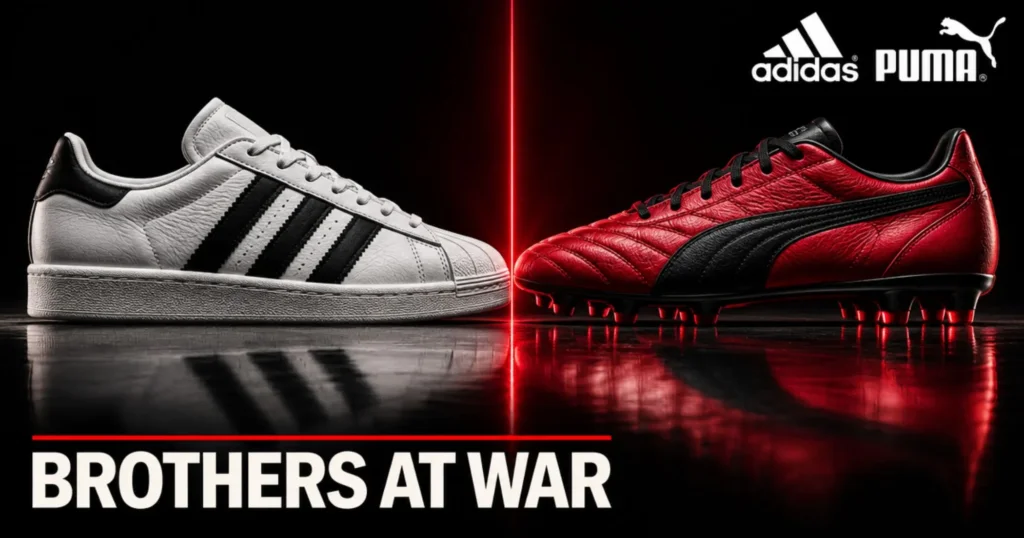
Puma and Adidas began as one small shoe business in a quiet German town. Two brothers, Adolf and Rudolf Dassler, ran it together. Then a bitter feud tore the family apart. Out of that split came two global sportswear giants. This guide shows how their rivalry shaped football, sneakers, and everyday fashion.
TL;DR:
- Adolf and Rudolf Dassler formed their shoe factory in Herzogenaurach, Germany, in 1924.
- A family feud split the brothers, and each started a rival firm in 1948 and 1949.
- The two firms fought hard over football boots, kits, and star players.
- Jesse Owens’ 1936 Olympic wins and big World Cup moments built both names.
- Their rivalry helped turn sports shoes into everyday fashion.
How the Dassler Brothers Started Their Shoe Business
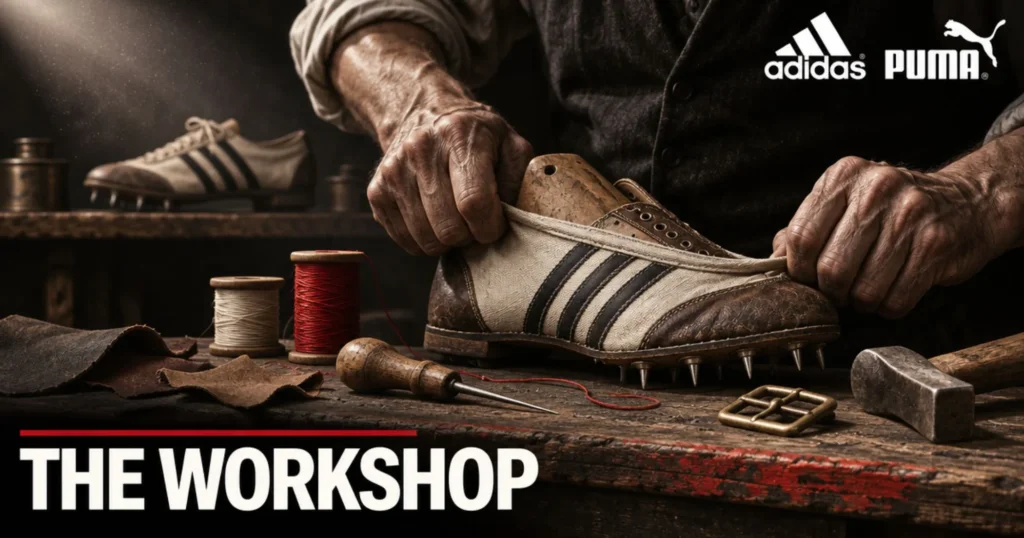
Great rivalries often start with friendship. Here, it began with two brothers and a shared love of sport.
How Adolf and Rudolf Dassler Began Making Sports Shoes
Adolf, called Adi, and Rudolf, called Rudi, grew up in Herzogenaurach, Germany. Their family were shoemakers. After World War I, the brothers started making shoes at their mother’s home. Together, they set out to build better shoes for athletes.
How the Dassler Brothers Built Their Shared Business
In 1924, the brothers formed the Dassler Brothers Shoe Factory. They worked with scraps of leather and canvas at first. Then they grew step by step. Adi tested new designs, and Rudi found customers. For about a decade, the partnership ran smoothly.
How Their Shoes Gained Recognition Among Athletes
Adi designed spikes that gripped cinder tracks better than other shoes. Athletes soon noticed. By 1928, German Olympians were competing in Dassler shoes. In addition, real athlete feedback helped the brothers improve each design. As a result, their name began to carry weight in sport.
How Jesse Owens’ 1936 Olympic Performance Brought Attention to Their Shoes
In 1936, sprinter Jesse Owens won four gold medals at the Berlin Olympics. He wore Dassler spikes. Photos of him racing in the shoes traveled the world. That fame gave the brothers worldwide attention.
How a Family Disagreement Created Puma and Adidas
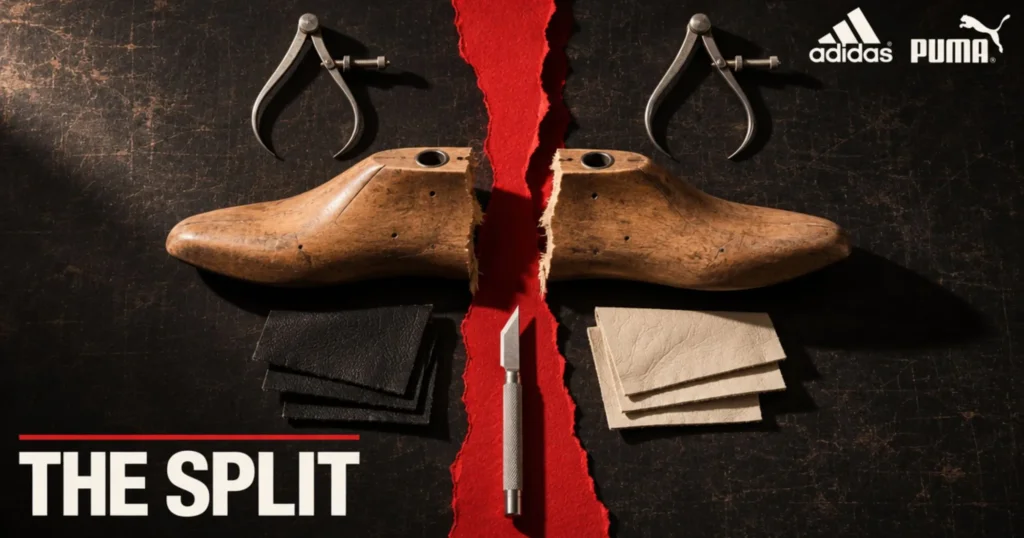
Success did not keep the brothers together. Instead, trouble grew quietly behind the scenes.
What Caused the Conflict Between Adolf and Rudolf Dassler
No one knows the exact cause. Tension grew in the 1930s and rose during World War II. Personal clashes and different business views both mattered.
How the Brothers Decided to End Their Partnership
After the war, the strain was too much. So, they chose to split the business. In the end, the brothers never reconciled. Both died without making peace.
How Adolf Founded Adidas in 1949
Adi registered Adidas in August 1949. The name blends his nickname, Adi, with the first letters of his surname, Das. Meanwhile, three stripes became its trademark.
How Rudolf Founded Puma in the Same Year
Rudi started his own firm just before his brother. In January 1948, he registered “Ruda.” Later that year, he renamed it Puma. So, his firm came first, and Adidas followed in 1949. Puma sportswear grew from that new start. Its leaping cat logo became the symbol of speed.
How Puma and Adidas Turned a Family Feud Into a Business Rivalry

A family fight became a business fight. Soon, the whole town felt it.
How the Two Brands Competed in Their Hometown of Herzogenaurach
The brothers built factories on opposite sides of the Aurach River. Their feud split the town of Herzogenaurach in two. People used to look down at strangers’ shoes first. Because of this, the rivalry became part of daily life.
How Employees and Residents Became Part of the Rivalry
Workers took sides, and so did shopkeepers. Families split over which firm to join. As a result, neighbors sometimes avoided each other. Rudi’s grandson later said the family never mentioned the name Adidas at home.
How Both Companies Built Separate Brand Identities
Each firm chose its own path. Adidas leaned on technical skill and bold stripes. Meanwhile, Rudi’s firm leaned on speed, style, and star power.
How Competition Influenced Their Business Strategies
Rivalry pushed both firms to work harder. If one signed a star, the other chased another. When one made a new boot, the other answered. Therefore, innovation sped up.
How Puma and Adidas Competed Through Football
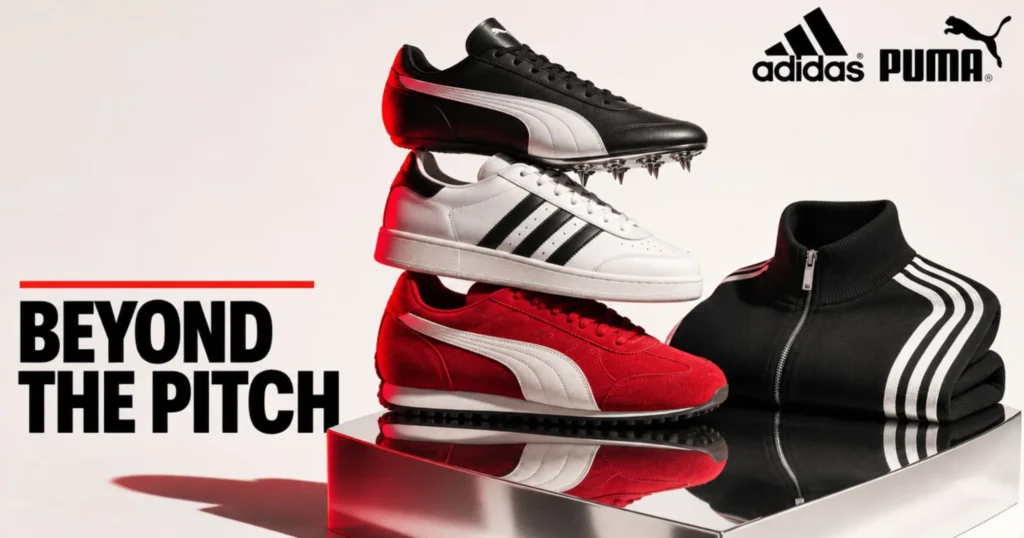
Football was the main battlefield. Boots, kits, and big stars drove the fight.
How Football Became a Major Market for Both Brands
Football is the world’s most popular sport. Winning there means worldwide fame. Both firms saw this early. They worked with national teams, clubs, and top players.
How Puma Developed Its Football Boots
Puma football boots built a name for flair and speed. At the 1970 World Cup, Pelé tied his Puma Kings on camera before Brazil’s first match. That moment gave the brand giant exposure. In 1974, the firm also backed Johan Cruyff, who wore only two stripes on his shirt. Style and star power became its edge.
How Adidas Strengthened Its Position in Football
Adidas football cleats made a big leap in 1954. Adi popularized screw-in studs. Players could swap them for wet or dry pitches. West Germany wore the lightweight boots to beat Hungary 3–2 in the final. Fans call it the “Miracle of Bern.” Later, Adidas supplied national teams and official kits. As a result, it dominated many World Cups.
How Athlete Sponsorships Increased Brand Recognition
Sponsorships spread both names. A star in a boot sells thousands of pairs. Therefore, both firms chased top players for decades. Deals gave fans a reason to buy.
How Puma and Adidas Expanded Beyond Football
Football was only the start. Soon, both brands looked at other sports.
How Puma Entered Running and Other Sports
The brand also built Puma sports shoes for track and training. Light spikes and quick trainers earned trust among runners. Later, the brand added tennis, motorsport, and golf. Many women search for the best running shoes for women, and both brands now cater to them.
How Adidas Expanded Its Sportswear and Footwear Range
Adidas grew just as fast. Today, Adidas sportswear covers running, training, tennis, and more. In addition, its tracksuits, shirts, and Adidas apparel became fashion items. Adidas shoes and Adidas footwear appear on courts, tracks, and streets. Famous models include the Stan Smith and the Superstar. Together, they proved that sport style could sell in everyday life.
How Both Brands Reached Basketball and Training Markets
Basketball helped both firms reach young fans. Puma basketball shoes became famous in the 1970s through NBA star Walt Frazier. Meanwhile, Adidas pushed the Superstar on courts, and hip-hop fans soon adopted it. As a result, both brands covered almost every workout.
How Sports Apparel Became Part of Their Business
Shoes are only part of the story. Shirts, shorts, and jackets matter too. Sports brand apparel, including sports accessories, now brings in a large share of sales. Clothes also let them reach shoppers who never run or play.
Puma vs Adidas: How Their Products and Styles Differ
Both brands make shoes and clothes. Still, their styles feel different.
How Puma and Adidas Approach Sports Shoe Design
Adidas often focuses on structure and technology. Its designs feel classic, with clean lines and three stripes. In contrast, Puma footwear tends to lean on flair. Its shoes often carry softer shapes and bolder color choices. In the Puma vs Adidas debate, taste decides.
Puma Super Liga vs Adidas Samba: What Sets Them Apart
Both are retro favorites. The Adidas Samba began as an indoor football shoe, with a gum sole for grip. It has a T-shaped toe overlay and a slim look. The Puma Super Liga is also a low-profile retro trainer with a suede feel. In the Puma SuperLiga vs. Adidas Samba matchup, the Samba is more common. The Super Liga feels a bit more unique.
How Their Football Boots Serve Different Playing Needs
Boots differ by position and playing style. Fast wingers often like light, snug boots. Defenders may want more support. Adidas boots often stress control and a locked-in fit. Meanwhile, Puma boots often stress speed and a close feel.
How Their Sneakers Reached Everyday Fashion
Eventually, sports shoes left the field. Puma sneakers and Adidas sneakers became streetwear. Now, Puma shoes for men range from sleek runners to chunky retro styles. In the Adidas vs. Puma shoes contest, both offer many colors. As a result, a pair can work for the gym or the street.
How the Rivalry Shaped Modern Sportswear and Sneaker Culture
Competition changed how people dress. Sneaker culture grew out of that fight.
How Sports Shoes Became Everyday Fashion
At first, sports shoes were only for sport. Then people started wearing them on the street. Rivalry pushed both brands to make shoes that looked cool, not just useful. This idea of sports fashion changed closets everywhere. Today, athletic footwear sits beside jeans and dresses.
How Music, Streetwear and Youth Culture Influenced Both Brands
Music pushed sneakers into the spotlight. In the 1980s, hip-hop group Run-DMC wore Adidas Superstars and even wrote a song about them. Their love for the shoes boosted Adidas sales. Meanwhile, Puma became a favorite in breakdancing and street scenes. Youth culture loved a shoe with a story. Therefore, both firms leaned into music and streetwear.
How Collaborations and Celebrity Partnerships Built Brand Appeal
Collaborations keep the brands fresh. Designers, artists, and musicians add new ideas. Celebrities also help. When a star wears a pair, fans want it too. Over the years, both firms have teamed up with top names in fashion and sport. These partnerships blur the line between sport and style.
How Performance Footwear Became Part of Lifestyle Fashion
Performance shoes now double as daily wear. Light foams, soft knits, and cushioned soles feel great on busy days. Because of this, people wear running shoes to work and school. Sneaker culture also grew around rare releases and resale. Performance and fashion now live in the same shoe.
How Puma and Adidas Continue to Compete Today
The rivalry has not faded. Today, it plays out on pitches, tracks, and screens.
How Both Brands Build Global Sports Partnerships
Both firms sponsor major clubs, leagues, and athletes. They also back events like the World Cup and the Olympics. Football, running, and basketball all remain key battlegrounds. Stars share photos in their gear, and fans react instantly. As a result, each deal reaches millions within hours.
How Innovation Shapes Their Modern Footwear
Innovation never stops. Brands now use lighter foams, stronger knits, and smart plates. When one launches a new shoe, the other answers fast.
How Sustainability Influences Their Product Development
Shoppers care about the planet. So, both brands now use recycled materials in some shoes and clothes. Still, competition pushes both to do more. A greener product can now be a selling point, not just a good deed.
The use of recycled materials also raises questions about how clothing and textiles can be reused instead of becoming waste. Understanding clothing donation vs recycling offers a closer look at different ways to reduce textile waste.
How Both Brands Balance Sports Performance and Fashion
Today, each brand must satisfy two groups. Athletes want performance. Fashion fans want style. So, both firms run separate lines for each. Performance shoes use the latest tech. Lifestyle shoes use retro looks and bold colors. A tech trick may appear in a fashion shoe, and the reverse is true too.
The Bottom Line
The story is simple. Two brothers built a shoe business, then fell out. Each started his own firm, and a town split in half. Out of that pain, a fierce rivalry grew. In turn, the Puma and Adidas rivalry pushed both brands to improve. It also helped create modern sneaker culture. Its lesson is clear. Even a family feud can lift two companies to the top.
The rivalry also played a part in shaping the sneaker culture we see today. The complete streetwear guide explores how sneakers and sportswear became an important part of everyday fashion.
FAQs
Who founded Puma and Adidas?
Brothers Rudolf and Adolf Dassler founded them. Rudolf started one, and Adolf started the other.
Why did the Dassler brothers separate?
Their relationship broke down during the 1930s and the war years. Personal clashes and business views both played a role.
When were Puma and Adidas founded?
Rudolf registered his firm in 1948, and it became Puma that year. Adolf founded Adidas in 1949.
Are Puma and Adidas owned by the same company?
No, they are separate companies. Each one is run on its own.
Where did the Puma and Adidas rivalry begin?
It began in Herzogenaurach, Germany. The town sits on the Aurach River.
How did Jesse Owens help the Dassler brothers’ business?
He won four gold medals in 1936 while wearing their shoes. That fame gave the brothers worldwide attention.
Which brand came first, Puma or Adidas?
Puma came first, by about a year. Adidas followed in 1949.
What is the difference between Puma and Adidas shoes?
Adidas often stresses structure and classic stripes. In contrast, Puma often stresses flair and speed.
What is the difference between Puma Super Liga and Adidas Samba?
The Samba began as an indoor football shoe with a gum sole. The Super Liga is a retro low-profile trainer.
How did the rivalry influence modern sportswear?
It pushed both brands to innovate and sign stars. As a result, sports shoes became everyday fashion.
Brothers Rudolf and Adolf Dassler founded them. Rudolf started one, and Adolf started the other.
Their relationship broke down during the 1930s and the war years. Personal clashes and business views both played a role.
Rudolf registered his firm in 1948, and it became Puma that year. Adolf founded Adidas in 1949.
No, they are separate companies. Each one is run on its own.
It began in Herzogenaurach, Germany. The town sits on the Aurach River.
He won four gold medals in 1936 while wearing their shoes. That fame gave the brothers worldwide attention.
Puma came first, by about a year. Adidas followed in 1949.
Adidas often stresses structure and classic stripes. In contrast, Puma often stresses flair and speed.
The Samba began as an indoor football shoe with a gum sole. The Super Liga is a retro low-profile trainer.
It pushed both brands to innovate and sign stars. As a result, sports shoes became everyday fashion.
Tags:

Smit Rangras
Product Associate, NineE
Smit works on the product team at NineE, helping shape how the platform is built and how it serves t...
Read More
Get Latest Fashion Insights, Before Everyone Else.